Urinary Stone Management
The Centre for Endourology & Urinary Stone Management is one of the very few centres in the region that offers complete spectrum of treatment options for people suffering from urinary stone problems. Headed by the qualified and experienced urologist, the centre is equipped with latest technologies that ensure utmost patient’s outcomes and faster recovery.
About 5% of the world population goes through kidney stone treatment in their lifetime. Urinary stones are aggregation of chemical substances dissolved in urine. When the concentration level of these substances goes beyond a particular point, they crystallize into stones.
They vary in size; very small to be felt or notices in the urinary tract to as large as a golf ball. When these stones obstruct the urine flow, it causes severe pain; felt in flank, lower abdomen, groin or leg of affected side. Usually, kidney stones show no symptoms until they move into ureter. The most common symptoms are: sharp pain in the groin area, blood in urine, frequent vomiting and nausea, difficulty in passing urine, burning sensation while urinating, and frequent urge to pass urine, and fever or chills.
At Aster Centre for Endourology & Urinary Stone Management, we adopt patient-centric treatment approach. Our expert clinical team who comes with the cumulative experience of 50+ years evaluates the patient’s history and present conditions thoroughly. After having a detailed counselling with the patient and the family, we chalk out the customized treatment plan.

Service Offered
At Aster Medcity, we always strive to deliver complete, comprehensive and compassionate care at one-place. All the treatment options are made available to them. The best possible treatment plan is derived keeping the patient's conditions in mind
Extracorporeal Shock Wave Lithotripsy (ESWL): Extracorporeal Shock Wave Lithotripsy, commonly known as ESWL, uses sound waves generated by a lithotripter to break the stones into smaller particles, and they smoothly pass into the bladder.
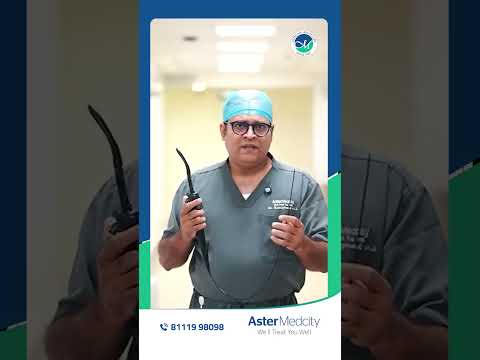
Ureterorenoscopic (URS) Lithotripsy with Holmium Laser: URS is recommended when the stone is stuck within the ureter. Your doctor use an Ureteroscope to remove the stones. In this a rigid ureteroscope along with laser fiber is inserted through the urethra into the bladder and ureter. The Holmium powered laser is used to break up the kidney stone. The surgeon remove the broken pieces through the urethra. Smaller pieces usually pass in urine. Sometime, your doctor may insert a stent in ureter to make it easy to pass stones and improve healing.
Retrograde Intrarenal Surgery (RIRS): RIRS is an endoscopic surgery where a flexible ureteroscope is used to reach stones in the kidney. It is specifically recommended for patients where ESWL or URS cannot be performed or have failed, tumours in the kidney, stones in children, grossly obese patients. It has multiple advantages such as no incision on the body, shorter hospital stay, and quicker recovery. With the sate of art instrumentation, we can remove layer stone without any wound harm the Kidneys
Percutaneous Nephrolithotomy (PCNL): PCNL is performed to remove stones that are too large for other forms of stone treatment such as ESWL or URS. The procedure creates a passageway from the skin on the back or side to the kidney. A tube is inserted through the incision under x-ray guidance. A small telescope is then passed through the tube in order to visualize the stone, break it up and remove it from the body. This treatment technique has a higher success rate for clearing all stones in one sitting than other techniques such as ESWL which may require several attempts
Kidney Stone Facilities
we work hard to stay ahead of the times to be among the first in the world to bring new, evidence based, approved therapies and technology to our patients.
-
Speciality Clinic for Stone Management
-
NABH accredited lab
-
252-slice CT Scan
-
Latest Ultrasound and X-Rays
-
Extracorporeal shock wave lithotripsy for renal and ureteric stones (stone fragmentation without hole)
-
Flexible cystoscopy diagnostic and therapeutic procedures for RIPS
-
Advanced Kidney Biopsy Laser therapy for treatment of stones (PCNL, RIRS / URS)
Want to find out more about the treatment? The answer to your questions can be found below.
Kidney stones are hard crystal-like deposits formed when minerals and salts in the urine stick together, especially when there is not enough water in the body.
Symptoms can include sharp pain in the back or side, pain during urination, nausea, blood in urine, and frequent urge to urinate.
Larger stones may require treatments such as shock wave lithotripsy (ESWL), ureteroscopy, or sometimes surgery to break or remove the stones.
Consult a doctor if you have severe pain, blood in the urine, persistent nausea, or difficulty passing urine.
Kidney stones can form due to low fluid intake, dehydration, urinary tract infections, hot weather, metabolic issues, and certain medical conditions.
Yes, small kidney stones can often pass naturally by drinking plenty of water and taking prescribed medications.
Staying well hydrated, drinking plenty of water, avoiding high-oxalate foods, and monitoring urine color helps reduce the risk of stones.
We have some of the best specialists from around the world, they bring years of experience and offer evidence-based treatment to ensure the best care for you.

Let's hear from our patients