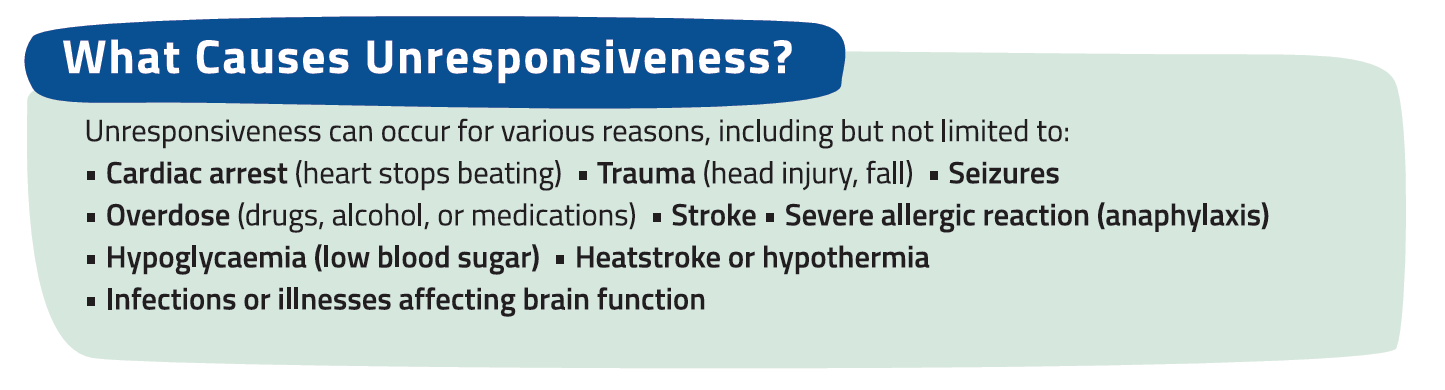
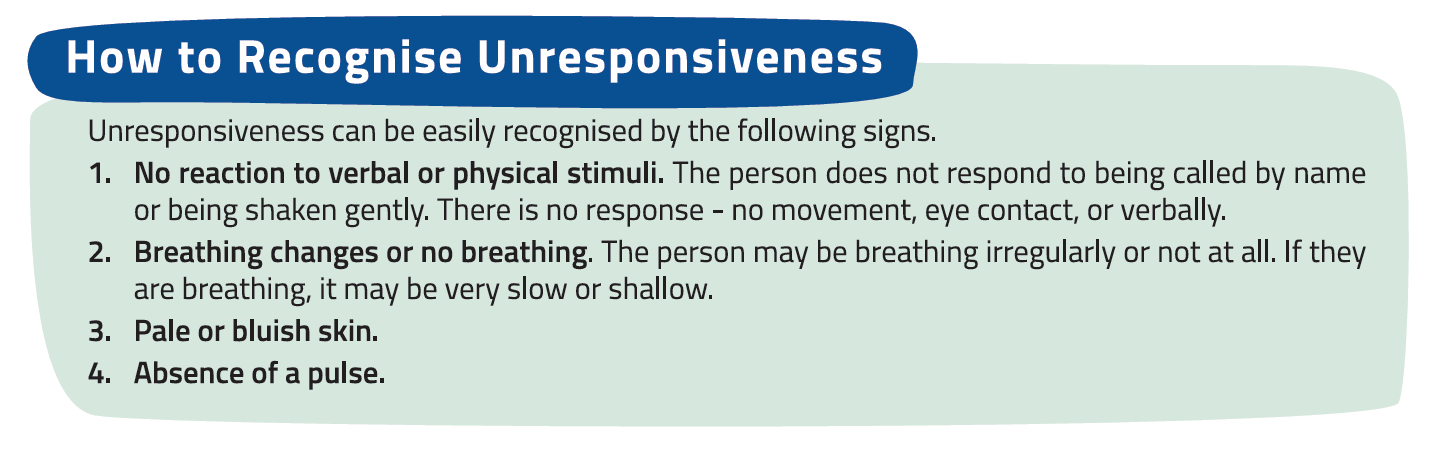
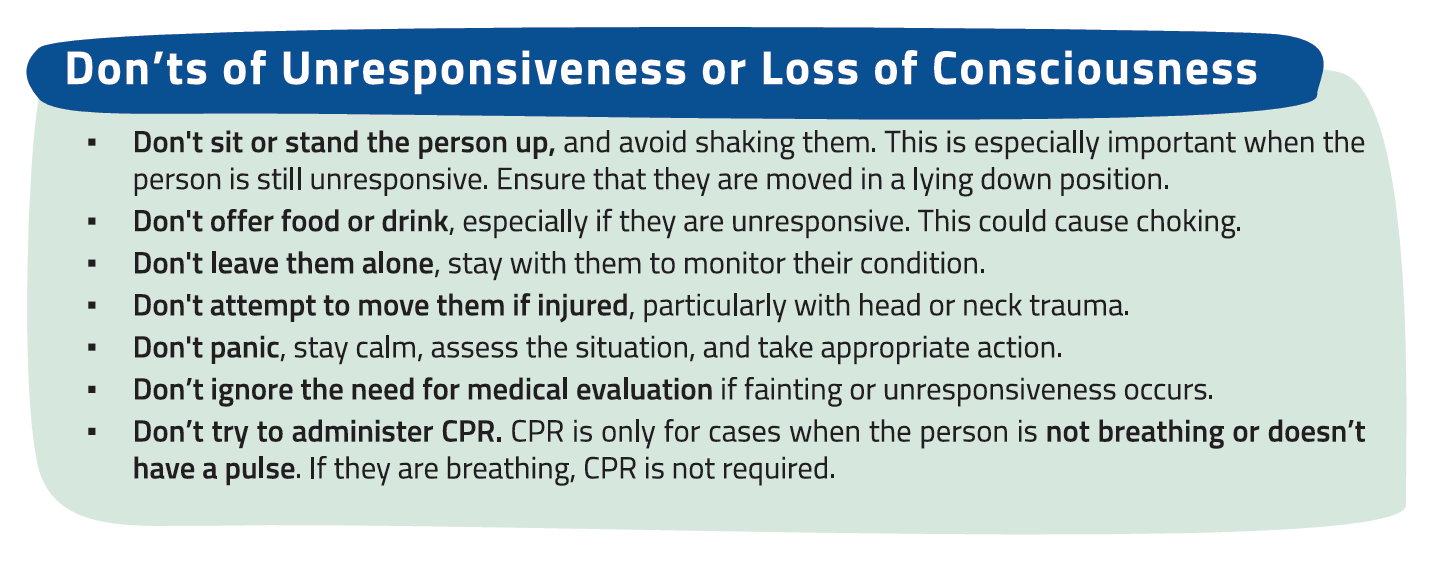
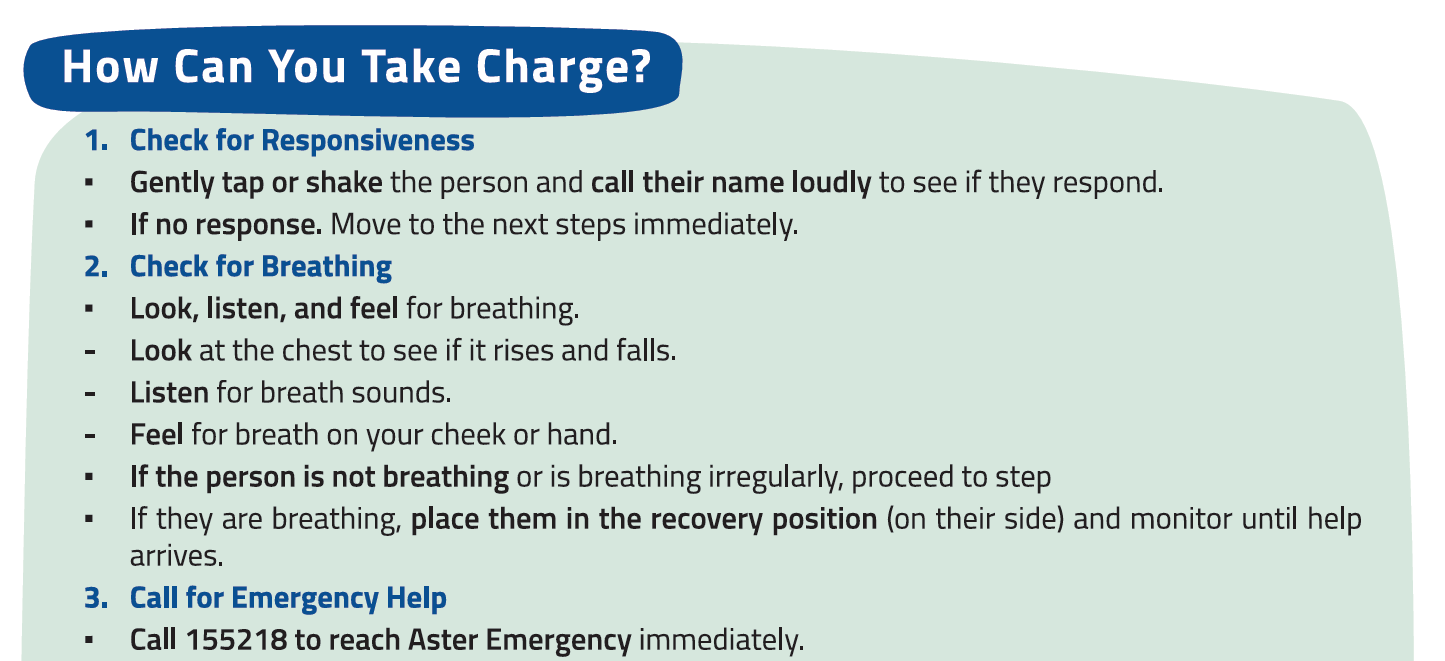
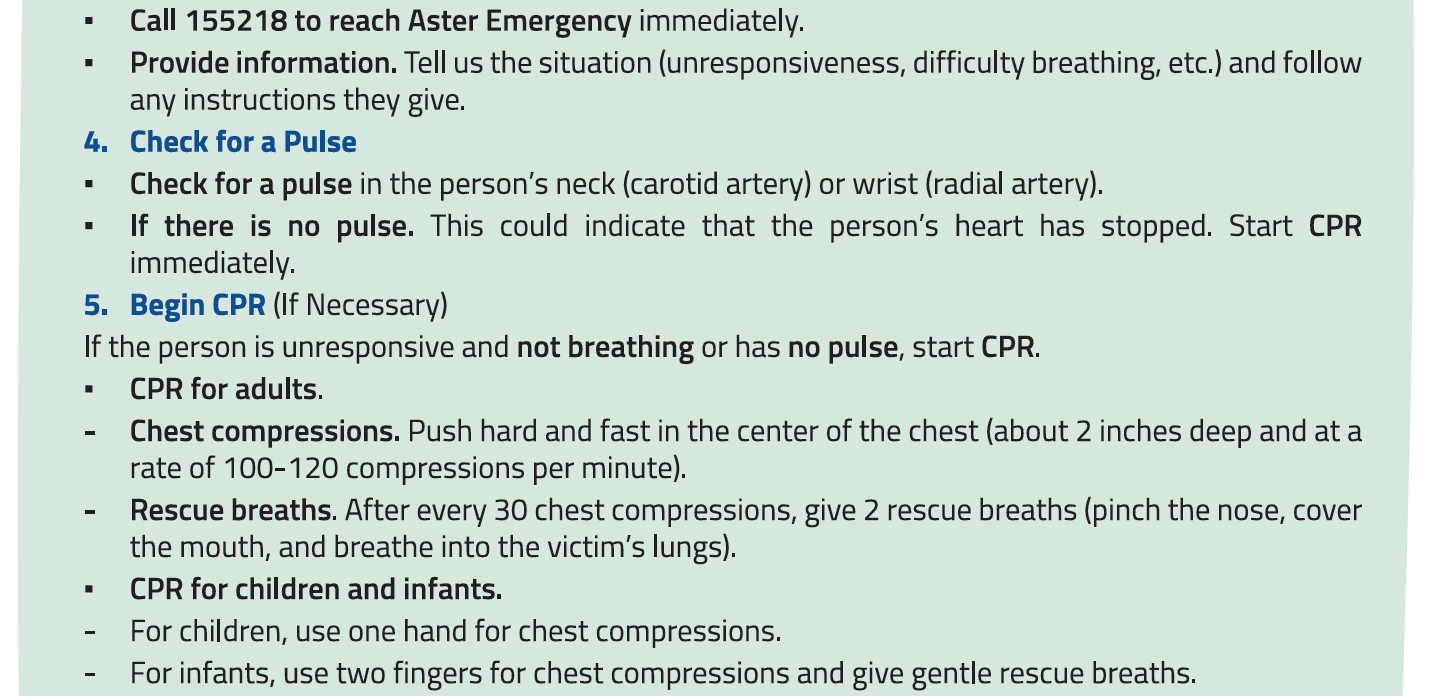
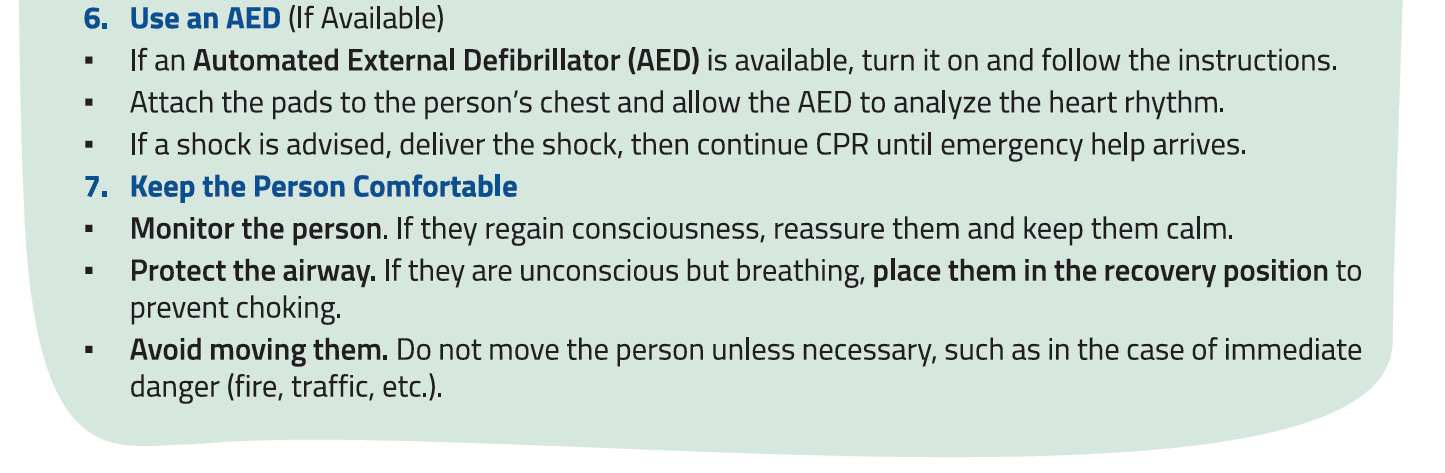
Unresponsiveness occurs when an individual is unconscious or not reacting to stimuli, such as sound, touch, or other forms of interaction. Unresponsiveness can vary from a temporary loss of consciousness (such as fainting) to a more serious condition where the person is unresponsive and not breathing or has no pulse (which could indicate a medical emergency like a heart attack or stroke). Unresponsiveness can result from various causes, including trauma, drug overdose, low blood sugar, heatstroke, stroke, or other medical conditions like seizures. Recognising and responding to unresponsiveness quickly is crucial for the person's survival and well-being.