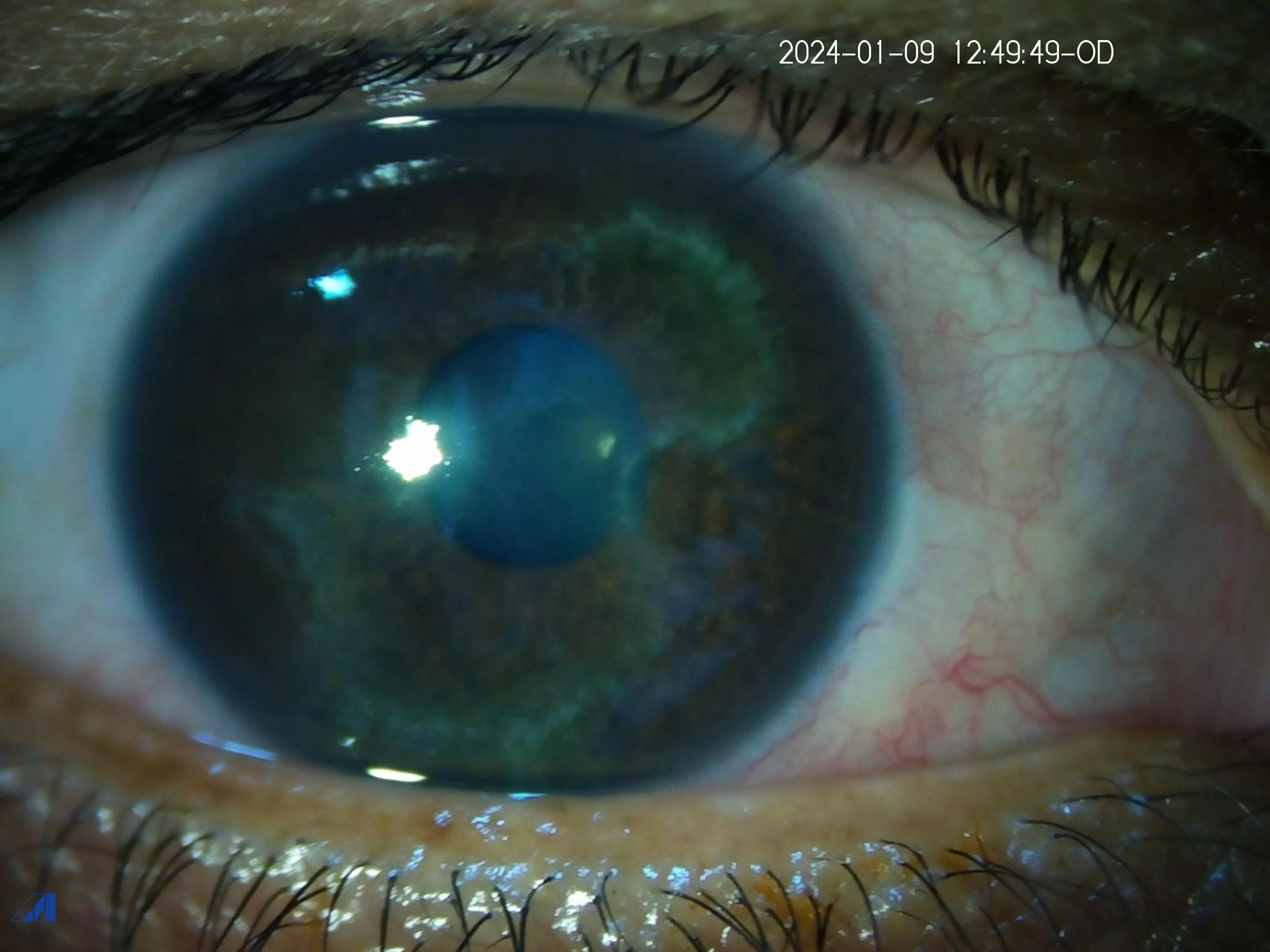
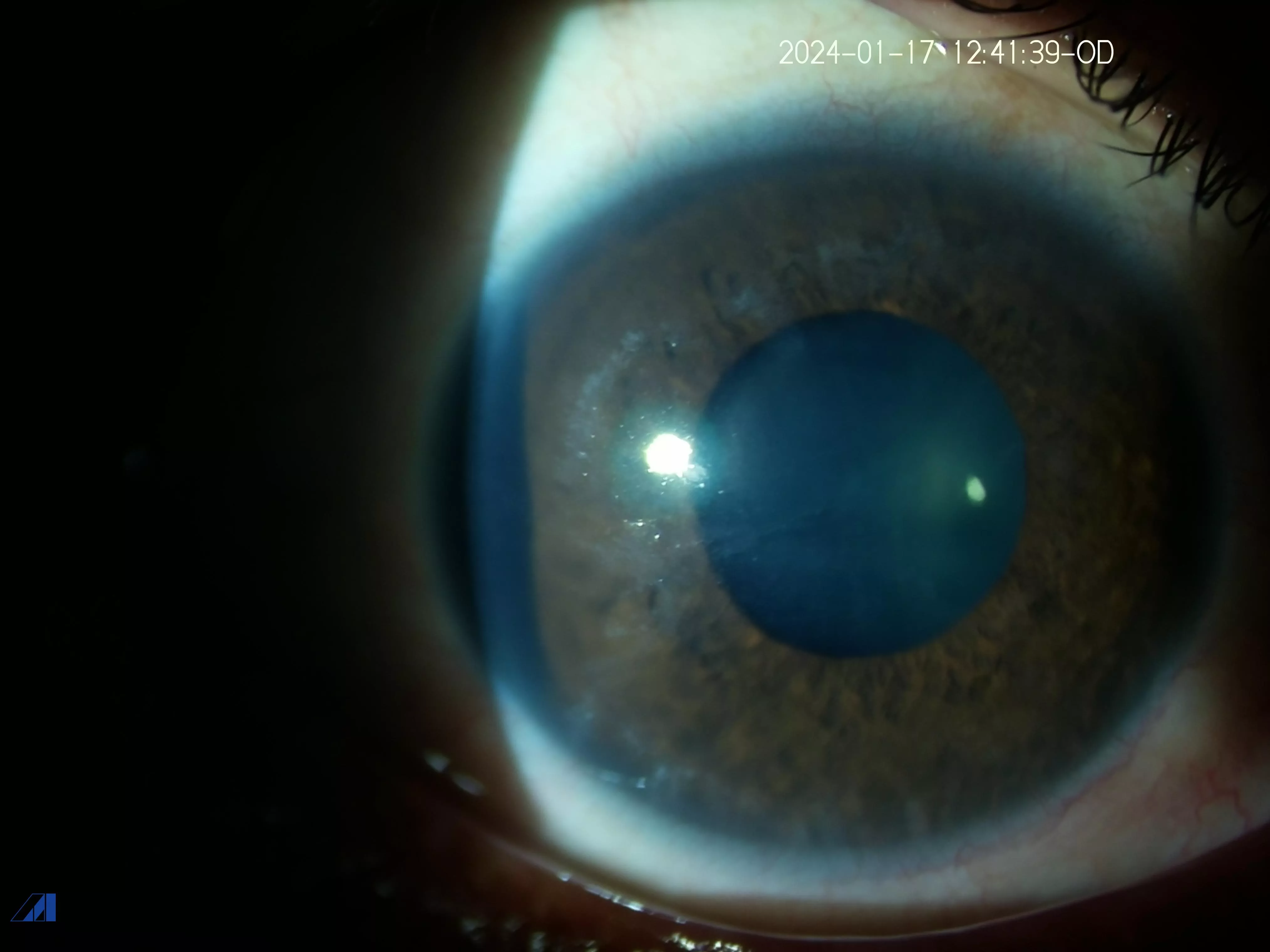
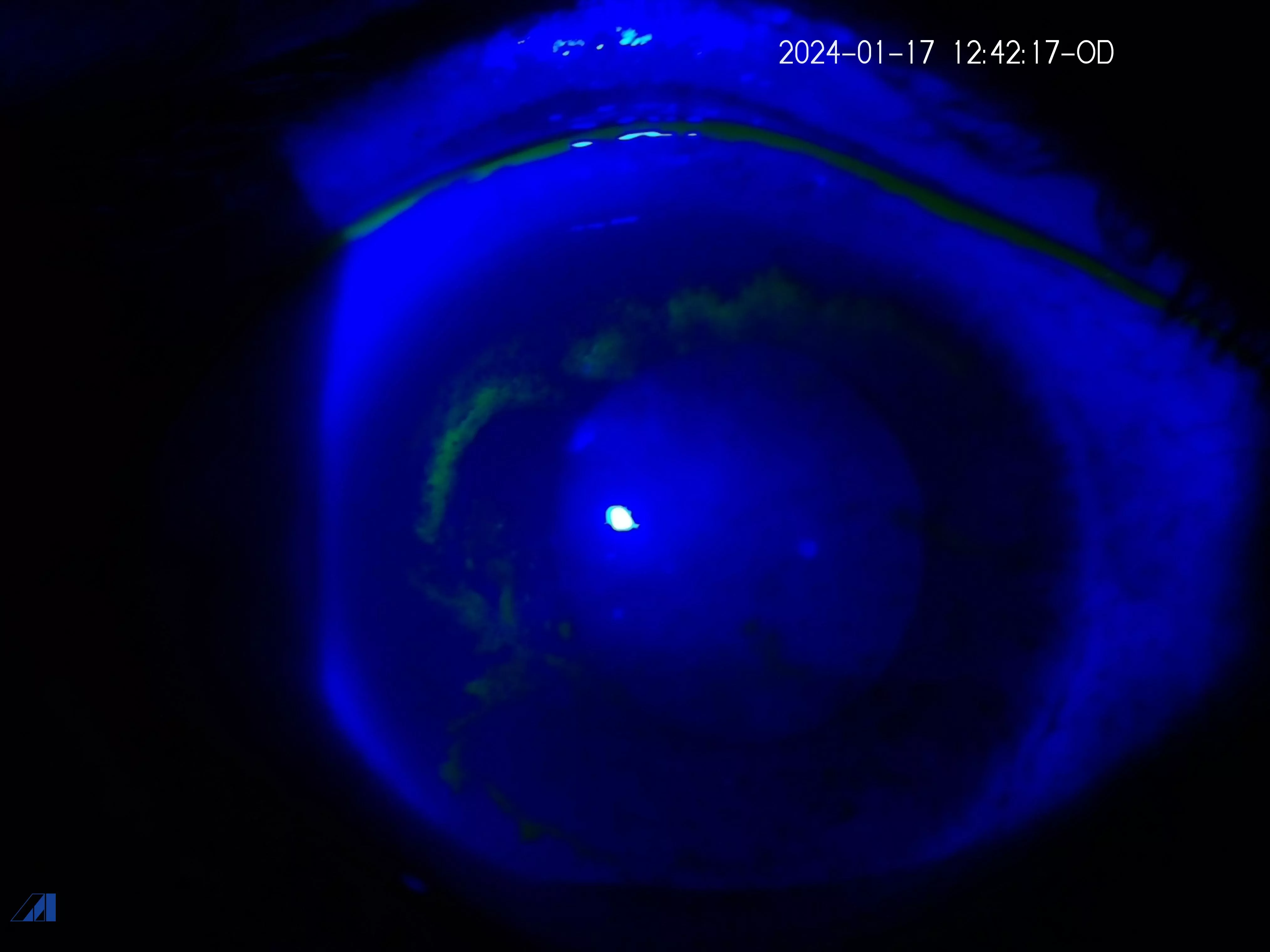
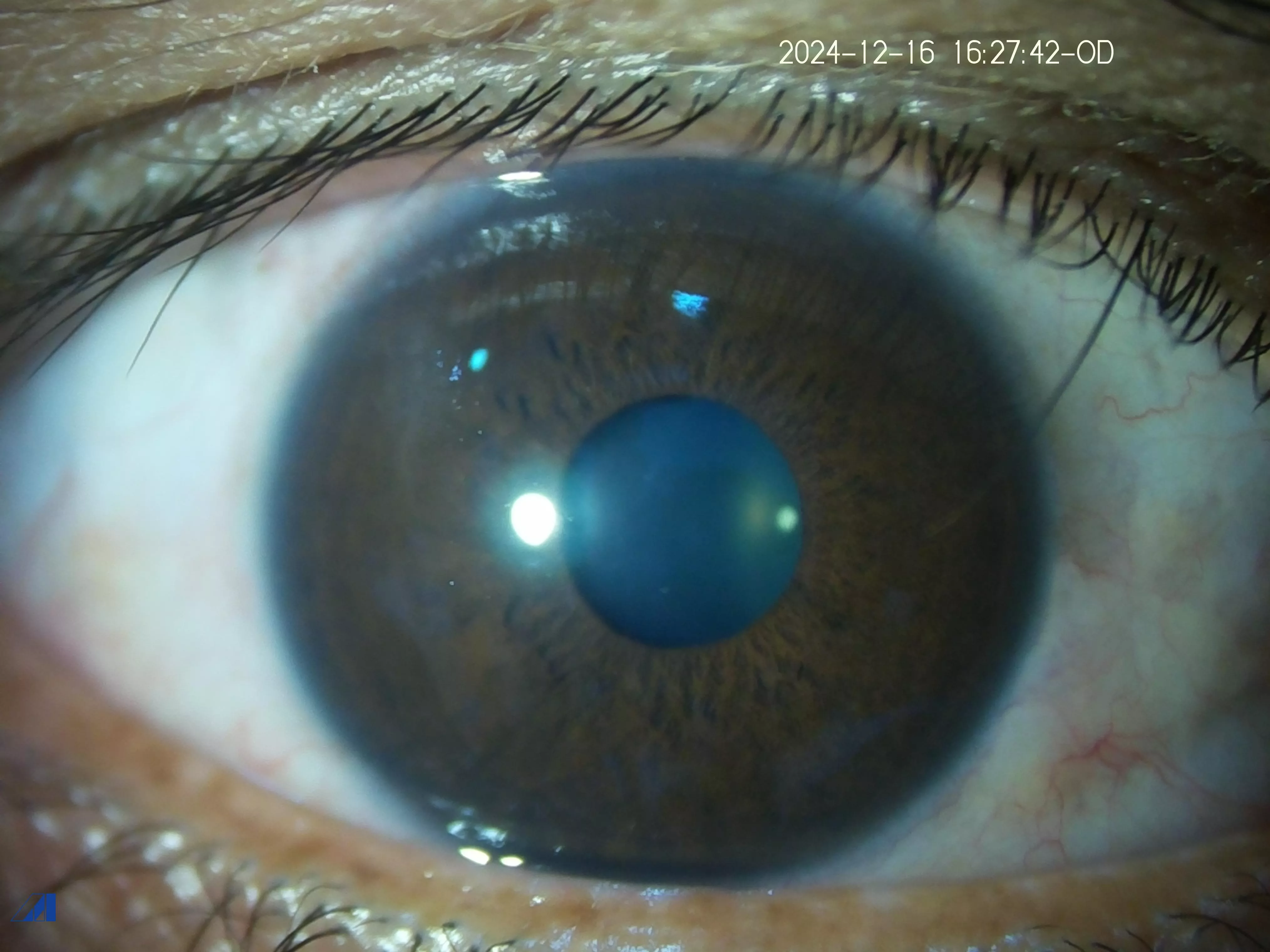

A 40 year female (homemaker)presented with complaints of diminution of vision redness and watering from her right eye since last 2 weeks. There was no significant contributory history of trauma, foreign body, contact lens wear, use of home remedies or any eye surgeries in the past.
On examination on slit lamp her right eye (RE) showed a raised corneal epithelial lesion in a dendritic pattern in superior part of cornea with mild anterior chamber flare; rest findings were normal in RE. LE showed no abnormal findings.
Clinically diagnosing it as herpes simplex viral lesion (dendritic ulcer) topical antiviral eye ointment was started 5times a day along with cycloplegic homatropine eye drops. After 5 days of follow up, cornea showed a similar raised epithelial lesion with dendritic appearance on nasal side of cornea, with disappearance of previous lesion, patient’s symptoms persisted and she did not tolerate acyclovir ointment well. Therefore, the frequency of acyclovir ointment was reduced to 2 times a day and a steroid – antibiotic eye drop was added to the treatment.
On the next follow up after 5 days patient’s cornea showed again the migration of raised epithelial lesion to superior part of the corneal periphery with still reduced vision and mild reduction in her symptoms.
We reviewed the literature thoroughly and the diagnosis of migratory serpiginous corneal epitheliopathy(MSCE ) was made.
MSCE is a rare entity affecting younger individuals between 3 to 4 decades with unknown etiology and usually takes several months to heal.
The plan of management was revised, antivirals were completely discontinued, and the patient was shifted to frequent instillation of artificial tear drops (every 2–3 hours). After two months of treatment, the patient’s cornea cleared with no epithelial lesions or erosions, and vision showed remarkable improvement. Such cases are carefully managed at leading Ophthalmology Hospital in India, where experienced Ophthalmologists in India ensure accurate diagnosis and effective treatment strategies.
MSCE is a unilateral condition affecting young individuals and is characterized by raised epithelium in various geographical shapes that regress centripetally in an amoeboid pattern. Although the definitive cause could not be ascertained, the lesion demonstrated good clinical response to frequent instillation of artificial tear drops within 2 to 3 months. Advanced evaluation and management at a specialized Ophthalmology Hospital in India, under the care of skilled Ophthalmologists in India, can significantly improve patient outcomes.
The term MSCE is used for three reasons, as the lesions were:
-
Migratory on every presentation
-
Serpiginous in appearance
-
Confined to the corneal epithelium