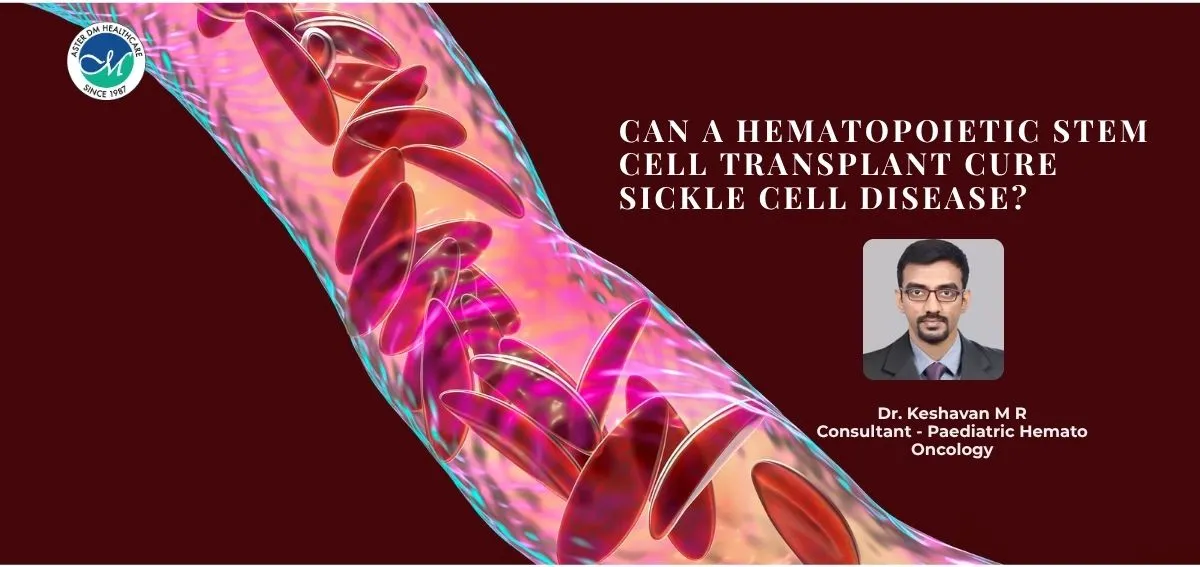

Sickle Cell Disease (SCD) is a hereditary blood disorder that affects millions of people worldwide. Characterized by abnormal hemoglobin production, the disease causes red blood cells to become rigid and sickle-shaped, leading to chronic anemia, severe pain episodes, organ damage, and reduced quality of life.
While supportive treatments and medications can help manage symptoms and complications, many patients and families ask an important question:
Can Sickle Cell Disease be cured?
The answer is yes. Bone Marrow Transplant (BMT), also known as Hematopoietic Stem Cell Transplantation (HSCT), is currently the only established curative treatment for Sickle Cell Disease. This advanced therapy is offered through specialized Hemato-Oncology and Bone Marrow Transplant services, where multidisciplinary experts provide comprehensive care for complex blood disorders.
Understanding Sickle Cell Disease
Sickle Cell Disease is an inherited condition caused by a mutation in the gene responsible for producing hemoglobin, the protein that carries oxygen in red blood cells.
Instead of maintaining their normal flexible, round shape, red blood cells become rigid and crescent-shaped. These misshapen cells can obstruct blood flow through small blood vessels, resulting in complications such as:
- Recurrent painful crises
- Severe anemia
- Increased risk of infections
- Stroke
- Lung complications
- Kidney and liver damage
- Delayed growth and development in children
The disease often requires lifelong medical care and can significantly impact daily activities and overall well-being.
What is a Bone Marrow Transplant?
Bone marrow is the spongy tissue found inside bones that produces blood-forming cells. During a Bone Marrow Transplant, unhealthy bone marrow is replaced with healthy stem cells collected from a compatible donor, enabling the body to produce normal blood cells.
The goal is to establish a new blood-producing system that generates normal red blood cells instead of sickle-shaped cells.
Once successful, the transplant can eliminate the underlying cause of the disease and provide a long-term cure.
How Does Bone Marrow Transplant Cure Sickle Cell Disease?
The procedure involves several steps:
1. Finding a Suitable Donor
The best outcomes are generally achieved when stem cells come from a Human Leukocyte Antigen (HLA)-matched sibling donor. If a matched sibling is unavailable, transplantation using a matched unrelated donor or a haploidentical (partially matched) family donor may be considered based on the patient's clinical condition and donor availability.
2. Pre-Transplant Evaluation
A comprehensive assessment is performed to evaluate the patient's overall health, organ function, and suitability for transplantation.
3. Conditioning Therapy
Before receiving donor stem cells, patients undergo chemotherapy-based conditioning treatment to prepare the bone marrow for the transplant.
4. Stem Cell Infusion
The healthy donor stem cells are administered through an intravenous infusion, much like a routine blood transfusion. After entering the bloodstream, these cells travel to the bone marrow, where they begin producing healthy blood cells.
5. Engraftment and Recovery
The transplanted stem cells migrate to the bone marrow and begin producing healthy blood cells. This process, known as engraftment, typically takes several weeks.
If successful, the newly formed blood cells produce normal hemoglobin, effectively curing the disease.
Who is Eligible for Bone Marrow Transplant?
Not every patient with Sickle Cell Disease is an immediate candidate for transplantation. Eligibility depends on several factors, including:
- Severity of the disease
- Frequency of pain crises
- History of stroke or organ complications
- Availability of a suitable donor
- Overall health status
- Age and transplant risk assessment
A detailed evaluation by a multidisciplinary transplant team helps determine whether transplantation is the most appropriate treatment option.
Benefits of Bone Marrow Transplant in Sickle Cell Disease
A successful transplant can offer life-changing benefits, including:
- Cure of Sickle Cell Disease
- Elimination or significant reduction of pain crises
- Improved hemoglobin levels
- Reduced risk of stroke and organ damage
- Better growth and development in children
- Improved quality of life
- Reduced need for lifelong medications and hospitalizations
Many patients are able to return to normal daily activities and enjoy a healthier future after successful transplantation.
Are There Risks?
Like any advanced medical procedure, Bone Marrow Transplant carries potential risks, including:
- Infections
- Graft-versus-host disease (GVHD)
- Graft failure
- Bleeding complications
- Organ-related side effects
- Mortality
However, advances in transplant techniques, supportive care, infection prevention, and donor selection have significantly improved outcomes over the years.
A careful risk-benefit discussion with transplant specialists is essential before proceeding with treatment.
Why Early Evaluation Matters
Early referral to a transplant center can be crucial. Evaluating patients before severe organ damage develops may improve transplant outcomes and long-term health.
Families of children diagnosed with Sickle Cell Disease should discuss transplant options with a hematologist, especially if a matched sibling donor is available.
Bone Marrow Transplant Services at Aster MIMS
At Aster MIMS, our Hemato-Oncology and Bone Marrow Transplant team provides comprehensive care for patients with Sickle Cell Disease and a wide range of benign and malignant blood disorders. From advanced diagnostic evaluation and donor matching to transplantation and long-term follow-up, our multidisciplinary specialists deliver personalized, evidence-based care.
Our services include advanced Hematopoietic Stem Cell Transplantation (HSCT), expert management of complex blood disorders, and comprehensive supportive care before, during, and after transplantation. Our goal is not only to manage disease but also to offer curative treatment options whenever possible, helping patients achieve healthier and more fulfilling lives.
Conclusion
Sickle Cell Disease can have a profound impact on patients and their families. While medications and supportive therapies help control symptoms, Bone Marrow Transplant remains the only established curative treatment available today.
For eligible patients, a successful transplant can eliminate the disease, prevent future complications, and significantly improve quality of life. Early consultation with a Hemato-Oncology specialist and Bone Marrow Transplant team can help determine the most appropriate treatment pathway and improve the chances of a successful cure.
At Aster MIMS, our Hemato-Oncology, Hematology, and Bone Marrow Transplant specialists provide comprehensive, evidence-based care for patients with Sickle Cell Disease and other complex blood disorders. With advanced transplant expertise and a patient-centered multidisciplinary approach, we are committed to delivering the highest standard of care and helping patients achieve healthier, brighter futures.