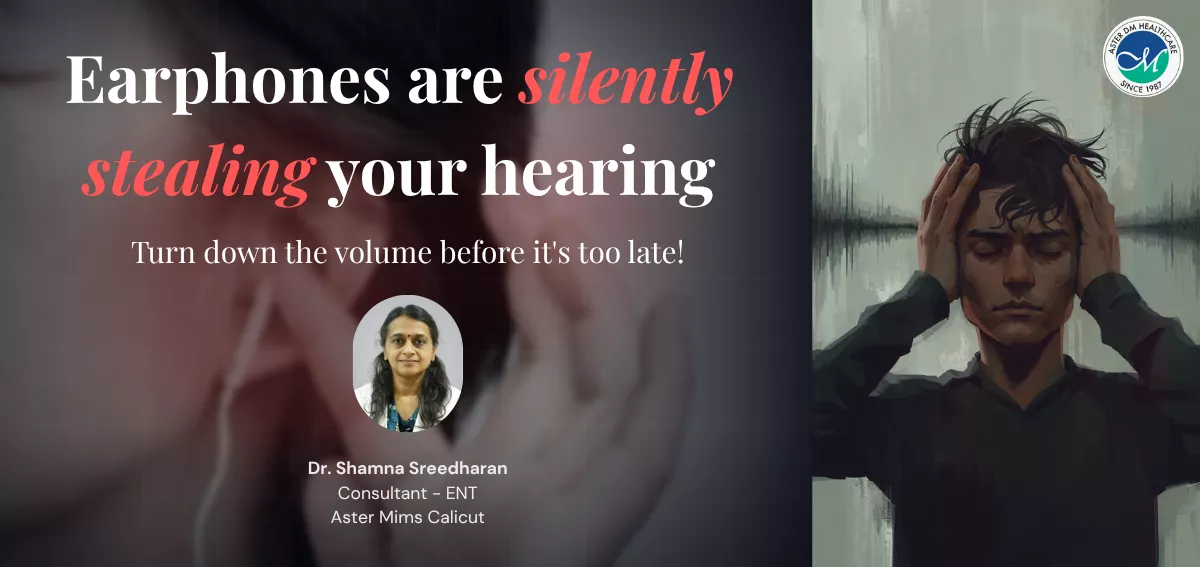

In today’s digital world, earphones and earbuds have become an essential part of daily life. Whether for work calls, online meetings, music, or entertainment, many people use them for several hours a day. While these devices offer convenience and privacy, excessive and improper use can significantly impact your hearing health.
This blog explains how earphones can affect your ears, the warning signs to watch for, and simple steps to protect your hearing.
The Hidden Risk of Excessive Earphone Use
With the rise of smartphones and streaming platforms, prolonged earphone usage has become common—especially among young people. However, this habit can lead to Noise-Induced Hearing Loss (NIHL), a condition caused by continuous exposure to loud sounds.
According to global health estimates, nearly one in four people may experience some form of hearing impairment. One of the leading contributors, particularly among youth, is the overuse of earphones and earbuds at high volumes.
How Does Sound Damage Hearing?
The harmful effects of sound depend on three key factors:
- Volume (Intensity of sound)
- Distance from the sound source
- Duration of exposure
Earphones are especially risky because they deliver sound directly into the ear canal, reducing the distance and increasing the impact on sensitive structures inside the ear.
Understanding Safe Sound Levels (Decibels)
Sound intensity is measured in decibels (dB):
- Normal conversation: 30–60 dB
- Loud conversation: 70–90 dB
- Earphones at high volume: 80–110 dB
Important thresholds:
- Exposure to 85 dB for more than 8 hours can damage hearing over time
- Sounds above 120 dB can cause immediate pain and harm
Many people unknowingly listen at unsafe levels, especially in noisy environments.
What Happens Inside the Ear?
Inside your inner ear is a spiral-shaped structure called the cochlea, filled with fluid and tiny hair cells. These hair cells convert sound vibrations into electrical signals that the brain interprets as sound.
When exposed to loud noise:
- Hair cells experience excessive stress
- Repeated exposure damages or destroys them
- Damaged hair cells do not regenerate
This leads to permanent hearing loss.
Why Using Earphones During Travel Is Risky
When you’re in traffic or public transport, background noise levels can reach 70–80 dB. To overcome this, people often increase their earphone volume to 90 dB or more.
This results in:
- Double exposure (background noise + high earphone volume)
- Increased strain on the inner ear
- Higher risk of long-term hearing damage
Over time, this habit can lead to significant or even complete hearing loss.
Warning Signs You Should Not Ignore
Hearing loss doesn’t happen overnight—it develops gradually. Watch for these early symptoms:
- Ringing or buzzing in the ears (Tinnitus)
- Difficulty understanding conversations
- Trouble hearing in noisy environments
- Frequently increasing TV or music volume
- Feeling of fullness or blockage in the ear
If you notice any of these signs, consult an ENT specialist promptly.
Safe Earphone Usage: Practical Tips
Follow the 60-60 Rule
One of the simplest and most effective guidelines:
- Keep volume below 60% of maximum
- Limit usage to 60 minutes at a stretch
Take Regular Breaks
Give your ears time to recover by avoiding continuous use for long hours.
Use Noise-Cancelling Headphones
These reduce background noise, so you don’t need to increase the volume.
Avoid Using Earphones in Noisy Environments
Try not to use them in traffic or crowded places where you’ll be tempted to turn up the volume.
Monitor Volume Levels
If someone next to you can hear your music, your volume is too high.
Don’t Ignore Symptoms
Early intervention can prevent permanent damage.
When Should You See a Doctor?
Seek medical advice if you experience:
- Persistent ringing in the ears
- Sudden or gradual hearing loss
- Ear blockage or discomfort
- Difficulty in understanding speech
Early diagnosis and treatment can help preserve your hearing.
Conclusion
Earphones have become a necessity in modern life, but careless use can have serious consequences for your hearing. Since hearing damage is often irreversible, prevention is the key.
By following simple habits like controlling volume, limiting usage time, and taking breaks, you can enjoy your devices without compromising your ear health.