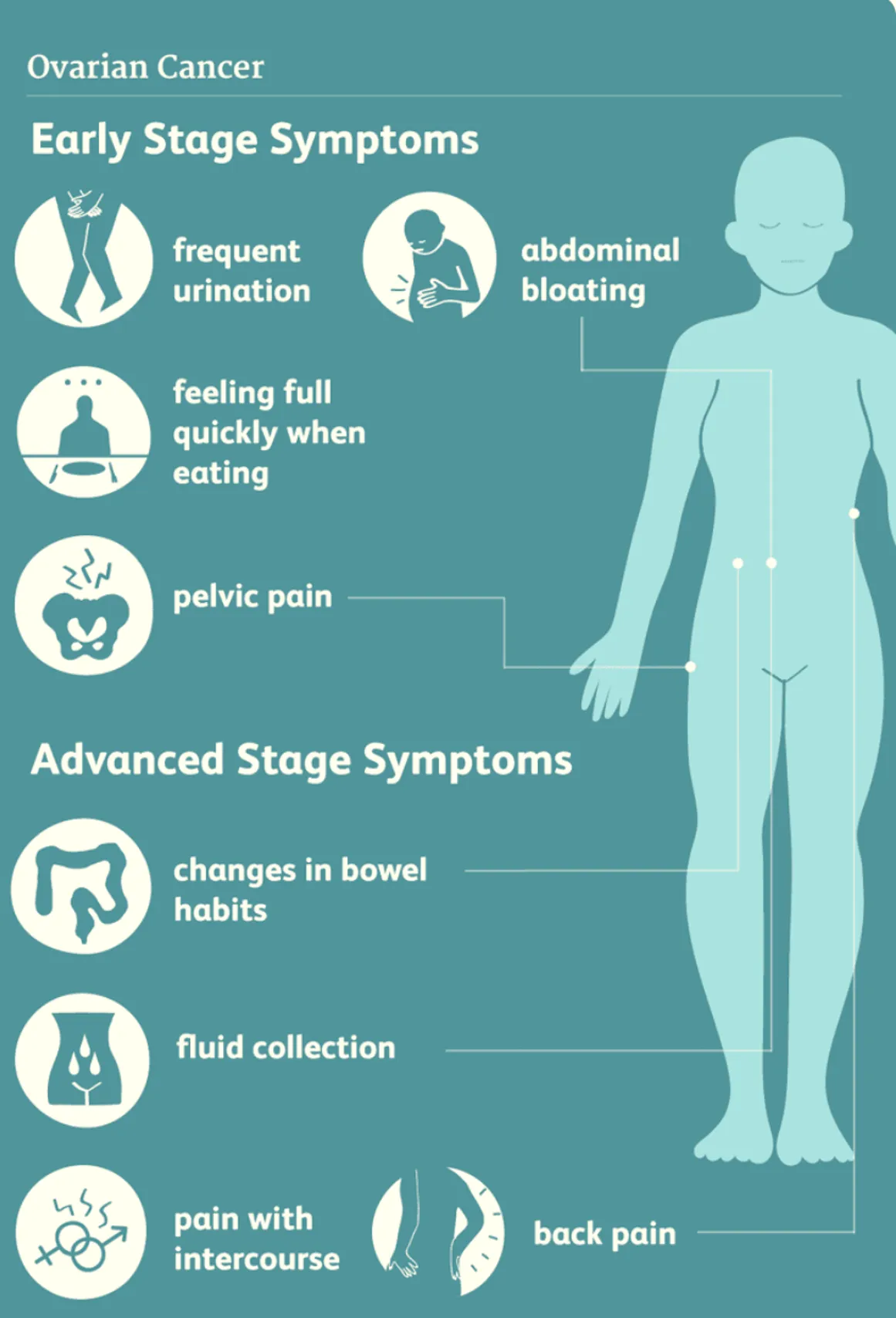

Ovarian cancer is often called the “silent disease” because its early signs can be subtle, non-specific, and easy to overlook. Symptoms such as bloating, pelvic discomfort, frequent urination, and feeling full quickly are common complaints that many women attribute to digestive issues, urinary infections, hormonal changes, or ageing. Individually, these symptoms may appear harmless. Together, especially when they persist for weeks, they can signal something more serious. This is one of the reasons ovarian cancer remains a significant health concern worldwide. In India, approximately 47,000 to 52,000 women are diagnosed with ovarian cancer each year, and nearly 33,000 lose their lives to the disease annually. More concerningly, over 70% of cases are detected only after the cancer has reached an advanced stage, when treatment becomes more challenging. Understanding the symptoms, risk factors, and diagnostic process can play an important role in identifying ovarian cancer earlier and improving outcomes.
What Is Ovarian Cancer?
Ovarian cancer develops when abnormal cells in the ovaries begin to grow uncontrollably. The ovaries are part of the female reproductive system and produce eggs and hormones such as oestrogen and progesterone. There are different types of ovarian cancer, but the majority arise from the cells that cover the outer surface of the ovary. Although ovarian cancer can occur at any age, it is more commonly diagnosed in women after menopause. Because the ovaries are located deep within the pelvis, small tumours often grow unnoticed during the early stages. This contributes to delayed diagnosis and is one of the reasons ovarian cancer is often referred to as a silent disease.
Symptoms of Ovarian Cancer to Watch For The challenge with ovarian cancer is not that symptoms are absent. The challenge is that they are often mistaken for more common and less serious conditions.
The following symptoms are among the most frequently reported early signs of ovarian cancer:
Persistent Bloating
Occasional bloating is common and is often linked to diet or digestive issues. However, ovarian cancer-related bloating tends to be persistent and occurs almost daily. Many women describe a feeling of abdominal fullness or swelling that does not improve over time.
Pelvic Pain or Pressure
A persistent feeling of heaviness, pressure, or discomfort in the lower abdomen or pelvis should not be ignored, particularly when it occurs regularly and has no obvious cause.
Feeling Full Quickly
Also known as early satiety, this symptom refers to feeling unusually full after eating only a small amount of food. When this change in appetite persists, it may warrant further evaluation.
Frequent Urination
As an ovarian tumour grows, it may press against nearby organs, including the bladder. This can lead to urinary urgency, increased frequency, or the sensation of needing to urinate more often than usual.
Changes in Bowel Habits
Some women may also experience constipation, indigestion, or other unexplained changes in bowel habits. While these symptoms are often related to benign conditions, persistent changes should be assessed by a healthcare professional.
Unexplained Fatigue Ongoing tiredness that does not improve with rest can occur in many medical conditions, including ovarian cancer.
If any of these symptoms occur frequently and persist for more than two to three weeks, medical evaluation is recommended.
Who Is at Higher Risk of Ovarian
Although ovarian cancer can affect any woman, certain factors can increase the risk.
1. People with BRCA1 and BRCA2
Gene Mutations BRCA1 and BRCA2 are genes that normally help repair damaged DNA. Inherited mutations in these genes increase the lifetime risk of ovarian and breast cancer.
2. Family History of Ovarian or Breast Cancer
Women with multiple close relatives diagnosed with ovarian or breast cancer, particularly at younger ages, may have an inherited predisposition to the disease.
3. People WIth Lynch Syndrome
Lynch syndrome is an inherited condition that increases the risk of several cancers, including ovarian cancer.
4. Age
The risk of ovarian cancer increases with age, particularly after menopause. Persistent symptoms in women over 50 should always be evaluated carefully.
How Is Ovarian Cancer Diagnosed?
Since there is no routine screening test, diagnosis often begins when symptoms prompt further investigation. Your doctor will begin with a thorough medical evaluation, which may include a pelvic examination. During this examination, the doctor assesses the pelvic organs by gently feeling the abdomen and the internal reproductive organs. The external genitalia, vagina, and cervix are also examined for any visible abnormalities. While a pelvic examination can sometimes identify enlarged ovaries or other abnormalities, very small ovarian tumours may not be detectable through a physical examination alone. As a tumour grows, it may place pressure on nearby structures such as the bladder or rectum, making abnormalities easier to identify during a pelvic or rectovaginal examination.
To obtain a clearer picture and confirm a diagnosis, your doctor may recommend the following tests:
1. Imaging Tests for Ovarian Cancer
● Ultrasound scan ● CT (Computed Tomography) scan ● MRI (Magnetic Resonance Imaging) These imaging tests provide detailed information about the size, shape, and location of ovarian tumours.
2. CA-125 Blood Test
One of the most widely used tests is the CA-125 blood test, which measures the level of Cancer Antigen 125, a protein that is often elevated in women with ovarian cancer.
3. Laparoscopy
In certain cases, a doctor may recommend a laparoscopy to obtain a closer view of the ovaries and surrounding pelvic organs. Laparoscopy is a minimally invasive procedure in which a thin tube with a camera, called a laparoscope, is inserted through a small incision in the abdomen.
4. Biopsy: The Only Way to Confirm Ovarian Cancer
While blood tests and imaging studies can strongly suggest ovarian cancer, a biopsy is the only test that can definitively confirm the diagnosis. A biopsy involves removing a small sample of tissue from the ovary or tumour and examining it under a microscope.
Can Ovarian Cancer Be Prevented?
There is currently no guaranteed way to prevent ovarian cancer.
However, research has identified certain ways to reduce the risk Factors that may help reduce ovarian cancer risk include:
● Taking contraceptive pills.
● Pregnancy.
● Breastfeeding.
● Surgeries on reproductive organs, such as tubal ligation or hysterectomy.
When to Consult a Specialist?
Now that we understand how subtle and easily overlooked the symptoms of ovarian cancer can be, it is important to remember that treatment outcomes have improved significantly over the past two decades. At Aster RV Hospital, Bangalore, the Aster International Institute of Oncology offers comprehensive and personalised cancer care through a multidisciplinary team of surgical oncologists, medical oncologists, radiation oncologists, and other specialists. Supported by advanced cancer treatment technologies and evidence-based care, the team works together to deliver the most appropriate treatment plan for every patient.
Early diagnosis is the most important factor in successful ovarian cancer treatment.
If you are experiencing persistent symptoms such as bloating, pelvic pain, frequent urination, or feeling full quickly, do not delay seeking medical advice.
Book an appointment with our cancer specialists at Aster RV Hospital for expert evaluation, early diagnosis, and advanced ovarian cancer treatment.
We'll Treat You Well.