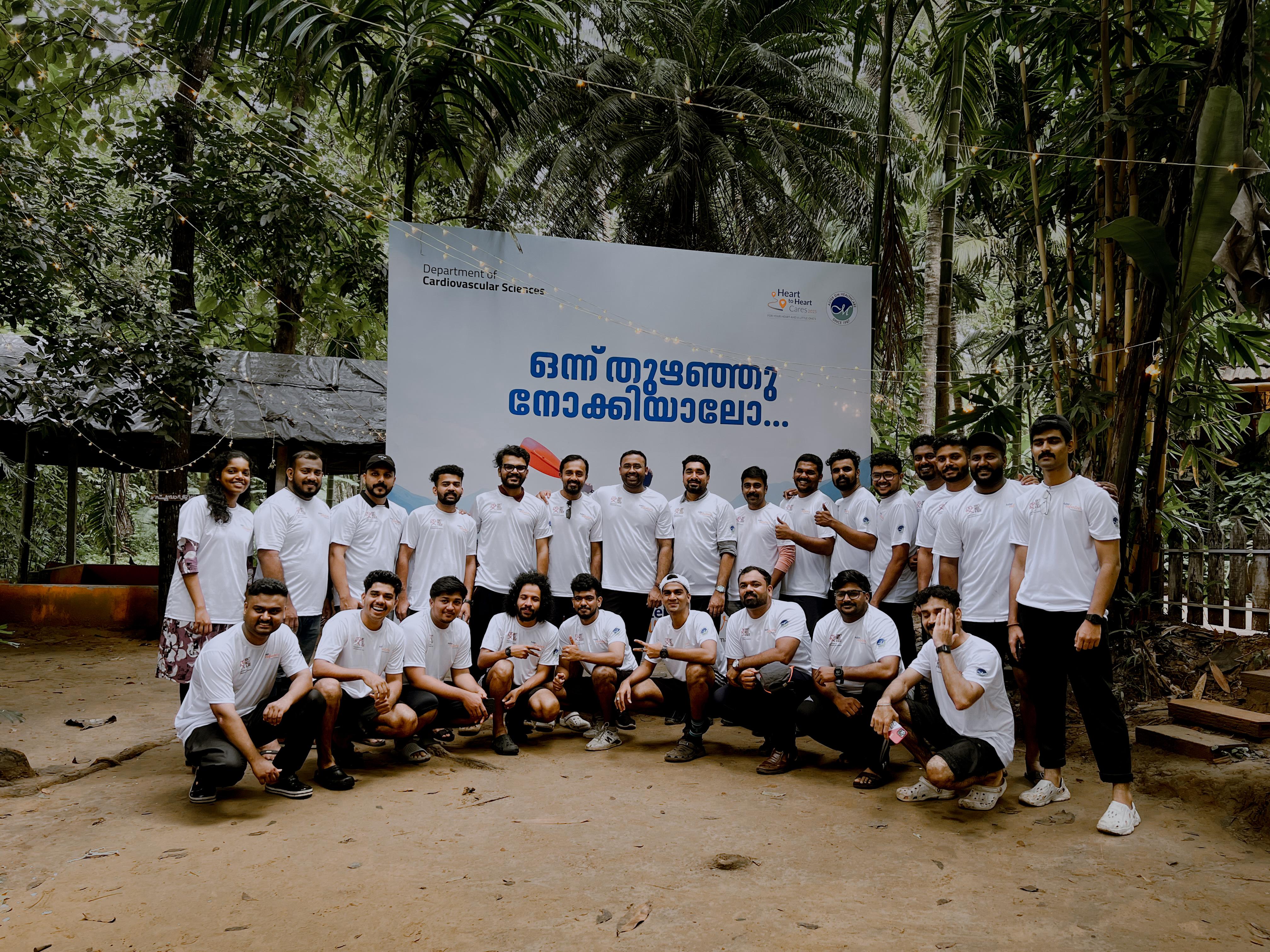

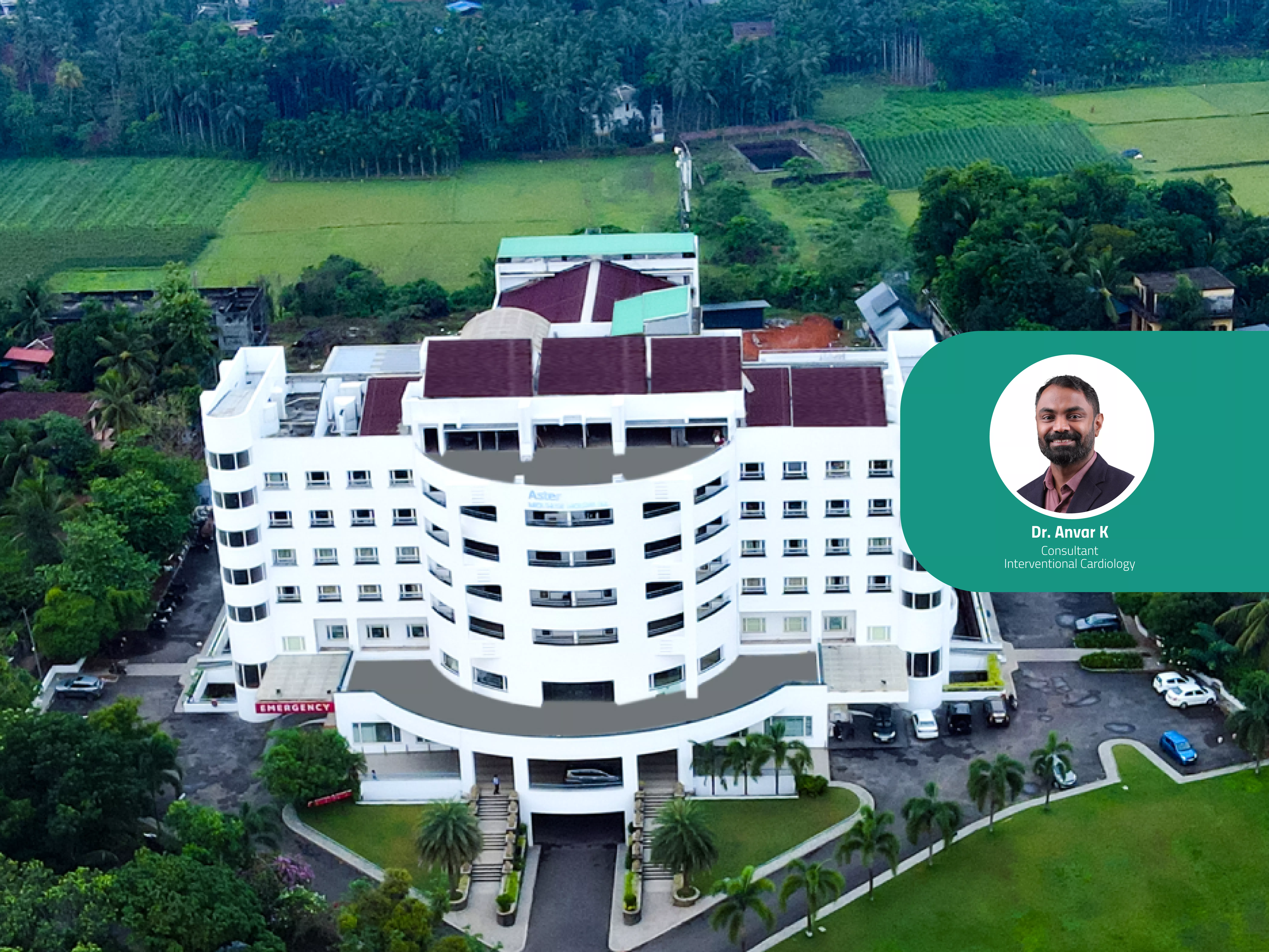
The Department of Cardiology at Aster MIMS Mother Hospital, Areekode is the largest cardiology facility in East Malabar, dedicated to providing compassionate, advanced and patient-focused heart care for people across Areekode, Malappuram, and nearby regions. Our team of experienced cardiologists, skilled cardiac nurses, and trained healthcare professionals work together to diagnose, treat, and manage a wide range of heart and blood vessel conditions with precision and care.
From preventive heart screenings to complex cardiac procedures, we offer complete cardiology services under one roof. Supported by advanced diagnostic technology, a modern Cardiac Catheterization Laboratory (Cath Lab), Coronary Care Unit (CCU), and non-invasive cardiac imaging facilities, we ensure timely diagnosis and effective treatment while promoting faster recovery and better clinical outcomes.
Our department provides 24×7 cardiologist and Angioplasty availability for heart attacks, acute coronary syndromes, heart failure, abnormal heart rhythms and other life-threatening cardiac emergencies. With dedicated Chest Pain services and Primary Angioplasty facilities, our team is prepared to deliver immediate, life-saving treatment when every second counts.
We also have a Dedicated Congenital Heart Disease and Paediatric Cardiology clinic, offering specialised diagnosis, treatment, and long-term care for children and adults living with heart conditions present from birth.
At Aster MIMS Mother Hospital, we believe that good heart health begins with prevention. Along with advanced treatment, we focus on early detection, risk assessment, lifestyle counselling, cardiac rehabilitation and long-term follow-up to help patients lead healthier lives. Every treatment plan is tailored to the individual, combining clinical expertise with compassionate care to deliver the best possible outcomes.
Scope of Services
-
24×7 Availability of Cardiologist
-
24×7 Emergency Cardiac Care
-
24×7 Primary Angiogram & Emergency Angioplasty (PPCI)
-
Advanced Cardiac Catheterization Laboratory (Cath Lab)
-
Chest Pain Evaluation & Rapid Response Unit
-
Diagnostic Coronary Angiography
-
Coronary Angioplasty & Stent Placement
-
Management of Acute Heart Attack (Myocardial Infarction)
-
Heart Failure Evaluation & Management
-
Cardiac Arrhythmia Diagnosis & Treatment
-
Hypertension & Preventive Cardiology Clinic
-
Electrocardiogram (ECG)
-
Echocardiography (2D Echo & Colour Doppler)
-
Treadmill Test (TMT)
-
Holter ECG Monitoring
-
Ambulatory Blood Pressure Monitoring (ABPM)
-
Pre-operative Cardiac Evaluation & Risk Assessment
-
Cardiac Health Check-ups & Preventive Screening
-
Fully Equipped Coronary Care Unit (CCU)
-
Long-term Cardiac Rehabilitation & Follow-up Care
Our Doctors
We have some of the best specialists from around the world, they bring years of experience and offer evidence-based treatment to ensure the best care for you.


FAQs
Want to find out more about the treatment? The answer to your questions can be found below.
What does a Cardiologist do?
A cardiologist examines and evaluates the patient’s cardiovascular system and provides necessary treatment plans according to the patient’s current medical health. They help patients prevent cardiovascular problems, like heart attacks, heart failure, or any kind of heart problem since birth.
What question should you ask a Cardiologist?
Before opting for the cardiologist treatment and surgery, patients must know the side effects of the treatment, precautions required, expected duration of disease curation, specialisation of cardiologists, and their experience. Consult thoroughly to have a better understanding of the best medical treatments.
What are the most common types of conditions that Cardiologists treat?
Expert cardiologists in Whitefield at Aster treat coronary artery disease, heart failure, hypertension, valvular heart disease, congenital heart defects, peripheral artery disease, heart attack, cardiomyopathy, and endocarditis. Consult with cardiologists and experts to know your treatment plan.
When should I consider seeing a Cardiologist?
When you experience symptoms like severe chest pain, dizziness, fainting, palpitations, shortness of breath, swelling in legs, high blood pressure, and diabetic symptoms, they damage blood vessels and heart nerves. Provide complete information to medical staff for effective treatment.
How should I prepare for my first visit to Cardiologist?
Patients must carry their medical history documents, results of recently conducted diagnostic reports, and family heart disease reports and provide complete details if they have high blood pressure, diabetes, or chronic kidney disease. This information helps cardiologists examine patients' health and provide the best treatment plan for them.
What is coronary angiography, and why is it performed?
It's an imaging test that uses X-rays and a contrast dye to map out the coronary arteries and reveal any narrowing or blockages, giving the cardiologist the information needed to plan the next step in treatment.
What are the risks of angiography?
It's considered a very safe procedure. Occasionally there can be bruising or bleeding at the insertion site, a reaction to the contrast dye, or, rarely, injury to the artery.
What's the difference between angioplasty and stent placement?
Angioplasty uses a balloon catheter to widen a narrowed artery. A stent — a small mesh tube — is usually placed right after to hold the artery open and stop it from narrowing again.
Can an artery narrow again after angioplasty?
It's uncommon with today's drug-eluting stents, but it can happen. Sticking to your medications, attending follow-ups, and making lifestyle changes all lower the odds significantly.
When is a pacemaker recommended?
A pacemaker helps when the heart beats too slowly, irregularly, or has an electrical conduction issue that keeps it from pumping efficiently.
Can I use a mobile phone or fly with a pacemaker?
Yes. Simple precautions — like keeping your phone at a distance from the device and letting airport security know you have one — are usually all that's needed.
Does CRT cure heart failure?
No, but paired with medication and lifestyle changes, it can meaningfully improve symptoms, stamina, and day-to-day quality of life.
How are conditions like ASD and VSD treated, and at what age?
Many atrial septal defects and some ventricular septal defects can be closed with a catheter-based device rather than open-heart surgery, depending on the defect's size and location. Timing varies — some are watched during early childhood, while others need earlier intervention — and your cardiologist will guide you based on individual evaluation.
When can I get back to work or normal activity?
It depends on the procedure and your general health. After minimally invasive treatments like angioplasty, many people manage light activity within days and desk work within a week or two; recovery from major surgery takes longer.
How often should I see my cardiologist after treatment?
Your first follow-up is usually within a couple of weeks, with a schedule after that based on your specific procedure — these visits track your recovery, check heart function, and catch any issues early.
How does a Cardiologist decide on a treatment plan?
Cardiologists and medical staff consult with patients regarding available treatment plans and monitor the patient’s and their family's medical history to take a look at any existing genetic conditions that might be affecting their present condition. The cardiologists also assess the possibility of any side effects that may occur as a result of treatment. With the patient’s approval, a treatment plan is put into action.
Will a Cardiologist help manage side effects during treatment?
Yes, trained and specialised cardiologists at Aster thoroughly examine patients’ health progress and diagnostic tests during regular check-ups. This enables them to determine if any side effects have developed as a result of the treatment. They also prevent patients from side effects with the best treatments and care.
What documents should I carry on my first visit to a medical oncologist?
Cardiologists require the patient’s healthcare reports, heart disease reports, diagnostic test results, family heart disease history, and relevant information that influences the treatment plan decisions of expert cardiologists and staff. Detailed patient medical history assists cardiologists in accurately assessing patients' cardiovascular conditions.
How do cardiologists decide if surgery is necessary?
At Aster, expert cardiologists in Bangalore, cardiologists, and medical staff thoroughly study and examine the patient’s medical history and conduct diagnostic tests, stress tests, and cardiac catheterisations. Further, based on the patient’s preferences and medical staff considerations, a treatment decision is formed.
Is emergency cardiac care available 24×7 at Aster MIMS Mother Hospital, Areekode?
Yes. The Department of Cardiology offers 24×7 emergency cardiac care, including rapid evaluation and treatment for heart attacks, acute chest pain, life-threatening arrhythmias, and other cardiac emergencies, supported by an experienced emergency medicine and critical care team.
Is angiography painful, and how long does it take?
It's done under local anaesthesia, so you may notice pressure at the point where the catheter enters, but the procedure itself isn't painful. It usually takes 20–45 minutes, and most patients go home the same day or after a short overnight stay.
How is angiography different from angioplasty?
Angiography is diagnostic — it locates blockages. Angioplasty is the treatment that follows, physically reopening the blocked artery, often with a stent placed to keep it open.
Will I need blood thinners after getting a stent?
Most patients go on dual antiplatelet therapy — typically aspirin plus a second blood-thinning medication — for around 6 to 12 months, though your cardiologist will tailor the duration to your case, to keep clots from forming inside the stent.
Are cardiac procedures painful in general?
Most are done using local anaesthesia, sedation, or general anaesthesia depending on what's involved, and the goal throughout is to keep you comfortable. Any soreness afterward is managed with medication.
Is getting a pacemaker major surgery, and how long does the battery last?
No — it's a minor, local-anaesthesia procedure with sedation, generally done in about an hour through a small incision near the collarbone. The battery typically lasts 8 to 15 years, and regular device checks keep track of its status.
What is cardiac resynchronization therapy (CRT), and who needs it?
CRT is for certain heart failure patients whose heart chambers beat out of sync due to an electrical delay. It helps coordinate the contractions so the heart pumps more effectively.
How is cardioversion different from ablation?
Cardioversion uses electrical energy or medication to reset the heart back into a normal rhythm quickly, but it doesn't address what's causing the arrhythmia — that's what ablation is for.
How should I prepare for a heart procedure?
Your care team will guide you on fasting, medication adjustments, and any pre-procedure blood tests — following these instructions closely helps ensure everything goes smoothly.
Is cardiac rehabilitation necessary, and what's involved?
It's not mandatory for every case, but it's strongly encouraged after events like a heart attack, bypass surgery, or valve procedures. A typical programme includes supervised exercise, dietary counselling, risk-factor management, and education — all shown to improve long-term recovery.
Is it safe for elderly patients to undergo advanced cardiac procedures?
Yes — treatments like angioplasty and pacemaker implantation are routinely performed on older adults once a thorough health assessment confirms they're a good fit.
Blogs
The source of trustworthy health and medical information. Through this section, we provide research-based health information, and all that is happening in Aster Hospital.
News & Events
Stay updated with the latest happenings at Aster Hospitals. Explore our News and Events section for insightful articles, health tips, upcoming events, and noteworthy achievements.