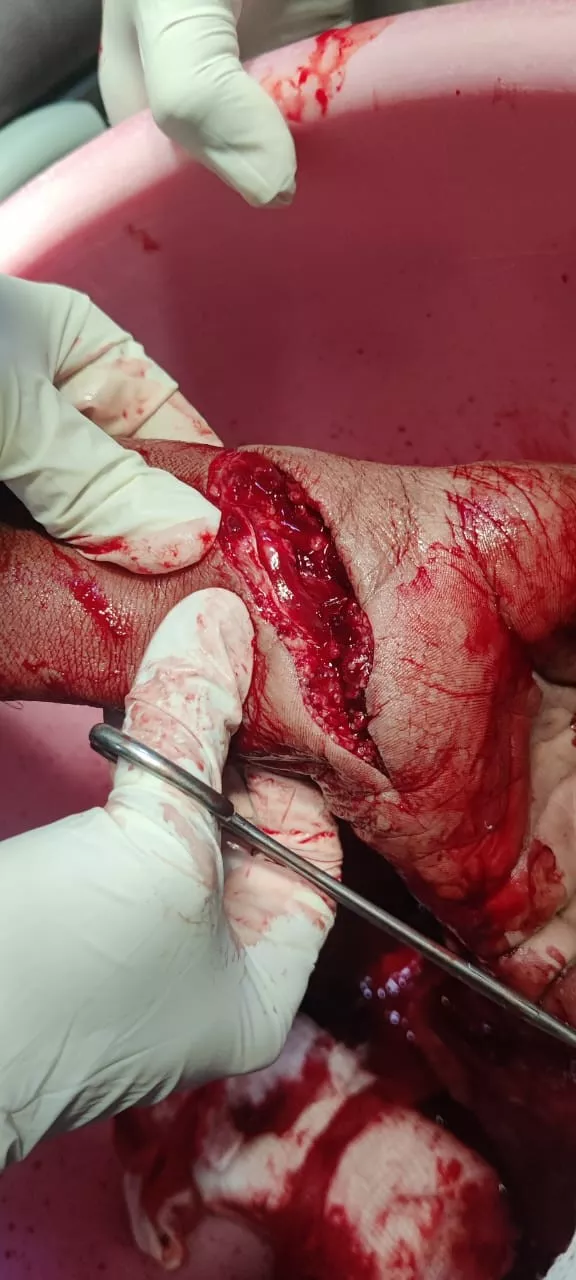
A diagnosis of vascular injury with Zone V flexor tendon and nerve injury was made. The patient and his attendants were counselled regarding the need for emergency surgical exploration and repair, and informed consent was obtained. He was shifted to the operating theatre by 1:30 a.m., and wound exploration was performed under tourniquet control.
Intraoperatively, all structures on the volar (anterior) aspect of the wrist were found to be transected, including the radial and ulnar arteries, median and ulnar nerves, and all 12 flexor tendons. The flexor tendons are responsible for flexion of the wrist and fingers. The median and ulnar nerves provide motor innervation to the intrinsic muscles of the hand and sensory supply to the palm and fingers. The radial and ulnar arteries constitute the primary blood supply to the palm and digits.
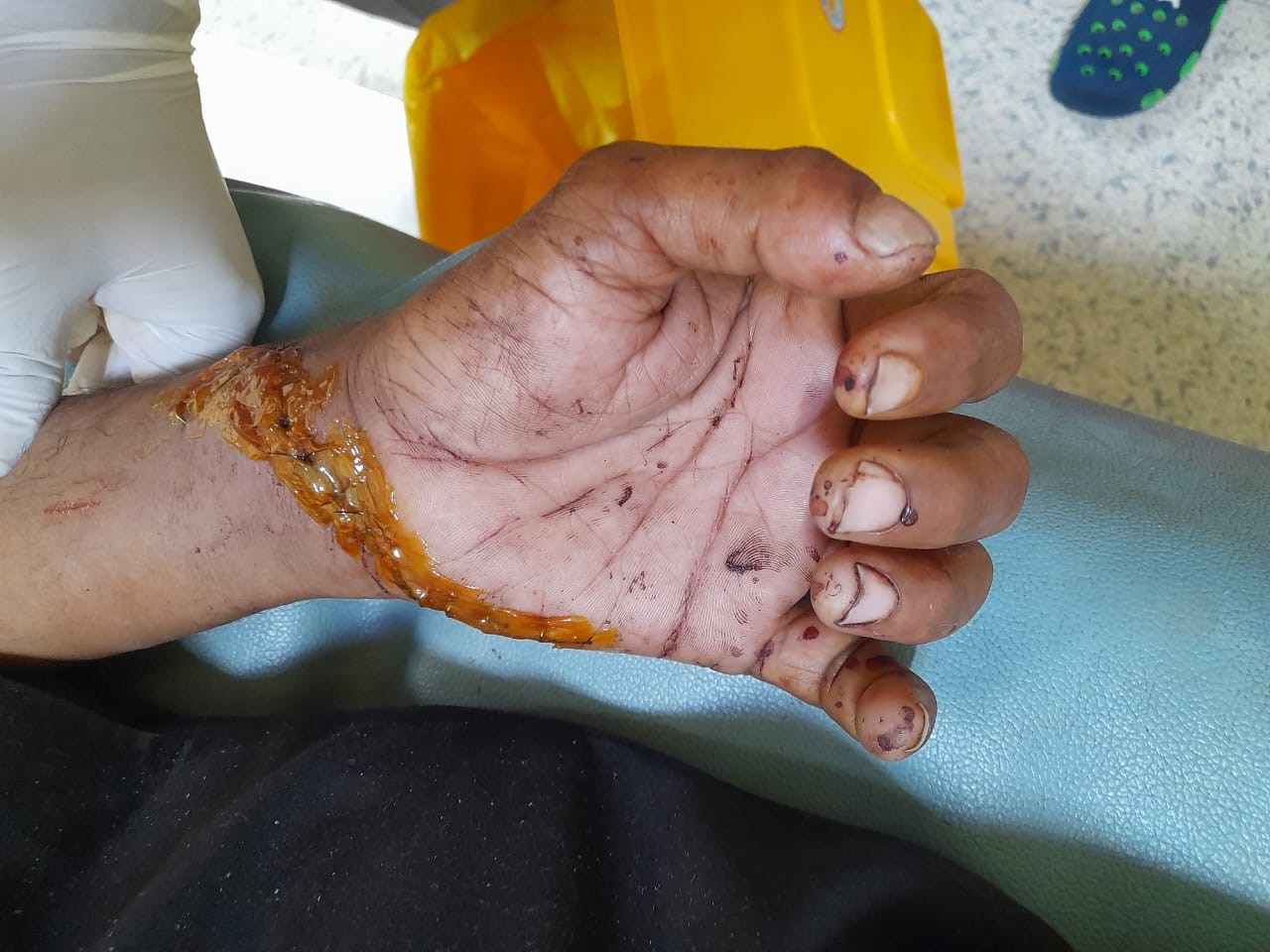
The cut ends of all flexor tendons were identified and repaired first. This was followed by epineural repair of the median and ulnar nerves. Finally, end-to-end anastomosis of both the radial and ulnar arteries was performed. All repairs were carried out under optical magnification. The surgery was completed at approximately 5:00 a.m. At the end of the procedure, the left palm and fingers were pink, warm, and demonstrated bleeding on pin-prick, indicating successful revascularisation. The patient was started on intraoperative heparinization.
The postoperative period was uneventful, and the patient was discharged on the third postoperative day with a viable and well-perfused left hand. This case highlights the critical importance of timely intervention in vascular injuries of the hand. Although the patient presented several hours after the injury, prompt surgical management resulted in a favourable outcome.
Other key factors contributing to successful outcomes include surgical expertise, use of magnification, appropriate instruments, and skilled support staff. The immediate postoperative priority in such cases is the survival of the injured limb. Once vascular viability is ensured, attention is directed toward functional recovery. Controlled mobilisation of the wrist and fingers is typically initiated three weeks postoperatively, followed by intensive physiotherapy, which plays a crucial role in regaining movement.
Sensory recovery is usually the last to occur and may take 6–9 months, with recovery often being partial or patchy. Patient reassurance and thorough counselling regarding the expected course of recovery are essential components of management and significantly contribute to overall patient satisfaction and functional outcome.
.