
Dry eye syndrome has almost become popular, and the blame usually goes to screens, aging, and the long hours of work; however, all these pale into insignificance against the biggest culprit of all-environmental factors or, rather, air pollution. Since the quality of urban air is still unstable, it is relevant for us to understand how pollution affects our eyes.
How air pollution affects the eyes
Air pollution is a mixture of particulate matter, smoke, and dust, along with chemical fume, vehicle emission, and air-borne allergens. All these substances come in direct contact with the surface of the eye to disturb the tear film that is supposed to keep it lubricated and protected. This is one of the causes of dry eyes. The tear film is made up of three layers, i.e., oil, water, and mucus. Pollutants in the air destabilize these layers, leading to the evaporation of moisture that results in a feeling of discomfort.
How does pollution contribute to dry eyes?
Several explanations are offered for this:
Tear film instability
The pollutants settle on the tear film and thus break it down even faster; this causes the tear film to lose its lubricating properties and to dry very fast.
Inflammation of the surface of the eye
Smog, chemicals, and particulate matter irritate the conjunctiva and cornea, thus causing an inflammatory response. Inflammation is one of the factors contributing to decreased tear production.
Reduced blink rate
Normally, people blink less when they are outside in some sort of polluted environment, or when their eyes are simply straining to avoid dust and irritants. The decrease in the number of blinks means less distribution of tears.
Increased oxidative stress
Some pollutants cause oxidative stress to the surface of the eye, and thus the glands responsible for tear production become impaired.
Common symptoms triggered by pollution
Many people note that symptoms worsen on days with particularly high pollution:
- Dryness or grittiness
- Burning sensation
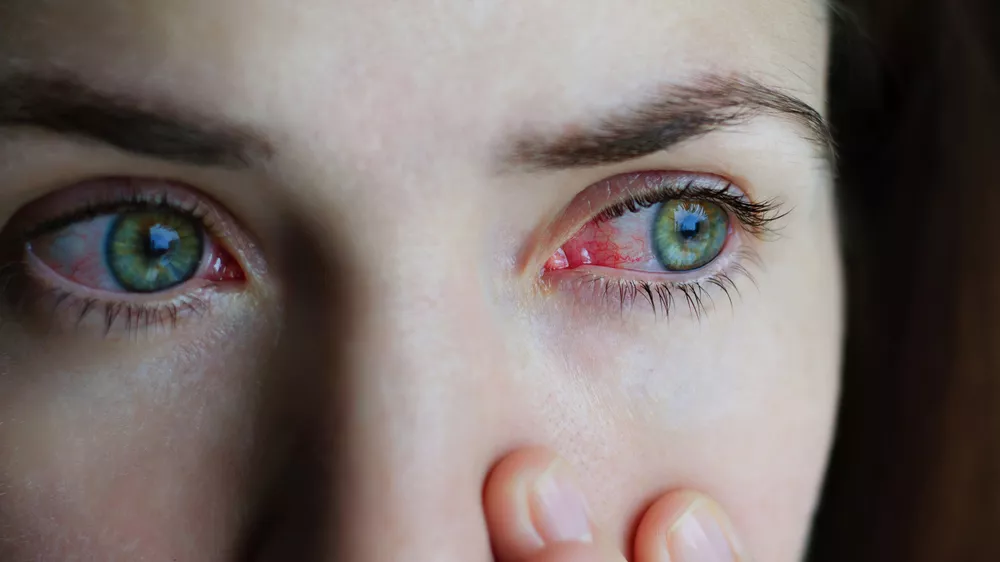
- Redness
- Watery eyes-a reflex response to dryness
- Eye fatigue
- Photosensitivity
These symptoms usually worsen on days when pollution increases or on days when one engages in activities such as going on a trip, being exposed to cigarette smoke, or spending extended hours outdoors on a dusty day.
Who is more likely to be affected?
Air pollution can have a more serious effect on certain people, such as:
- Contact lens wearers
- Individuals with pre-existing dry eye disease
- People with allergies
- Older adults
- Outdoor workers
- People living in highly traffic-congested or industrialized areas.
How do you protect your eyes?
While pollution is something that cannot be totally avoided, discomfort can be lessened through a few practical measures:
Wear eye protection
Wrap-around sunglasses or clear protective glasses can keep your eyes safe from direct contact with dust and particles.
Avoid dry eyes
Artificial tears free from preservatives help maintain the integrity of the tear film and soothe the irritation. This is one remedy for dry eyes that you should be doing.
Don't rub your eyes
That would only worsen the situation through increased inflammation, as well as pushing the irritants deeper into the skin.
Stay indoors when the AQI is high
Indoor air can be purified with air purifiers and, hence, cleaner.
Practice good eye hygiene
This is because warm compresses and eyelid cleaning serve to improve oil gland function and help in stabilizing the tear film.
Hydrate yourself
Proper water intake is one of the ways that supports tear formation.
When should you seek medical advice?
Any signs or symptoms of continuous dryness, vision changes, or growing irritation should be treated by an eye-care professional without further delay. In extremely rare cases, prolonged exposure to pollution may also lead to grave conditions, including allergic conjunctivitis or even chronic tear-film dysfunction.
How does Aster Hospitals help?
At Aster Hospitals, we are fully equipped to take care of every eye health need, offering the following services:
- Tear film analysis
- Dry eye assessment and treatment
- Nutritional guidance given for eye health
- Management of all types of pollution allergies
- If necessary, more advanced therapies such as punctal plugs or prescription medications
Doctors at Aster Hospitals use the most advanced and up-to-date diagnosis technology to find the exact cause of dry eye disease and come up with bespoke treatment plans to relieve the symptoms and treat the disease itself. Our ophthalmologists utilize the most recent diagnostic technology to localize the root cause of dry eye and devise individualized treatment schemes that go beyond mere symptom relief.
Conclusion
Air pollution is one of the main causes of dry eye symptoms. Familiarity with the way environmental irritants affect the surface of the eye can be immensely helpful in the management of discomfort and protection of eye health in the long term. Many issues arising due to polluted air exposure and dry eyes can be managed with ease through simple preventive measures and timely medical intervention at a trusted ophthalmology hospital in India. You may consult experienced ophthalmologists in India for accurate diagnosis, guidance, and personalised eye care advice.
Aster Hospitals form a part of the chain of private hospitals that offer varied levels of healthcare services—from primary and secondary to tertiary and quaternary care. Your needs will be carefully listened to by our specialists, who will assess your condition and, in case it is complex, collaborate with other specialties to arrive at the most suitable treatment plan. Multiple care options are discussed with patients, and the best approach is finalised through cross-functional, cross-specialty committees such as the Tumour Board, which determines the most appropriate line of treatment.