Why Quitting Tobacco Is Harder Than It Looks — And What You Can Do About It
Every year on the 31st of May, World No Tobacco Day comes around with its posters and pledges, and every year I find myself thinking about a conversation I have far too often in my clinic. A patient sits across from me sometimes a young man in his thirties, sometimes someone's grandfather and after I've explained the diagnosis, they ask: "Doctor, if I had stopped earlier, would it have made a difference?" The answer is almost always yes.
I'm a head and neck surgical oncologist. The cancers I treat of the mouth, tongue, throat, voice box are among the most preventable cancers in the world, and among the most disfiguring to treat when they arrive late. India carries one of the highest oral cancer burdens globally, and the reason isn't complicated. More than 90% of my patients with oral cavity cancer use tobacco not always cigarettes, but gutka, khaini, pan masala, betel quid, bidi. Forms that never attracted the same public attention as smoking but cause the same damage, often worse.
The Tobacco Problem India Doesn't Talk About Enough
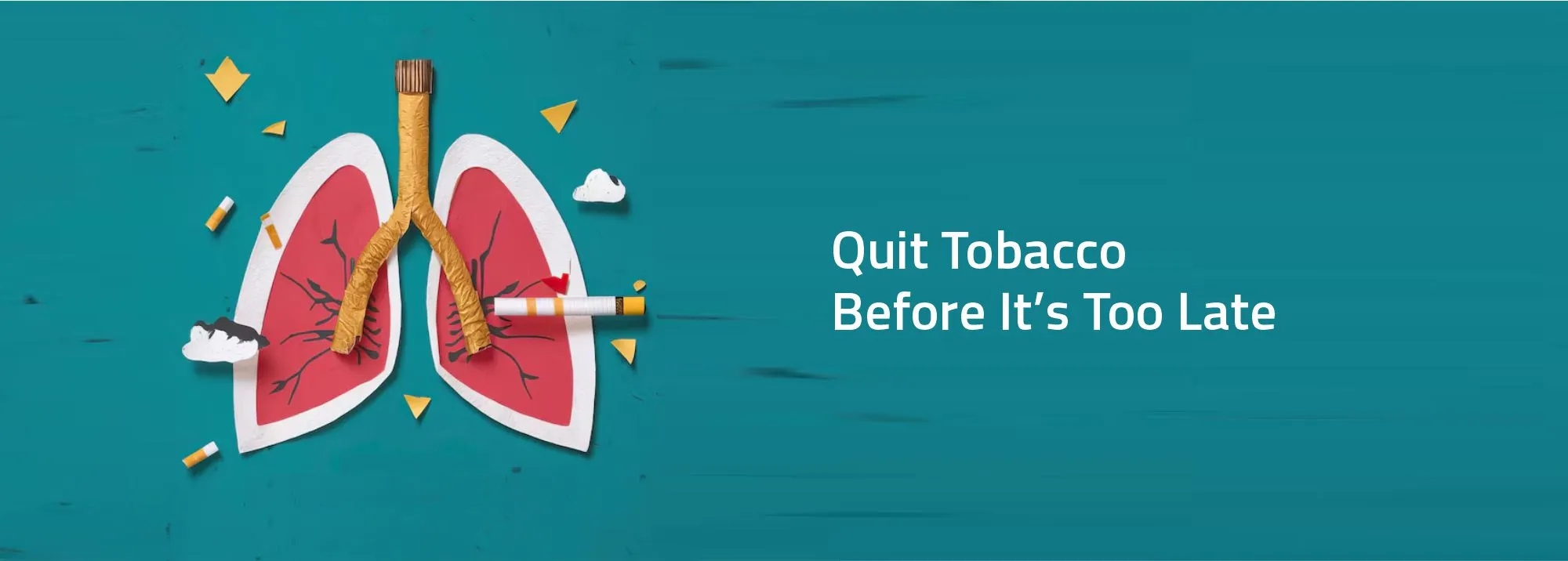
Smokeless tobacco is the real epidemic. It increases oral cancer risk by up to twelve times higher than smoked forms yet because there's no smell, no visible smoke, it doesn't register as a health risk the way a cigarette does. For many people using it, it isn't really thought of as tobacco at all. It's something done after meals, during breaks, at social gatherings. Something their father did. Something available at every corner shop for a few rupees.
Oral submucous fibrosis a precancerous condition caused almost entirely by areca nut and betel quid is something I see constantly in Bengaluru. Patients come in unable to open their mouths fully, a stiffness that crept in so gradually they adjusted without realizing anything was wrong. Some of them have been living with a white patch or a restricted jaw for years by the time they sit in front of me. That gap between first warning signs and a frank cancer is exactly where things can still be turned around.
Why Quitting Is Actually Difficult
Something I've noticed over years of practice is that patients who haven't managed to quit often carry a layer of guilt about it as if it were a failure of character rather than a pharmacological problem.
Nicotine is one of the most addictive substances known. In smokeless forms, the absorption is prolonged, keeping blood levels elevated and the dependence deeper. The withdrawal irritability, poor sleep, difficulty concentrating, cravings that hit without warning peaks in the first week but doesn't always disappear quickly. People know this from their own attempts. Most have tried.
What's harder to account for is the habit layer on top of the addiction. For many patients, tobacco use is attached to specific moments in the day after a meal, during a tea break, at a work site with the same colleagues for fifteen years. These are conditioned responses, not just cravings, and they persist long after the physical withdrawal has passed. Breaking the habit means navigating those moments differently, repeatedly, until new patterns take hold. That's genuinely hard,and framing it as a matter of willpower sets most people up to feel like they've failed when they haven't.
What's Available for Cessation in India
The evidence is consistent: combining behavioral counselling with medication works significantly better than either alone. The WHO formalized this in clinical guidelines for tobacco cessation for the first time in 2024.
In India, three pharmacological options are available:
Nicotine Replacement Therapy (NRT)
Nicotine gum sold as Nicotex or Nicogum, available without prescription. It takes the edge off withdrawal in the early weeks by providing controlled nicotine without the carcinogens. A useful bridge, particularly for people making their first structured attempt.
Varenicline (Champix)
Prescription only, and not always easy to find at a local pharmacy, but it is available. Works directly on nicotine receptors in the brain, reducing both craving and the reward of using. The evidence behind it is strong it more than doubles quit rates compared to no medication.
Bupropion (Bupron)
Another prescription option, originally an antidepressant, that works on overlapping brain pathways. An alternative for people who can't use NRT.
The National Tobacco Quitline - 1800-11-2356
Is free and available across India. Aster's tobacco cessation service offers structured counselling alongside pharmacotherapy for those who want a more comprehensive programme.
What to Watch For: Early Detection
Nearly half of oral cancers in India are diagnosed at an advanced stage not because the disease appears without warning, but because the early signs are painless and easy to explain away.
For anyone who uses tobacco in any form, a few things are worth knowing:
A white or red patch inside the mouth that doesn't go away after two weeks needs to be looked at. So does a mouth ulcer that isn't healing, progressive difficulty opening the jaw, a lump in the neck, persistent hoarseness, or trouble swallowing that's getting worse rather than better.
A visual oral examination takes a few minutes. Found early at the stage of leukoplakia, erythroplakia, or early submucous fibrosis treatment is relatively straightforward and outcomes are good. The gap between early and late detection in the cancers I treat translates directly into the scale of surgery required, the likelihood of complications, and the impact on function and quality of life. It's a gap worth closing.
A Closing Thought
The pattern I see most often isn't someone who didn't try to quit. It's someone who tried without adequate support, didn't make it, and concluded that quitting wasn't possible for them. The pharmacological and counselling options that exist now are meaningfully better than what was available a decade ago and underused, partly because people don't know they're there. World No Tobacco Day is as good a reason as any to look into what's actually available.