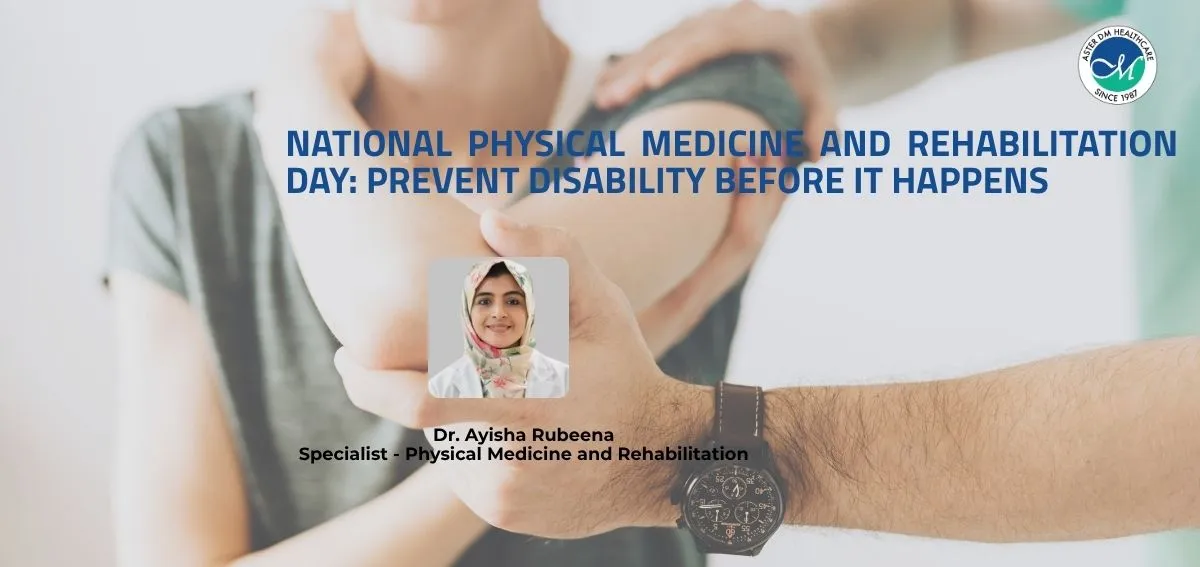
Every year on July 6, India observes National Physical Medicine and Rehabilitation (PMR) Day, an initiative introduced by the Indian Association of Physical Medicine and Rehabilitation (IAPMR) to raise awareness about the importance of rehabilitation medicine. The day carries a simple yet powerful message: “Rehab is Essential, Not Optional ”
For many people, rehabilitation is something they associate only with recovery after a serious injury, surgery, or stroke. However, Physical Medicine and Rehabilitation (PMR) is much more than post-injury care. It is a specialized branch of medicine that focuses on preventing disability, restoring function, relieving pain, and enabling people to lead active, productive, and independent lives at every stage of life.
What is Physical Medicine and Rehabilitation?
Physical Medicine and Rehabilitation (PMR), also known as Physiatry, is a comprehensive, patient centered medical specialty that focuses on restoring function, reducing disability, and improving quality of life. Unlike many medical specialties that primarily concentrate on diagnosing and treating diseases, PMR adopts a holistic approach by addressing the physical, emotional, psychological, and social aspects of recovery.
It combines medical expertise with rehabilitation therapies, assistive technologies, patient education, and lifestyle modifications to help people overcome physical limitations, regain confidence, and actively participate in their families, workplaces, schools, and communities.
PMR specialists, known as physiatrists, diagnose and manage conditions affecting the muscles, bones, joints, nerves, brain, and spinal cord. They coordinate rehabilitation plans tailored to each patient’s individual needs, ensuring that treatment addresses both immediate recovery and long-term functional outcomes.
Physiatrists and rehabilitation teams commonly care for individuals recovering from:
- Stroke and acquired brain injuries
- Spinal cord injuries
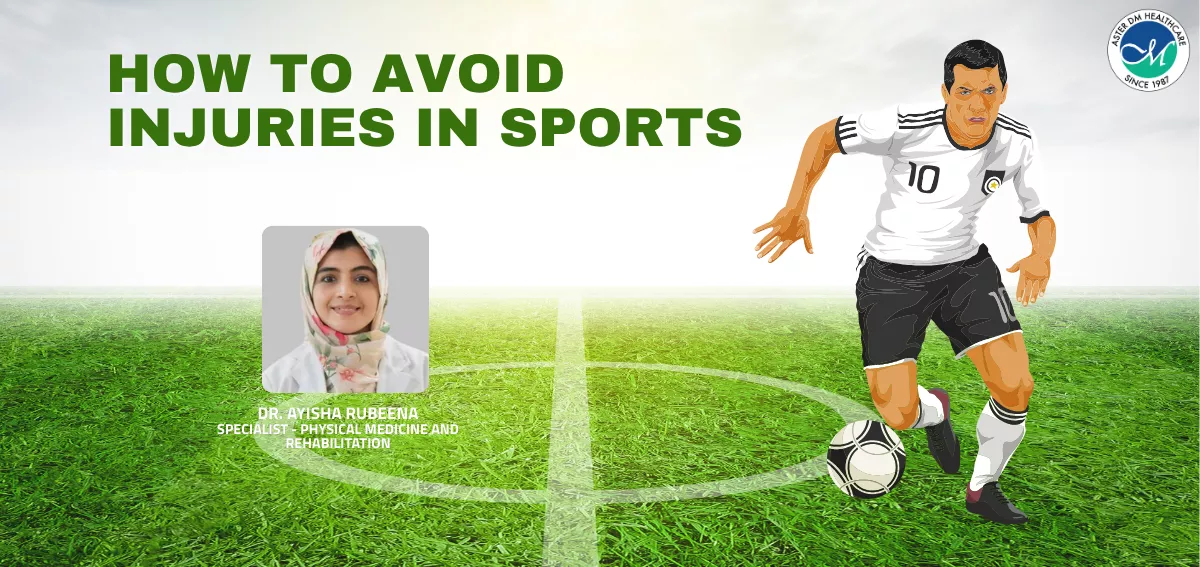
- Sports injuries and fractures
- Post-surgical recovery, including joint replacements and ligament repairs
- Chronic pain conditions such as back pain, arthritis, and frozen shoulder
- Neurological disorders including Parkinson's disease and multiple sclerosis
- Age-related mobility decline and balance disorders
- Congenital disabilities and developmental disorders requiring long-term rehabilitation
The ultimate goal is not simply to treat the underlying condition but to restore mobility, improve function, relieve pain, prevent complications, and enable individuals to return to their everyday activities with as much independence as possible.
A Multidisciplinary Approach to Recovery
One of the greatest strengths of PMR is its multidisciplinary team approach. Rehabilitation is rarely the work of one healthcare professional alone. Instead, it brings together experts from multiple disciplines who work collaboratively to achieve the best possible outcomes for patients.
The rehabilitation team may include physiatrists, physiotherapists, occupational therapists, speech and language therapists, rehabilitation nurses, psychologists, medical social workers, prosthetists, orthotists, and vocational rehabilitation specialists.
Each member plays a unique role in the recovery journey.
Physiotherapy focuses on improving strength, flexibility, balance, coordination, endurance, and mobility through therapeutic exercises and movement training. It also helps reduce pain and prevent future injuries.
Occupational therapy enables individuals to regain the skills needed for daily living, such as dressing, bathing, cooking, writing, or returning to work. Therapists may also recommend adaptive equipment or modifications to the home or workplace.
Speech and language therapy assists individuals experiencing difficulties with communication, speech, language, cognition, or swallowing following neurological conditions or injuries.
Rehabilitation nursing provides specialized medical care, patient education, medication management, and support throughout the rehabilitation process while promoting independence.
Psychologists help patients and families cope with the emotional and psychological challenges associated with illness, injury, chronic pain, or disability, supporting mental well-being during recovery.
Prosthetic and orthotic services improve mobility and function by providing customized artificial limbs, braces, and supportive devices that enhance independence.
Medical social workers and vocational rehabilitation specialists assist individuals in returning to their families, education, employment, and community life while helping them access social support services and rehabilitation resources.
Services Offered by Rehabilitation Centres
Modern rehabilitation centres provide comprehensive services designed to meet the diverse needs of patients throughout their recovery journey. These services commonly include:
- Comprehensive assessment and individualized rehabilitation planning
- Physiotherapy and exercise-based rehabilitation programs
- Pain management and non-surgical interventions
- Assistive device assessment and training, including walkers, wheelchairs, prosthetics, and orthotics
- Stroke rehabilitation and neuro-rehabilitation
- Ergonomic advice and workplace injury prevention
- Fall prevention programs for older adults
- Patient and caregiver education to support long-term recovery and self-management
Marking the Day: “Rehab is Essential Not Optional ”
National PMR Day is more than a medical observance-it is a reminder that disability prevention begins with awareness and early action. Many disabling conditions can be minimized or prevented through timely diagnosis, appropriate treatment, regular physical activity, healthy lifestyle choices, and early rehabilitation.
Simple measures such as maintaining good posture, staying physically active, using proper lifting techniques, managing chronic diseases, seeking early physiotherapy for persistent pain, participating in fall-prevention programs, and adhering to rehabilitation after stroke or surgery can significantly reduce the risk of long-term disability.
Early intervention often leads to faster recovery, fewer complications, reduced healthcare costs, and improved quality of life. Delaying rehabilitation, on the other hand, may result in muscle weakness, joint stiffness, chronic pain, loss of independence, and avoidable disability.
At its core, Physical Medicine and Rehabilitation focuses on ability rather than disability. It encourages prevention, promotes recovery, maximizes independence, and supports inclusion in society. As India observes National PMR Day each year, the message remains clear: timely rehabilitation can transform lives, restore hope, and empower individuals to live active, productive, and dignified lives.