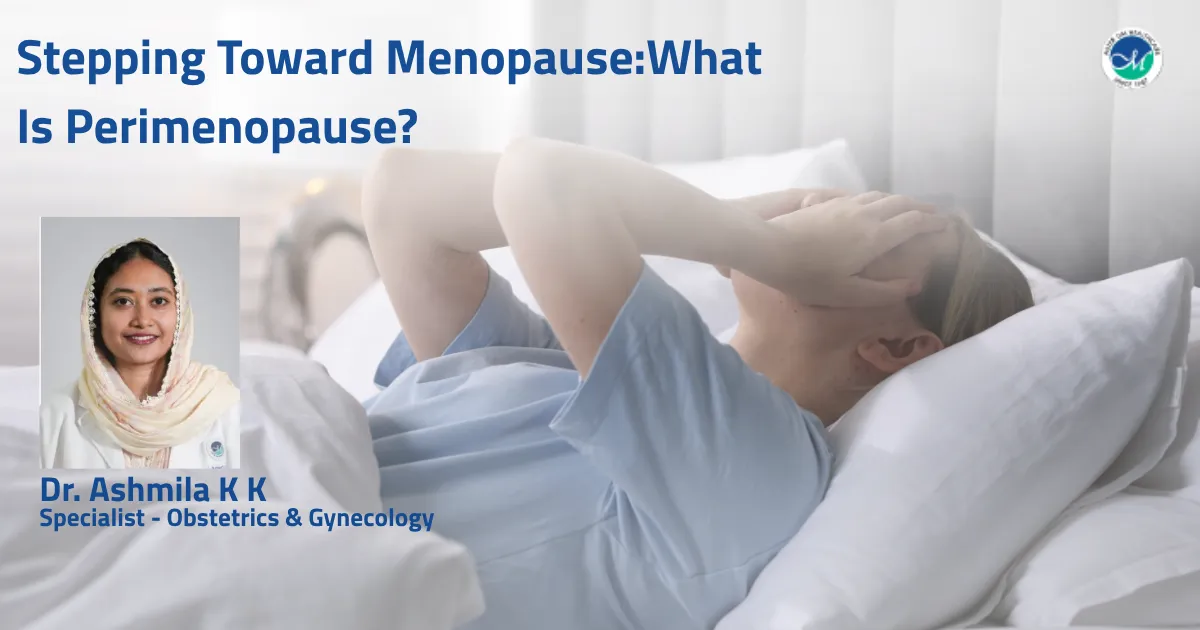

Menopause is a very important and natural physical change in a woman's life. But it is not something that happens suddenly overnight. Before periods stop completely, there is a transition period during which the body prepares for it. In medicine, this is called Perimenopause. It is a phase in which many physical and emotional changes take place in the body. So having a clear understanding of these changes will help every woman get through this period in a healthy way.
What Is Perimenopause?
Perimenopause is the period when the body begins its transition toward menopause. During this time, the production of the hormones estrogen and progesterone by the ovaries fluctuates. Perimenopause usually begins after the age of 40, but in some women these changes can start in the late 30s. It can last for a few months or sometimes four to ten years. Perimenopause ends and menopause begins when a woman has gone 12 consecutive months without a period.
What Are the Main Symptoms?
During perimenopause, the body shows a variety of changes. They are as follows:
• Irregular periods: Changes in the length of the menstrual cycle are normal. In some months, periods may come early or may not come at all. The amount of bleeding can also vary.
• Hot flashes: A sudden feeling of intense heat, especially in the face and chest, along with sweating.
• Sleeplessness: Night sweats and physical discomfort prevent many women from getting restful sleep.
• Mood changes: Because of hormonal fluctuations, unexplained anger, sadness, anxiety, and depression are very common during this phase.
• Vaginal dryness: A drop in estrogen levels can cause the vagina to lose moisture and can make sexual intercourse painful.
• Bone health: Hormonal changes affect calcium absorption, so bone density may decrease, and there is a risk of conditions like osteoporosis.
Taking Care of Your Health During Perimenopause
With the right lifestyle, perimenopause symptoms can be managed to a certain extent:
• Healthy diet: Include plenty of calcium and vitamin D in your diet. Make a habit of eating dairy products, leafy vegetables, nuts, and soybeans. In addition, cut down as much as possible on foods high in fat and sugar.
• Regular exercise: Doing exercises that give the body a workout for at least five days a week helps control body weight and reduce stress.
• Reduce stress
• Avoid bad habits: Smoking, alcohol, and excessive caffeine can make symptoms such as hot flashes worse.
When Should You See a Doctor?
Perimenopause is not a disease but simply a stage of life. However, you should definitely consult a gynecologist if you have any of the following:
• Abnormally heavy bleeding during periods.
• Bleeding between periods or after sexual intercourse.
• Perimenopause symptoms that significantly affect your daily life.
These physical and emotional changes should be faced not with fear, but with understanding and proper preparation. By adopting a healthy lifestyle, any woman can pass through this period of change with great ease.
Featured Blogs


One Aster
Personalized Medical Assistant for all your healthcare needs.
Book instant appointment, pay securely, eConsult with our doctors and save all your health records at one place are some of the benefits of OneAster App. It is everything you need, to manage your family Health.



* Registration available only for valid Indian mobile number