
Introduction
Atypical Hemolytic Uremic Syndrome (aHUS) is a rare and life-threatening disorder characterized by thrombotic microangiopathy (TMA), leading to microangiopathic hemolytic anemia, thrombocytopenia, and acute kidney injury. Pregnancy and the postpartum period are recognized triggers for aHUS, particularly in women with underlying complement pathway abnormalities. Early diagnosis and timely intervention are crucial to prevent irreversible organ damage and improve outcomes.
Case Summary
A 31-year-old woman was referred to Aster Aadhar Hospital with hypertensive emergency, breakthrough convulsions, and worsening renal impairment, 24 days after delivering a baby through a Caesarean section at eight months of gestation. She had a history of severe pregnancy-induced hypertension (PIH) and developed cough with expectoration six days after delivery, for which she received antibiotics. Her initial serum creatinine was 1.6 mg/dL, and she also reported episodes of black-colored loose stools.
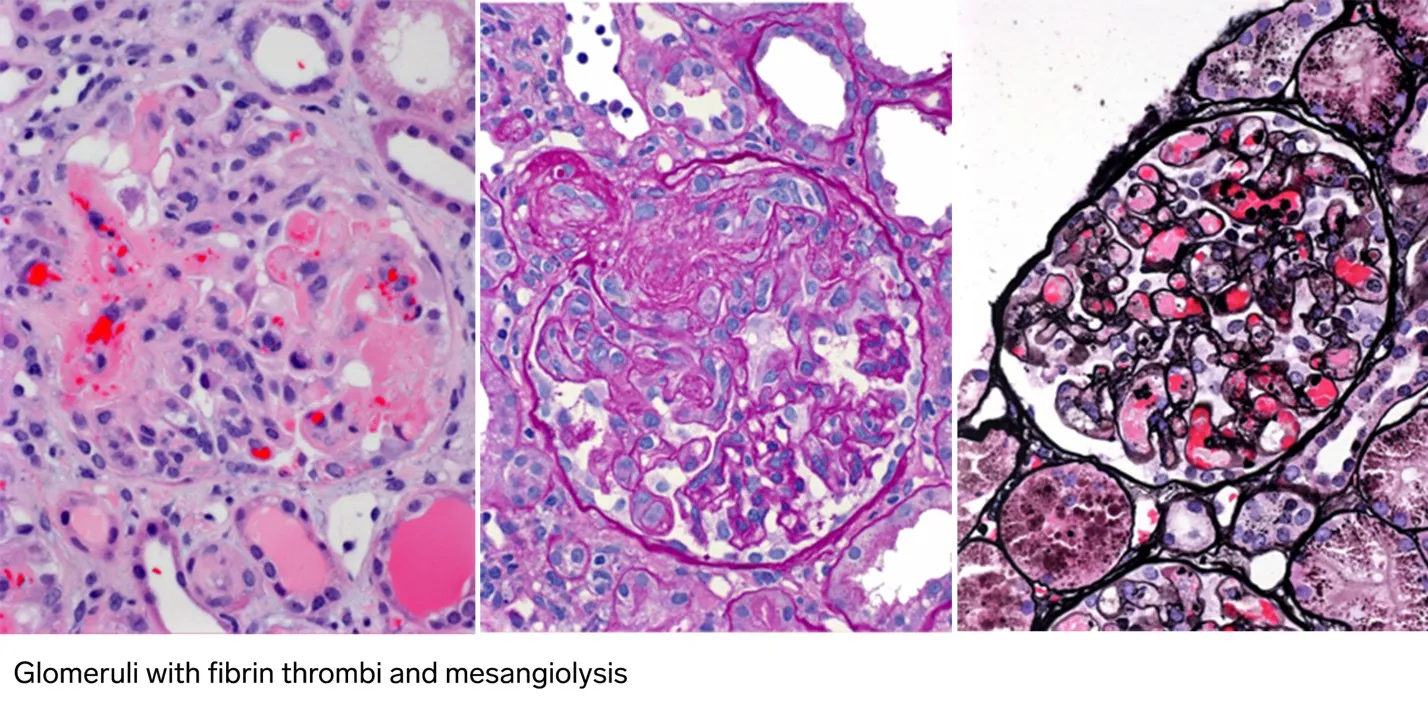
Further investigations revealed significant proteinuria (24-hour urinary protein of 2400 mg), positive ANA, and worsening kidney function. MRI of the brain showed Posterior Reversible Encephalopathy Syndrome (PRES), while kidney biopsy confirmed thrombotic microangiopathy with severe acute tubular necrosis (ATN).
Treatment and Clinical Course
The patient's blood pressure was controlled with antihypertensive medications. However, her kidney function continued to deteriorate, leading to pulmonary edema. She was immediately started on hemodialysis and plasmapheresis, completing a total of 10 sessions. Extensive investigations ruled out several autoimmune and thrombotic conditions, including TTP, ANCA-associated vasculitis, antiphospholipid syndrome, and anti-factor H antibody disease. ADAMTS13 activity was found to be 60%, making TTP less likely.
Given the strong suspicion of atypical HUS, advanced genetic testing was performed. The analysis identified susceptibility-associated genetic abnormalities involving the CFHR3 and CFHR1 genes, confirming complement pathway dysregulation. Despite aggressive treatment, the patient's renal function did not recover, and she continues to require maintenance hemodialysis three times per week.
Clinical Significance
Pregnancy-associated aHUS is an uncommon but severe condition that predominantly occurs during the postpartum period. Its clinical presentation often overlaps with preeclampsia, HELLP syndrome, and thrombotic thrombocytopenic purpura (TTP), making diagnosis challenging. Early recognition and differentiation from these conditions are essential, as delayed treatment can result in irreversible kidney damage and progression to end-stage renal disease (ESRD).
This case highlights the importance of a multidisciplinary approach involving nephrologists, obstetricians, intensivists, hematologists, and pathologists for accurate diagnosis and comprehensive management. Recent advances in anti-complement therapy, particularly Eculizumab, have significantly improved outcomes in patients with aHUS by reducing mortality, morbidity, and the risk of ESRD.
Conclusion
This rare case of postpartum atypical Hemolytic Uremic Syndrome underscores the importance of maintaining a high index of suspicion in women presenting with acute kidney injury and thrombotic microangiopathy after pregnancy. Prompt diagnosis, genetic evaluation, and early initiation of targeted therapy are critical to minimizing long-term organ damage and improving patient outcomes.