
35 year old female, presented with fever associated with chills and rigors, loose stools and vomiting since 4-5 days.
She was admitted at local hospital and work up was s/o Plasmodium vivax - malaria positive. She was shifted to Aster Aadhar Hospital i/v/o hypotensive shock which was managed with fluid resuscitation, inotropic support and received shock dose of steroids.
Workup at AAH was negative for tropical fever including Peripheral smear for Malaria, cultures (urine/blood/stool), Respiratory viral panel .
2DECHO was normal.
She received anti-malarial treatment as per NVBDCP (National Vector Borne Disease Control Program) guidelines / ISCCM guidelines.
On second day of admission during morning rounds 2DECHO turned abnormal and showed global hypokinesia and was suggestive of myocarditis with low LVEF(20%)
Eventually she developed pulmonary edema and required invasive mechanical ventilatory support.
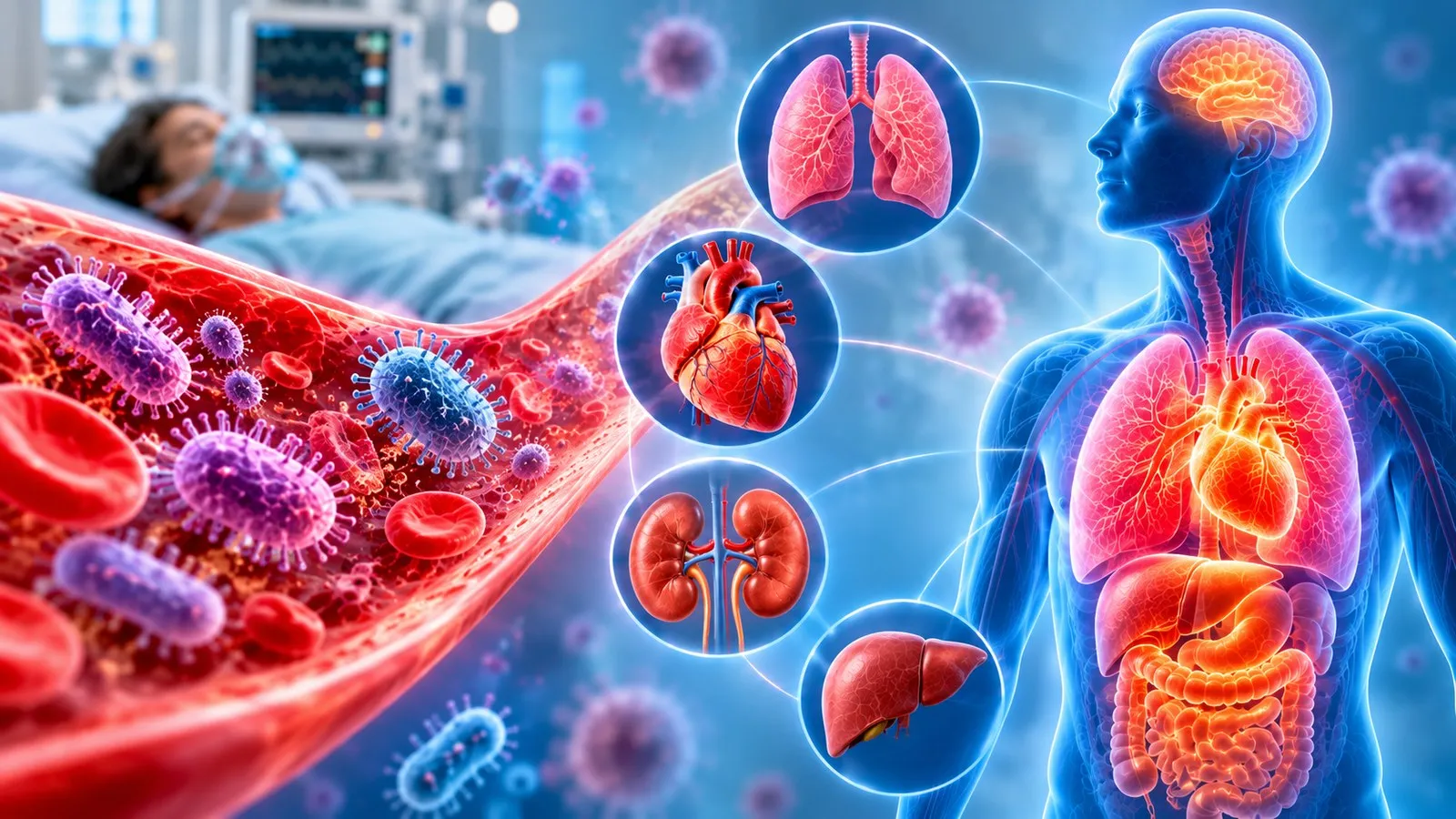
With Sepsis & impending MODS work up for all systems including hematology was done.
Hematological parameters were suggestive of DIC with derranged coagulation profile(INR-2.3; APTT -60; Fibrinogen: 65 ) ,inflammatory markers( D-dimer: >10,000; CRP: 97; Ferritin >5000; LDH 2253) and required multiple transfusions of blood products.
Cultures were repeated and ET secretions were s/o MDR Klebsiella , hence antibiotic policy changed according to AMSP Guidelines and Anti-fungals were added i/v/o long term immunosuppresive therapy.
She was extubated but required re-intubation(poor respiratory efforts).
Bronchoscopy was done i/v/o worsening shadows on chest xray, BAL BIOFIRE was s/o Pseudomonas, Acinetobacter, Klebsiella (Resistant to CTX-M, NDM, OXA-48).
BAL culture had MDR Klebsiella and MDR Pseudomonas, hence CARBA-R was done and accordingly treated with Ceftazidime+ Avibactum+ Azetreonam.
Patient had persistent fever. Repeat 2DECHO during morning rounds raised the suspicion of vegetations at mitral valve hence blood cultures were sent according to the Infective endocarditis protocol-which were negative.
Extubation trial was given again - but failed , she had weak cough reflex and muscle power hence tracheostomised and repeat bronchoscopy done (Diagnostic +Therapeutic)-S/O MDR Pseudomonas.
Surprisingly she showed significant hyperpigmentation of skin and raised the suspicion of Adrenocortical insufficiency.
Endocrine workup done- S/O adrenocortical insufficiency (S.cortisol -5.1and S.ACTH 161)- hence Glucocorticoids and mineralocorticoids were added.
IMAGE OF SKIN CHANGES:
Patient improved hemodynamically, inotropic support decreased. Patient improved clinically, fever subsided, limb and muscle power improved with extensive physiotherapy , nutritional support . Decannulation of tracheostomy tube done after achieving good cough reflex.
Patient was discharged in stable condition.
DISCUSSION:
Recognizing the early symptoms and signs of sepsis are key: the confused, hypoxic, hypotensive patient with pyrexia, tachycardia, tachypnoea and leucocytosis. The difference between severe sepsis and septic shock is that of response and time. The patient who fits the criteria for severe sepsis but after adequate fluid therapy (maximum 6 hours) remains hypotensive or hypoperfused (lactate >4 mmol l−1) should be considered as septic shock and managed accordingly.
Should we give steroids for septic shock patients as emergency physicians? Is it a reasonable therapy? If so, when should we give it? Despite seemingly contradictory outcomes of these studies, there is a consistent trend among the secondary outcomes. Steroids appear to lead to shock reversal, decreased vasopressors need, increased ventilator free days, and less time in the ICU. These outcomes are patient-centered and important in reducing critical care burden within the hospital.[6]

Critically ill patients present a special challenge in terms of diagnosis and management of adrenalinsufficiency. Stressful conditions, including pain, fever, and hypovolemia require an increase in ACTH and cortisol. Multiple factors may contribute to hypoadrenalism in critically ill patients. These include anatomic damage to the adrenals or the pituitary as a result of preexisting or previously undiagnosed disease of the adrenal cortex or HP area or acute destruction of the adrenal gland from hemorrhage or infection. Probably more commonly, hypoperfusion or cytokine- induced inhibition of the adrenal or the HP area will lead to functional impairment of different components of the axis.
Hyperkalemia is usually present in primary insufficiency but absent in secondary. Hyponatremia is a feature of both, but in primary insufficiency it is associated with volume contraction resulting in an elevated blood urea nitrogen (BUN) and creatinine. Hyponatremia in secondary adrenal insufficiency is dilutional because of decreased ability to excrete a water load and increased vasopressin levels.
More recently, multiple studies have used the concept of “relative” adrenal insufficiency. This relates to use of more physiologic “stress” doses of 100 to 300 mg of hydrocortisone or its equivalent in patients with shock, high cardiac output, multiorgan failure, and prolonged mechanical ventilation. Multiple studies show a beneficial effect of steroids in such patients in terms of ability to discontinue vasopressors, wean patients from mechanical ventilation, and improve survival.
The clinical presentation of “relative” adrenal insufficiency is usually a catecholamine-dependent hyperdynamic shock, which responds to steroids.
The possibility of “relative” adrenal insufficiency should be considered in patients who are pressor dependent or require prolonged mechanical ventilation. Clues that should increase suspicion for adrenal dysfunction include eosinophilia , unexplained hypothermia, hyperpigmentation, hyperkalemia, hyponatremia, nausea, vomiting, and abdominal pain, as well as hypotension not responding to fluids or catecholamines.
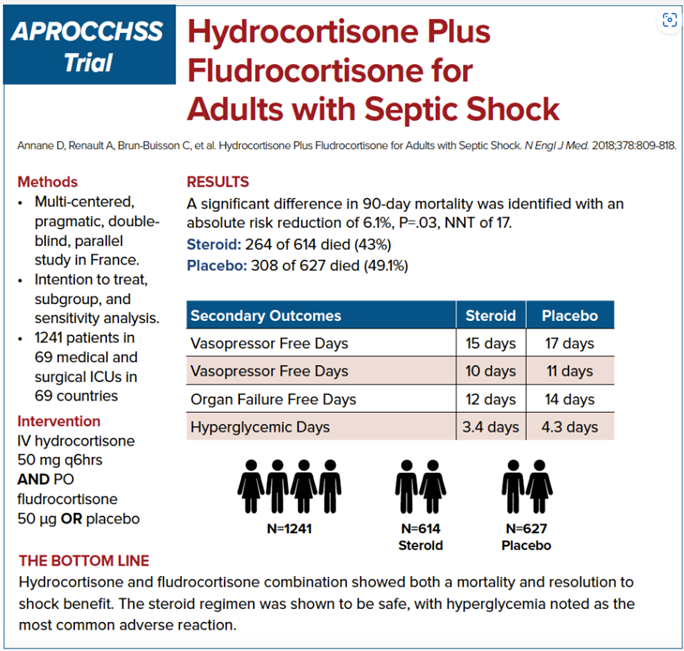
Simultaneous use of low-dose glucocorticosteroids and mineralocorticosteroids as an adjunct treatment in the management of septic shock has shown beneficial effects.
It decreases the short-term mortality of patients with septic shock. It is additionally found that patients receiving both glucocorticosteroids and mineralocorticosteroids had lower ICU mortality and improved shock reversal rate within 30 days.
Along with medicines, nutrition and physiotherapy plays a vital role in the recovery of the patient which should be looked for from the initial days of admission.