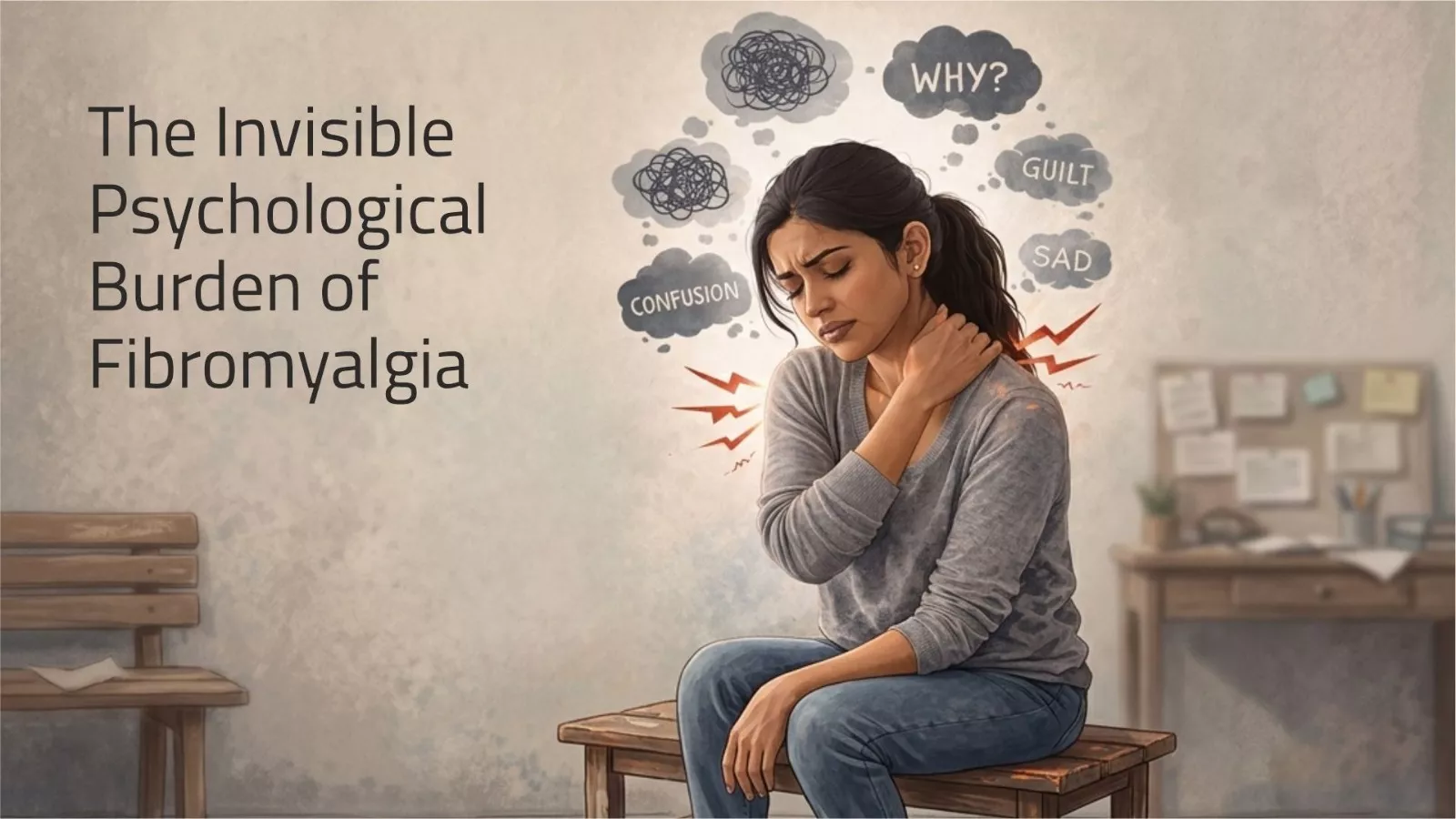

“Why me?”
“How long do I have to endure this?”
“Is this ever going to go away?”
“I am not who I was before.”
These are not just questions. They are fragments of grief.
As a psychologist working closely with people living with fibromyalgia, I don’t just hear these words I sit with what they carry. They often come after months, sometimes years, of unexplained pain, of being told “everything looks normal,” of pushing through exhaustion that no amount of rest seems to fix.
One of the most painful themes that emerges in therapy is the sense of betrayal of one’s own body no longer feeling like a safe or reliable place. Simple, everyday activities getting out of bed, combing one’s hair, cooking a meal begin to feel effortful, unpredictable, and at times overwhelming. There is a quiet but profound grief in realizing that things once done without a second thought now require planning, pacing, and recovery.
“I feel like my body has turned against me,” many say. And beneath that statement is not just frustration, but loss.
Because fibromyalgia is not just a physical condition. It is a disruption of identity.
People often tell me they no longer recognize themselves. The “before” version of them the energetic, capable, always-on-the-go version feels distant. And with that comes guilt. Guilt for slowing down. Guilt for saying no. Guilt for needing rest in a world that often equates worth with productivity.
What makes this even harder is the invisibility of the illness. When pain doesn’t show up on scans or reports, it can feel unseen and at times, invalidated. Over time, this can turn inward. Doubt creeps in. Is it really that bad? Am I overreacting?
This is where the psychological aspect becomes not just important but essential.
Chronic pain does not exist in isolation. It is deeply connected to our emotional world and our nervous system. When the body remains in a constant state of alert caught in cycles of stress, worry, or frustration the experience of pain can intensify. It becomes a loop: pain fuels distress, and distress amplifies pain.
Breaking this loop is not about denying the pain or forcing positivity. It is about gently changing the way one relates to it.
In therapy, the focus is often on restoring a sense of control not necessarily over the pain itself, but over one’s response to it. This may involve learning to pace activities without self-judgment, recognizing and softening harsh inner dialogue, and reconnecting with aspects of identity that exist beyond illness.
Over time, something shifts.
The pain may still be present, but it no longer dominates in the same way. It becomes one part of the experience, not the entirety of it.
Acceptance plays a crucial role here not as resignation, but as a way of making space for reality without constantly fighting against it. When that struggle softens, energy can be redirected toward living, rather than just enduring.
Fibromyalgia may change the rhythm of life but it does not take away its meaning.
And slowly, in that space where compassion replaces criticism, where control is redefined, and where the mind and body begin to work together rather than against each other patients begin to find their way back to themselves.
Not the “before” version.
But a new version one that is still whole.