
For many families, the first seizure arrives without warning. One moment everything is normal. The next, there is confusion, fear and a rushed trip to the hospital. Once the immediate worry passes, the questions begin. What caused it? Will it happen again? What happens next?
If you are walking this path, you are not alone, and the process is often clearer than you might expect. Here is what diagnosis and treatment usually look like.
Why one seizure does not always mean epilepsy
A seizure can happen for reasons that have nothing to do with epilepsy, such as a very high fever in a young child, low blood sugar, a sudden drop in sodium levels, a head injury or severe sleep deprivation. Epilepsy is generally diagnosed when a person has had two or more unprovoked seizures, or when tests show a high chance of more happening. This is why a careful medical assessment is so important.
The first step: telling the story
The most valuable tool in diagnosis is often a good description. A neurologist will ask what happened before, during and after the episode, how long it lasted, and whether there were any warning signs. Because the person often does not remember the seizure, a family member or friend who saw it is very helpful. If you can, note down what you saw, or even record a short video on your phone if it happens again. Doctors find this incredibly useful.
The doctor will also ask about birth history, childhood development, past head injuries, infections, medicines and any family history of seizures.
Tests you may be asked to do
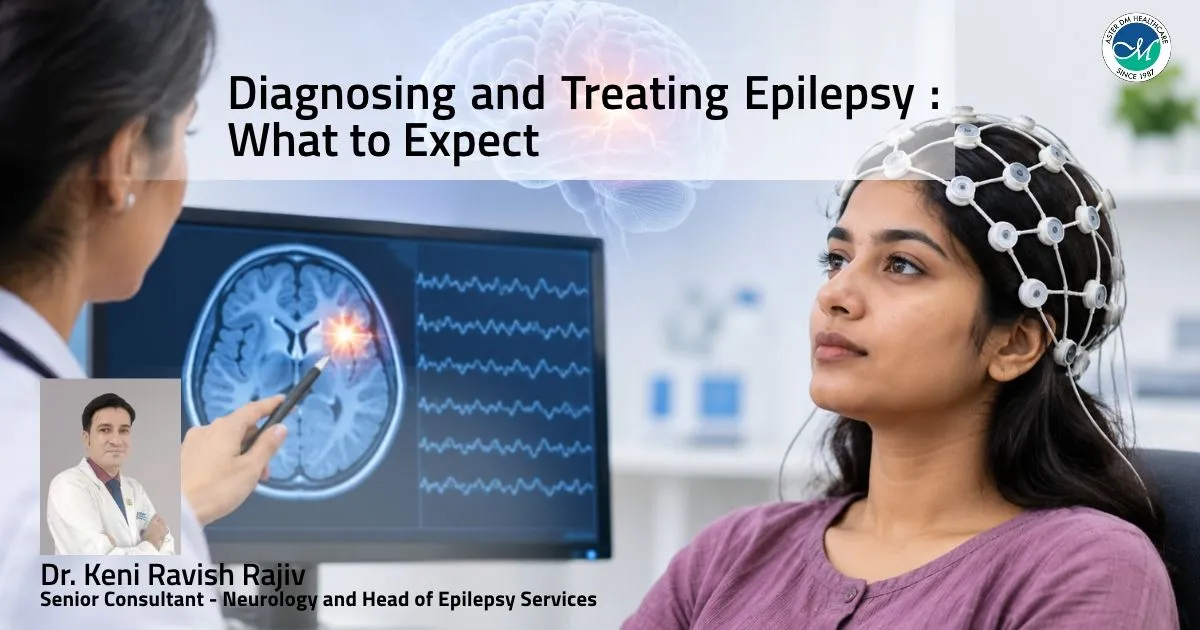
EEG (electroencephalogram). Small sensors are placed on the scalp to record the brain's electrical activity. It is painless and safe. Sometimes the test is done while you are awake, asleep or after being deprived of sleep, as abnormal patterns can show up more clearly. A normal EEG does not completely rule out epilepsy, so doctors look at the whole picture.
MRI scan of the brain. This gives a detailed picture of the brain's structure and can reveal scars, tumours, developmental differences or other causes.
Blood tests. These check for infections, blood sugar, salt balance and other health issues that can trigger seizures.
Video-EEG monitoring. For complex cases, a person may stay in hospital for a few days while video and EEG are recorded together to capture and study seizures in detail.
Treatment: medicines come first
For most people, treatment begins with anti-seizure medicines. There are many different options, and the right one depends on the type of seizure, age, gender, other health conditions and possible side effects. Around two out of three people achieve good seizure control with the first or second medicine they try.
A few things are worth knowing:
• Take the tablets at the same time every day. Missing doses is one of the most common reasons seizures return.
• Never stop or change the dose without speaking to your doctor.
• Tell your doctor about any side effects, such as drowsiness, dizziness or mood changes. Often a small adjustment helps.
• Women who are planning a pregnancy should speak to their neurologist beforehand, as some medicines need to be reviewed and folic acid is often advised.
• Always mention your epilepsy medicines before starting any other medicine or supplement.
When medicines are not enough
If seizures continue despite trying two suitable medicines properly, the condition is sometimes called drug-resistant epilepsy. This does not mean there are no options left. A specialist epilepsy team may consider:
• Epilepsy surgery, where the small area of the brain causing seizures is removed or disconnected. For carefully chosen patients, it can lead to long seizure-free periods.
• Vagus nerve stimulation, a small device placed under the skin that sends mild electrical pulses to reduce seizures.
• Dietary therapy, such as the ketogenic diet, which is sometimes used for children whose seizures are hard to control. This should only be done under the supervision of a doctor and dietitian.
• Newer medicines and combination therapy, which can be tried under close supervision.
Follow-up matters
Epilepsy treatment is rarely a one-visit affair. Regular follow-up lets your doctor check how well the medicines are working, look at side effects, monitor bone health, and adjust treatment as life changes through school, work, pregnancy or ageing. Keep a simple seizure diary noting the date, time, what happened and any possible triggers such as missed sleep or illness. It makes appointments far more productive.
Emotional care is part of treatment
Living with a diagnosis can bring worry, embarrassment or fear about the future. Parents often feel guilt that they should not carry. Talking to a counsellor, joining a support group or simply speaking openly with family can help enormously. Good treatment cares for the person, not just the seizures.
When to see a neurologist
Please seek medical advice if you or someone you love has:
• A first seizure of any kind
• Episodes of staring, sudden confusion or unexplained jerking
• Seizures that are becoming more frequent or changing in pattern
• Side effects from current medicines that are affecting daily life
A diagnosis of epilepsy can feel overwhelming at first, but it is also the beginning of getting the right care. With accurate tests, the right treatment and steady support, many people go on to live full, active and seizure-free lives.
Featured Blogs





One Aster
Personalized Medical Assistant for all your healthcare needs.
Book instant appointment, pay securely, eConsult with our doctors and save all your health records at one place are some of the benefits of OneAster App. It is everything you need, to manage your family Health.



* Registration available only for valid Indian mobile number