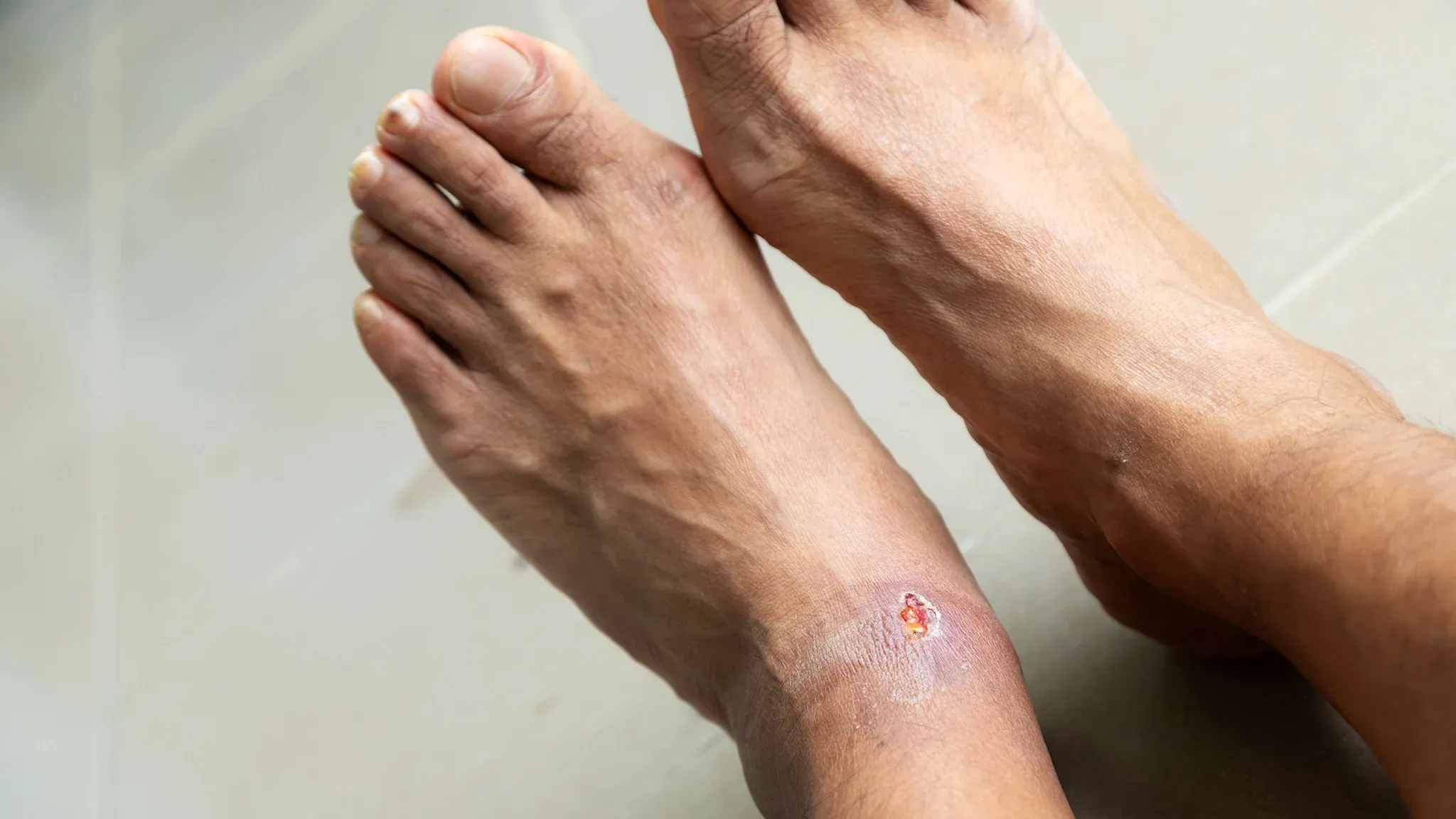

Diabetes has become a common health condition today, and the feet are among the parts of the body that can be seriously affected by it. Foot-related complications that develop in people with diabetes are commonly known as diabetic foot
What Is Diabetic Foot?
When diabetes remains poorly controlled over a long period, it can damage the nerves and blood vessels in the feet. Two major conditions contribute to diabetic foot complications:
1. Diabetic Neuropathy
High blood sugar levels can damage the nerves in the feet. This may cause tingling, numbness, or a reduced ability to feel pain. As a result, minor injuries, cuts, and blisters may go unnoticed and develop into more serious wounds.
2. Peripheral Arterial Disease (PAD)
Although peripheral arterial disease is commonly associated with smoking, people with diabetes are also at an increased risk of developing this condition. It occurs when the blood vessels supplying the legs and feet become narrowed, reducing blood flow. Consequently, wounds may not receive enough oxygen and nutrients, delaying healing and increasing the risk of complications.
When Should You Consult a Specialist?
People with diabetes should seek medical attention if they notice any of the following signs:
- A small cut, wound, or ulcer on the foot that does not show signs of healing within two days.
- Unusual swelling, redness, or fever.
- Black or bluish discolouration of the skin on the feet.
- Foul-smelling discharge or pus from a wound.
Important: If you notice a foot wound, seek medical advice promptly rather than waiting for it to heal on its own. Black or blue discolouration, spreading redness, or signs of infection require urgent medical assessment.
Essential Foot Care Tips for People with Diabetes
1. Examine Your Feet Every Day
Check both feet carefully every night before going to bed. Look for cuts, cracks, blisters, swelling, numbness, and changes in skin colour. If you have difficulty seeing the soles of your feet, use a mirror or ask someone to help.
2. Keep Your Feet Clean and Dry
Wash your feet daily using lukewarm water and mild soap. Dry them gently, paying particular attention to the spaces between your toes, where moisture can accumulate.
3. Trim Your Toenails Carefully
Cut your toenails straight across rather than rounding the corners or cutting down the sides. This helps reduce the risk of ingrown toenails and injuries. If you have poor circulation, reduced sensation, or difficulty trimming your nails safely, Trim nails(toe and finger) with the help of family members.
4. Wear Appropriate Footwear at All Times
Wear comfortable, well-fitting footwear both indoors and outdoors. Avoid walking barefoot, even at home, as you may accidentally injure your feet without noticing it,Wear cotton socks even inside home along with footware.
Protect Your Feet, Protect Your Health
Diabetic foot complications can often be prevented or identified early through good blood sugar control, daily foot inspections, suitable footwear, and regular medical check-ups. Never ignore even a minor foot injury if you have diabetes. Early medical attention can help prevent serious complications and protect your long-term foot health.