
Mouth ulcers are small yet painful sores that develop inside the mouth. These sores can appear on the tongue, inner cheeks, lips, and even gums. While most ulcers are harmless, they can cause significant discomfort. Many patients experience pain while eating, drinking, or speaking.
If you are dealing with ulcers, it is natural to question, “What causes mouth ulcers?” and “Are they a sign of a serious health problem?” In fact, many patients worry about infection or long-term illness.
In most cases, mouth ulcers are temporary and heal on their own. However, understanding the cause can help you choose the right mouth ulcer treatment and prevent recurrence.
If ulcers are persistent, unusually large, or frequently recurring, professional evaluation is recommended to identify the underlying cause and plan appropriate treatment.
Mouth Ulcers – What Are They?
The clinical term for common mouth ulcers is “recurrent aphthous stomatitis (RAS)”, commonly known as aphthous ulcers. These are round or oval sores with white or yellow centers and a red border. They are not contagious. In fact, most minor ulcers heal within 7 to 14 days without leaving scars.
However, if ulcers last more than three weeks, become unusually large, or recur frequently, it could be a cause for concern. Timely evaluation allows your doctor to rule out underlying systemic conditions and initiate appropriate mouth ulcer treatment.
What Are the Main Causes of Mouth Ulcers?
Many patients wonder why ulcers occur even when they maintain good oral hygiene. The truth is that several factors can trigger mouth ulcers, and often more than one factor plays a role.
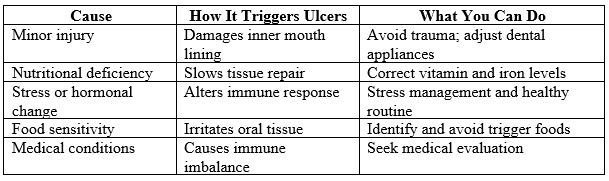
1. Minor Injury or Trauma
Small injuries inside the mouth are a common cause. For instance, accidental cheek biting, sharp tooth edges, braces, or poorly fitting dentures may irritate the oral lining. Even aggressive brushing can cause trauma.
When the inner lining is damaged, it may develop into a painful ulcer.
2. Nutritional Deficiencies
Low levels of iron, vitamin B12, and folic acid can increase the risk of ulcers. These nutrients are essential for maintaining healthy oral mucosal cells. When deficient, tissue repair slows down, and ulcers may recur.
If ulcers are frequent, blood investigations may be recommended. Correcting deficiencies often reduces recurrence.
3. Stress and Hormonal Changes
Emotional stress can influence immune function. Many individuals notice ulcers during periods of examination stress, work pressure, or emotional strain. Hormonal changes, particularly during menstruation, may also act as triggers.
Stress does not directly cause infection, but it may make the oral lining more vulnerable to inflammation.
4. Food Sensitivities
Certain foods can irritate the oral mucosa. Common triggers include spicy, acidic, or salty foods. Some individuals may also be sensitive to chocolate, nuts, or citrus fruits.
Maintaining a food diary may help identify patterns and triggers.
5. Medical Conditions
Recurrent mouth ulcers may sometimes indicate underlying systemic conditions such as:
• Coeliac disease
• Inflammatory bowel disease
• Autoimmune disorders (e.g., Behçet’s disease)
• Immunodeficiency states
• Certain viral infections
In rare cases, persistent non-healing ulcers require further investigation to rule out premalignant or malignant lesions.
Summary of Causes and Preventive Steps
How Is Mouth Ulcer Treatment Planned?
The primary goals of mouth ulcer treatment are to relieve pain, promote healing, and prevent recurrence. Treatment depends on the underlying cause and severity.
1. Pain Relief and Topical Care
Doctors may prescribe medicated gels containing topical anesthetics, anti-inflammatory agents, or mild corticosteroids. These reduce discomfort and form a protective barrier over the ulcer. Antiseptic mouth rinses may help prevent secondary infection.
Avoid frequent self-medication if ulcers are recurrent without medical advice.
2. Nutritional Support
If investigations reveal deficiencies, supplements such as iron, vitamin B12, or folic acid are prescribed. Dietary counselling may also be advised to improve overall nutritional status.
3. Managing Underlying Conditions
If ulcers are associated with systemic illness, managing the primary condition is essential. This may require collaboration between dental and medical specialists.
In moderate to severe recurrent cases, short-term corticosteroid therapy or immunomodulatory medication may be considered under supervision.
4. Lifestyle and Preventive Measures
Simple preventive strategies include:
• Using a soft-bristled toothbrush
• Avoiding very spicy or acidic foods during active ulcers
• Maintaining good oral hygiene
• Staying well hydrated
• Managing stress through adequate sleep and relaxation techniques
Personalized advice from a qualified dental professional can help reduce recurrence.
Why Does Evaluation Matter?
Many individuals delay treatment, assuming ulcers are always minor. While most are harmless, persistent or atypical ulcers require clinical assessment. Early evaluation helps exclude serious underlying causes and ensures appropriate management.
During examination, clinicians assess the size, shape, location, and duration of the lesion. If required, additional investigations such as blood tests or biopsy may be recommended.
What Can You Do at Home?
While waiting for healing:
• Rinse with a mild saltwater solution
• Avoid irritating foods
• Maintain gentle oral hygiene
• Stay hydrated
Home care measures can reduce discomfort but should not replace professional evaluation in severe or recurrent cases.
8 Oral Sites to Examine for Early Signs of Oral Cancer
Early detection of oral cancer significantly improves treatment outcomes. During routine dental check-ups, clinicians carefully examine specific areas inside the mouth where oral cancer most commonly develops. Here are eight important oral sites that should always be evaluated:
1. Tongue (Especially the Sides and Undersurface)
The lateral borders and ventral surface of the tongue are among the most common sites for oral cancer.
Persistent ulcers, red or white patches, or firm lumps in this area should never be ignored.
2. Floor of the Mouth
The area beneath the tongue (floor of the mouth) is another high-risk site.
Any persistent swelling, thickening, or non-healing sore here requires prompt evaluation.
3. Buccal Mucosa (Inner Cheeks)
The inner lining of the cheeks can develop white patches (leukoplakia), red patches (erythroplakia), or mixed lesions.
In regions with high tobacco use, this is a commonly affected site.
4. Gingiva (Gums)
Oral cancer may appear on the upper or lower gums.
Lesions here may resemble gum infections but do not heal with routine treatment.
5. Hard Palate
The roof of the mouth should be examined for unusual growths, persistent ulcers, or color changes.
Smokers may be at increased risk in this region.
6. Soft Palate
The soft palate (posterior roof of the mouth) can develop subtle lesions that are sometimes painless in early stages.
Any persistent red or ulcerated area should be assessed.
7. Retromolar Trigone
This is the small area behind the last molar teeth.
It is often overlooked but is a significant site for oral malignancies, especially in tobacco users.
8. Lips (Especially the Lower Lip)
The lower lip is more commonly affected due to chronic sun exposure.
Non-healing cracks, ulcers, or crusted lesions should be examined carefully.
Final Thoughts
Mouth ulcers are common and usually temporary. However, understanding their causes empowers individuals to prevent recurrence and seek timely care when necessary.
Appropriate mouth ulcer treatment reduces discomfort and supports faster healing. If ulcers are persistent, unusually painful, or recurrent, consulting a dental professional is advisable for proper diagnosis and management.
FAQs
1. Are mouth ulcers contagious?
No. Common aphthous ulcers are not contagious and do not spread from person to person.
2. How long do mouth ulcers take to heal?
Minor ulcers typically heal within 7 to 14 days. If healing takes longer than three weeks, professional evaluation is recommended.
3. Can stress alone cause mouth ulcers?
Stress can alter immune response and increase susceptibility, but ulcers usually occur due to multiple contributing factors.
4. When should I seek professional mouth ulcer treatment?
Seek care if ulcers are large, extremely painful, recurrent, or persist beyond two to three weeks.