
There is a natural balance in how your body functions. Hormones act as a chemical messenger that carry out many functions in your body. These include your menstrual cycle, fertility, metabolism, mood and even energy levels. But, when you gain excess weight, the delicate system of your body could shift. As a result, you could experience hormonal changes and weight gain. And this cycle becomes extremely difficult to break.
In fact, many women feel frustrated because of this shift. They experience irregular periods, flared-up acne, hair thinning, mood swings and difficulty conceiving. Some women might find it tough to manage hormonal imbalances and weight loss, even if they're eating well and working out consistently.
Well, such concerns demand careful evaluation and compassionate care.
At a trusted gynecology hospital in India, doctors see this pattern often. The good news is that with the right medical guidance, you can restore balance and improve your overall health.
The Science Behind Weight and Hormones
Excess body fat is not just stored energy. It is active tissue. It produces hormones and inflammatory substances that affect your entire endocrine system.
When fat tissue increases, it can alter insulin, estrogen, and other reproductive hormones. As a result, hormonal changes and weight gain often occur together. This is not a lack of willpower. It is a biological response.
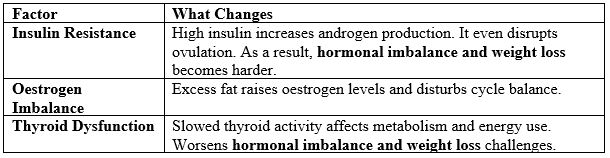
1- Insulin Resistance and Its Impact
Insulin helps your body use sugar for energy. When you carry excess weight, your cells may stop responding properly to insulin. This is called insulin resistance.
High insulin levels stimulate the ovaries to produce more androgens, which are male-type hormones. Increased androgens can disrupt ovulation. You may observe irregular cycles or missed periods. You may also struggle with acne or hair growth on the face and body.
Insulin resistance also makes hormonal imbalance and weight loss more challenging. Even with effort, the body holds on to fat.
2- Estrogen Imbalance
Fat tissue converts certain hormones into estrogen. When fat increases, estrogen levels may rise. When there's an excess of estrogen and not enough progesterone, it can definitely affect your menstrual cycle.
You may experience heavy periods, irregular bleeding, or worsening premenstrual symptoms. In the long term, persistent imbalance may increase the risk of endometrial problems. Early evaluation by experienced gynecologists in India helps prevent complications.
3- Thyroid Function and Metabolism
Your thyroid gland controls metabolism. While excess weight does not always cause thyroid disease, even mild thyroid dysfunction can worsen hormonal imbalance and weight loss struggles.
You may feel tired, cold or mentally slow. A simple blood test can inspect thyroid levels. Treatment, when needed, is usually straightforward yet effective.
Conditions Commonly Linked to Excess Weight
Certain medical conditions clearly show the connection between hormonal changes & weight gain. Comprehending them can help you seek timely care.
1- Polycystic Ovary Syndrome
Polycystic Ovary Syndrome, or PCOS, is one of the most common hormonal disorders in women. It is closely linked with insulin resistance as well as weight gain.
Women with PCOS often experience irregular periods, difficulty conceiving, acne, and excess hair growth. Weight gain can worsen symptoms. At the same time, PCOS makes hormonal imbalance & weight loss more difficult.
Management includes lifestyle changes, medication to regulate cycles, insulin sensitizing drugs, and fertility support when needed. The comprehensive assistance offered at a gynecology hospital in India ensures that treatment is tailored to your goals.
2- Irregular Menstrual Cycles
When ovulation does not occur regularly, your body does not generate progesterone in a balanced way. This can cause unpredictable bleeding.
Excess weight increases the likelihood of anovulation, which means no egg is released. Over time, this may affect fertility and uterine health. Early consultation with gynecologists in India can restore regular cycles. It can protect your long-term health.
3- Fertility Challenges
If you are trying to conceive, you may worry that weight has lowered your chances. It is true that both underweight and overweight states affect ovulation.
But again, many women conceive successfully after addressing hormonal imbalance and weight loss in a structured way. Fertility specialists combine medical therapy, ovulation tracking, and metabolic management to improve outcomes.
How Doctors Evaluate Hormonal Health
At a leading gynecology hospital in India, evaluation is thorough and patient friendly. Your doctor will first listen carefully. Your menstrual history, weight pattern, sleep, stress levels, and family history all provide clues.
Blood tests may include insulin levels, blood sugar, thyroid profile, and reproductive hormones. Ultrasound may assess ovarian structure and uterine health.
This step-by-step approach ensures that hormonal imbalance and weight loss strategies are based on evidence, not guesswork.
Treatment Approaches That Restore Balance
Treatment always depends on the root cause. There is no single plan for every woman. However, most care plans include a combination of lifestyle guidance and medical therapy.
1- Structured Lifestyle Support
Even modest weight reduction can enhance ovulation and insulin sensitivity. Doctors focus on realistic goals. A loss of five to ten percent of body weight can significantly reduce hormonal changes and weight gain effects.
Nutrition advice focuses on balanced meals with adequate protein, fiber, and controlled carbohydrates. Regular physical activity improves insulin response. Sleep and stress management are essential components of a healthy lifestyle.
2- Medical Therapy
When making lifestyle changes doesn't do the trick, medication could be the next best option. Insulin sensitizing drugs can improve ovulation in women with PCOS. Hormonal therapy can regulate cycles and protect the uterus.
Thyroid disorders are treated with hormone replacement when required. Each treatment plan aims to support safe and sustainable hormonal imbalance and weight loss.
3- Fertility-Focused Care
If pregnancy is your goal, doctors may use ovulation induction medicines under careful monitoring. In some cases, assisted reproductive techniques are advised. Experienced gynecologists in India follow internationally accepted protocols to ensure safety and high standards of care.
Why Timely Care Matters
Ignoring symptoms may allow imbalance to persist. Over time, uncontrolled insulin resistance can elevate the risk of type 2 diabetes. Prolonged irregular cycles can affect uterine health.
Early care prevents complications. More importantly, it helps you feel better. When hormones stabilize, many women notice improved mood, clearer skin, better energy, and more predictable cycles.
At a comprehensive gynecology hospital in India, care teams work together. Endocrinologists, nutrition experts and reproductive specialists collaborate to address both hormonal changes and weight gain and long-term wellbeing.
Final thoughts
Excess weight does not only change your appearance. It has an effect on the daily functioning of your hormones. This type of interaction may lead to a frustrating cycle of hormonal imbalance and weight loss may seem like an uphill battle.
However, this cycle can be reversed. With accurate diagnosis, personalized treatment and ongoing support, you can restore balance. You can regain regular cycles and improve fertility potential.
If you notice symptoms of hormonal changes and weight gain, think about consulting experienced gynecologists in India. Early guidance brings clarity. It also brings reassurance.
FAQs
1- Can losing weight really improve hormonal imbalance?
Yes. Losing even a little weight can enhance your insulin sensitivity & restore ovulation. This directly promotes weight loss recovery and hormonal imbalance.
2- Are hormonal problems always caused by excess weight?
No. Thyroid disorders, genetic factors and stress can even disrupt hormones. But again, excess weight often worsens hormonal changes as well as weight gain patterns.
3- How long does it take to see improvement?
Some women notice cycle improvement within three to six months of structured treatment. The timeline depends on the underlying cause as well as consistency of care.
4- When should I see a specialist?
If you have irregular periods, difficulty conceiving, or persistent weight gain despite effort, consult a qualified specialist at a recognized gynecology hospital in India for detailed evaluation.