
Patient Profile
A 3-year-1-month-old female child was referred from a private hospital with complaints of:
- Loose stools (3–4 episodes on day 1, onset 4 days prior)
- Vomiting (5–6 episodes/day for 3 days)
- Fever and decreased urine output for 2 days
There was no history of:
- Blood in stool
- Cough or abdominal pain
- Abdominal distension
- Drug intake
- Major past illness
Clinical Examination
At admission:
- Child was drowsy, pale, and icteric
- Vitals were stable
- Systemic examination was unremarkable
The patient was admitted to the PICU for further evaluation.
Investigations
Laboratory findings revealed:
- Severe anemia: Hb – 5.9 g/dL
- Thrombocytopenia: 26,000/µL
- Elevated reticulocyte count: 10.9%
- Raised LDH: 3340 U/L
- Hypokalemia: 2.7 mmol/L
- Renal dysfunction:
- Urea: 115.1 mg/dL
- Creatinine: 1.64 mg/dL
Peripheral smear:
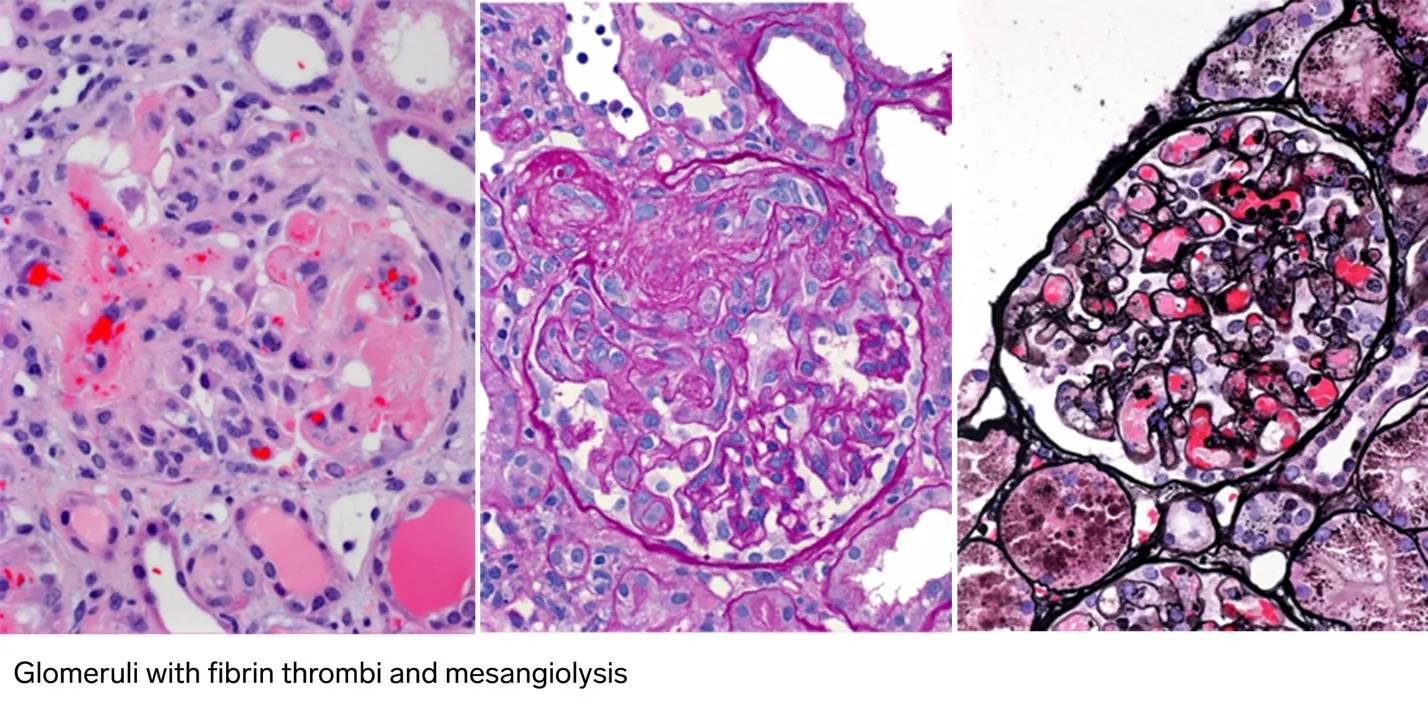
- Presence of schistocytes (fragmented RBCs)
Urine examination:
- RBCs: 70–80/hpf
- Proteinuria: 2+
These findings were consistent with Hemolytic Uremic Syndrome (HUS).
Further evaluation showed:
- Anti–Factor H antibody: >300 U/mL
- Complement levels (C3, C4): Normal
- ANA: Negative
Diagnosis
Based on clinical and laboratory findings, a diagnosis of Atypical Hemolytic Uremic Syndrome (Anti–Factor H antibody–mediated) was made.
Management
The child was managed in the PICU with:
Plasmapheresis (PLEX)
- Initiated immediately
- Total 12 cycles administered:
- First 5 cycles: Daily
- Next 3 cycles: Every 2 days
- Final 4 cycles: Every 4 days
Medications
- Inj. Methylprednisolone (started after 3 cycles of PLEX, given for 3 days)
- Followed by oral Prednisolone
- Mycophenolate mofetil was initiated after the 8th PLEX cycle
- Antihypertensives:
- Amlodipine
- Enalapril
Supportive Care
- Correction of hypokalemia
- Monitoring and management of renal function
Clinical Course
- Renal remission achieved after the 3rd PLEX cycle
- Hematological remission was achieved after the 5th cycle
- Hypertension was controlled with oral medications
- Proteinuria and hematuria:
- Reduced after 9 cycles
- Completely resolved after 12 cycles
Repeat Anti–Factor H antibody titer:
- <6 U/mL (negative)
Outcome
The patient showed significant clinical improvement and was discharged after 4 weeks of hospitalization on:
- Oral Prednisolone
- Mycophenolate mofetil
Discussion
Hemolytic Uremic Syndrome (HUS) is a leading cause of acute kidney injury in children and is characterized by:
- Microangiopathic hemolytic anemia
- Thrombocytopenia
- Acute renal failure
While most pediatric cases are diarrhea-associated (STEC-HUS), atypical HUS results from complement dysregulation. In this case, elevated Anti–Factor H antibodies confirmed an immune-mediated atypical form.
Early recognition and aggressive management with plasmapheresis and immunosuppression are critical to improving outcomes, especially in settings where Eculizumab is not readily available.
Conclusion
This case highlights:
- The importance of early diagnosis of atypical HUS
- The role of Anti–Factor H antibody testing
- Successful management with plasmapheresis and immunosuppressive therapy
Timely intervention resulted in complete hematological and renal recovery in this child.