
Patient Information
- Age: 36 years
- Sex: Female
- Obstetric History: One full-term normal vaginal delivery 15 years ago (male child).
- Presenting Complaint: Pelvic discomfort and heavy menstrual bleeding.
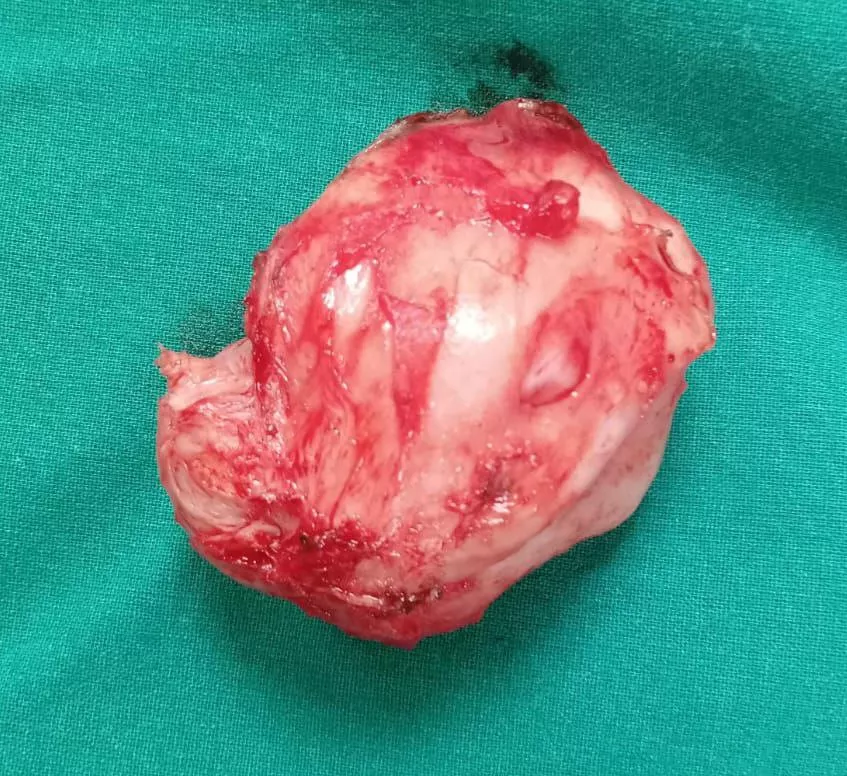
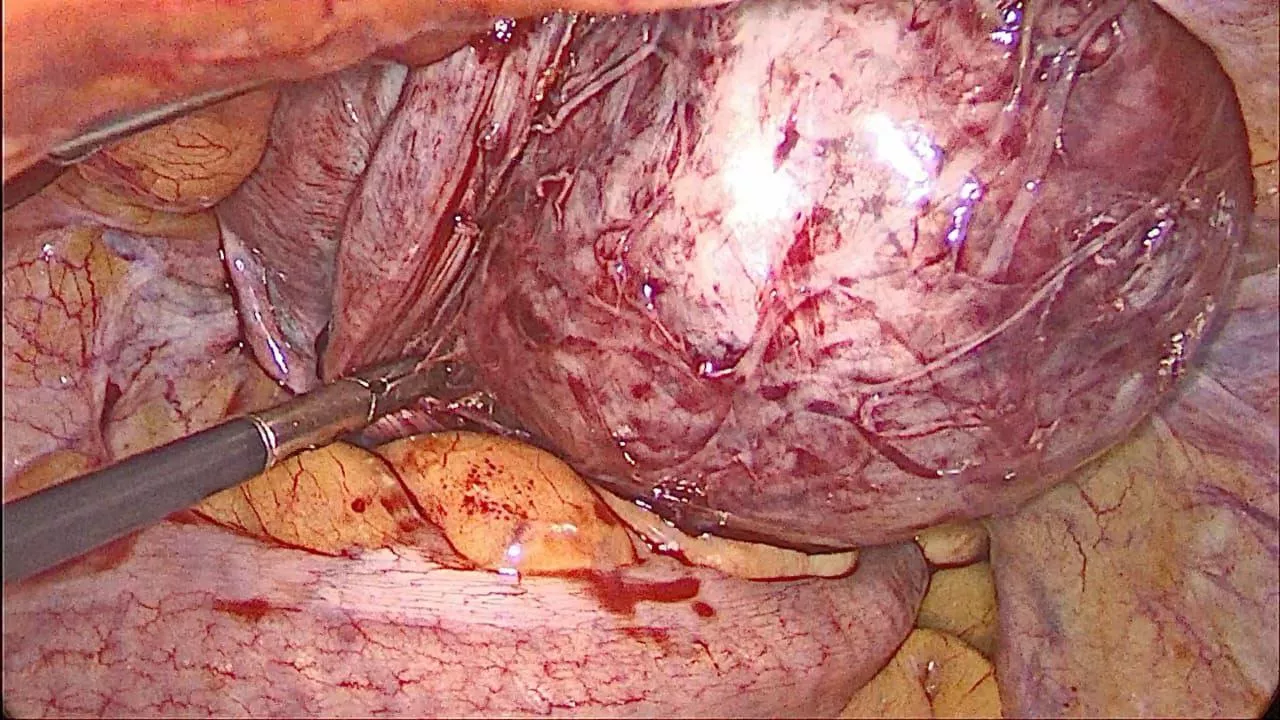
- Diagnosis: Large posterior wall uterine fibroid measuring 7 × 6 × 5 cm.
Clinical Presentation
A 36-year-old woman presented with complaints of heavy menstrual bleeding, dysmenorrhea, and intermittent pelvic pain for the past several months. She had no significant comorbidities and had a previously uncomplicated normal delivery 15 years earlier.
Pelvic ultrasound revealed a single, large intramural fibroid located in the posterior uterine wall, measuring 7 × 6 × 5 cm. Because the fibroid was symptomatic and causing pressure symptoms, she was advised to undergo surgical management.
Preoperative Assessment
- Ultrasound Pelvis: Confirmed single posterior wall fibroid.
- Blood Work: Hemoglobin normal, other baseline investigations within normal limits.
- Counseling:
- Explained options including medical management, laparoscopic myomectomy, and open myomectomy.
- Considering the patient’s age, preference, and fibroid characteristics, laparoscopic myomectomy was chosen.
Surgical Procedure: Laparoscopic Myomectomy
- Equipment Used:
- Olympus laparoscopic system
- Ligasure for vascular control and tissue sealing
- Procedure Details:
- Patient placed under general anesthesia.
- Three small laparoscopic ports were made.
- The posterior wall fibroid was identified and vasopressin was infiltrated to reduce intraoperative bleeding.
- A serosal incision was made, and the fibroid was enucleated using sharp and blunt dissection assisted by Ligasure.
- The uterine incision was sutured in layers to restore anatomical integrity.
- Fibroid was removed via minimally invasive technique.
- Hemostasis was well maintained throughout.
Postoperative Course
- The postoperative recovery was smooth.
- Due to minimally invasive surgery, the patient experienced significantly less pain, faster mobilization, and minimal wound complications.
- Oral intake was resumed early and ambulation started on the same day.
- She was discharged on postoperative day 3 in stable condition.
Discussion
Uterine fibroids (leiomyomas) are extremely common in women of reproductive age. Although many are asymptomatic, surgical removal is indicated when:
- They cause heavy menstrual bleeding
- Lead to pelvic pain/pressure
- Distort the uterine cavity
- Affect fertility
- Rapidly increase in size
Decision-making factors for myomectomy include:
- Patient’s age
- Fertility wishes
- Size, number, and location of fibroids
- Symptoms
- Surgical expertise available
Laparoscopic myomectomy is preferred for selected cases because it offers:
- Less postoperative pain
- Early recovery
- Minimal blood loss
- Shorter hospital stay
- Better cosmetic results
Conclusion
This case demonstrates the successful use of laparoscopic myomectomy for a large posterior wall fibroid in a 36-year-old woman. The procedure was completed safely with modern laparoscopic equipment and energy devices, resulting in minimal postoperative discomfort and early discharge. Surgical approach for fibroids should always be individualized, considering the patient’s symptoms, fertility plans, age, and fibroid characteristics. Modern advances have made laparoscopic myomectomy safe and effective options for women with symptomatic fibroids.