by Dr. Anuradha Kakkanatt Babu
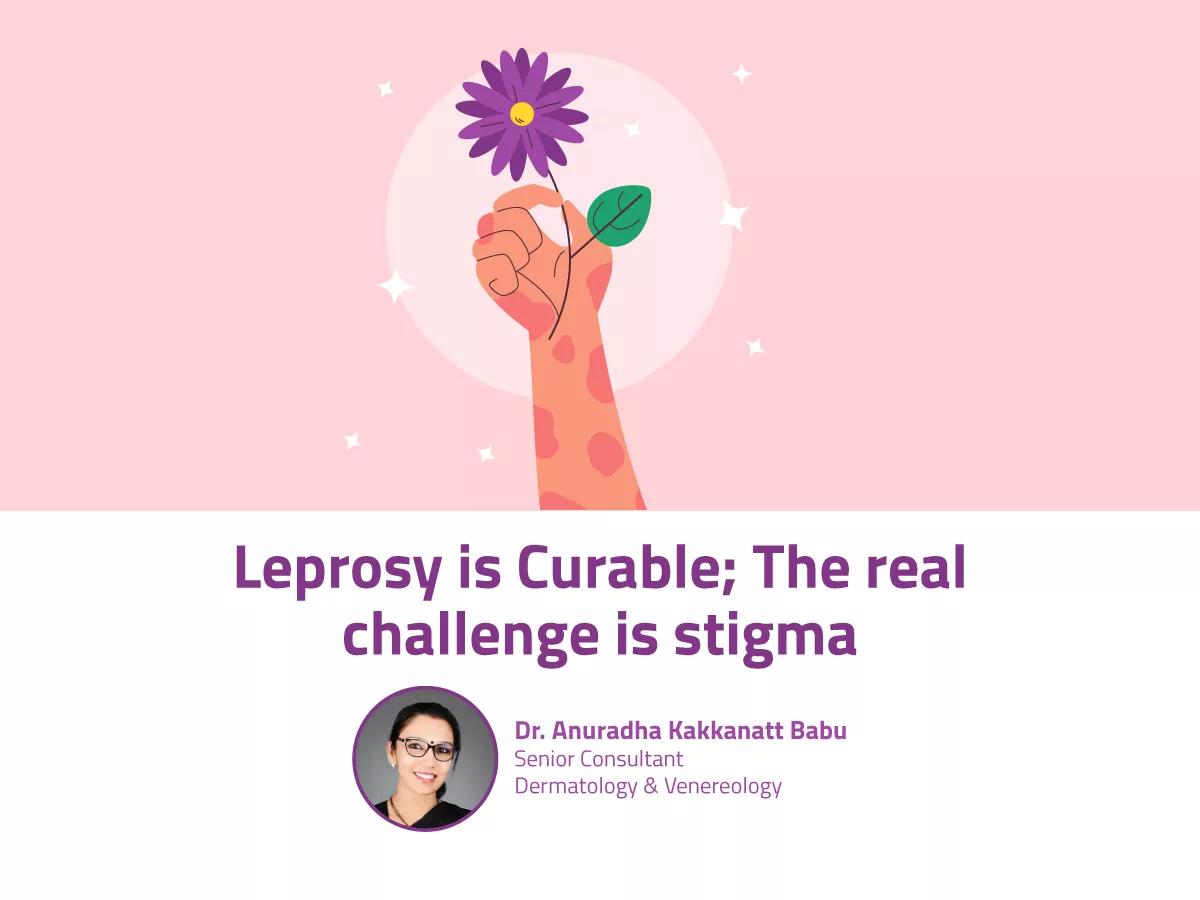

World Leprosy Day is observed every year to raise awareness about a disease that still carries fear and misunderstanding, even though modern medicine has made it completely curable. In 2026, the global theme “Leprosy is curable, the real challenge is stigma” draws attention to a truth many people overlook. The illness itself can be effectively treated, but social attitudes continue to create barriers to early care and recovery.
Leprosy is often associated with myths, isolation, and permanent disability. Because of these misconceptions, people may delay seeking medical help, even when symptoms are present. This delay can lead to complications that could have been prevented with timely diagnosis and treatment. World Leprosy Day 2026 serves as a reminder that awareness, understanding, and compassion are just as important as medical treatment.
This blog aims to provide clear and reliable information about leprosy for the general public, addressing common concerns, explaining leprosy treatment options in India, and highlighting the importance of early care and social acceptance.
What Is Leprosy
Leprosy, also known as Hansen’s disease, is a long-term infectious disease caused by the bacterium Mycobacterium leprae. It primarily affects the skin and peripheral nerves. In some cases, it can also involve the eyes and upper respiratory tract.
One of the unique aspects of leprosy is its slow progression. Symptoms may take months or even years to appear after infection. Because of this, many individuals do not realise they are affected until noticeable signs develop. Early medical evaluation plays a crucial role in preventing long-term complications.
Common Signs and Symptoms to Look Out For
Leprosy symptoms often begin quietly. Early symptoms are usually painless and easy to miss, which is why leprosy awareness in India is essential.
Some common signs include:
● Light coloured or reddish patches on the skin
● Reduced or lost sensation in affected skin areas
● Numbness or tingling in hands or feet
● Muscle weakness
● Thickened nerves
● Dry skin due to reduced sweating
Any skin patch that shows loss of sensation should be examined by a healthcare professional. Not every skin change indicates leprosy, but early evaluation helps rule out serious conditions.
How Does Leprosy Spread
There is a widespread belief that leprosy spreads easily. In reality, this is not true.
Important facts to understand:
● Leprosy is not highly contagious
● It spreads only through prolonged close contact with an untreated person
● Casual contact, such as shaking hands, hugging, or sharing meals, does not spread the disease
● Most people have natural immunity to the bacteria
Once treatment begins, the person is no longer infectious, making early diagnosis of leprosy even more important.
Leprosy Is Curable: Treatment and Recovery
One of the most important messages of World Leprosy Day 2026 is that leprosy is curable. Treatment involves Multi-Drug Therapy for leprosy, recommended by the World Health Organization.
Treatment includes:
● A combination of antibiotics
● A fixed treatment duration depending on the type of leprosy
● Safe and well-tolerated medicines
● Continued ability to work and live normally during treatment
When treatment is started early, patients recover fully and lead normal lives without long-term complications.
Why Early Diagnosis Matters
Early diagnosis of leprosy is essential in preventing nerve damage and disability. Leprosy affects nerves silently, and untreated nerve damage can become permanent.
Early detection helps:
● Prevent physical deformities
● Reduce disability risk
● Preserve sensation and muscle function
● Improve quality of life
Delays in diagnosis often happen because of a lack of awareness or fear of social judgment. Addressing these fears is key to improving outcomes.
Understanding the Real Problem: Stigma
Despite medical progress, stigma remains the biggest challenge in leprosy care. Many people hesitate to seek treatment due to fear of discrimination.
Stigma may lead to:
● Delayed medical consultation
● Social isolation
● Emotional distress
● Loss of employment or education opportunities
These challenges are rooted in outdated beliefs. Leprosy is not hereditary, not a punishment, and not a reason for exclusion from society.
Emotional and Social Impact of Leprosy
Leprosy does not only affect physical health. It can also impact mental and emotional well-being.
Some individuals may experience:
● Anxiety and fear
● Low self-confidence
● Depression
● Withdrawal from social interactions
Support from family, healthcare providers, and the community plays an important role in recovery. Counselling and reassurance help individuals regain confidence and dignity.
Leprosy in India: Why Awareness Still Matters
India has made significant progress in reducing leprosy cases over the years. However, new cases continue to be reported, particularly in areas where leprosy awareness in India is limited.
Late diagnosis remains a concern. Many individuals are unaware of early leprosy symptoms or are hesitant to seek care due to fear of stigma. Public education helps people recognise symptoms early and understand that effective leprosy treatment is available in India.
Who Is at Risk and Who Should Get Checked
Leprosy can affect people of all ages. Anyone experiencing symptoms should seek medical advice.
Consult a healthcare professional if there is:
● Persistent skin patches with reduced sensation
● Numbness or weakness in limbs
● Close contact with a person diagnosed with leprosy
● Unexplained nerve thickening
Early consultation helps ensure timely care and peace of mind.
Myths and Facts About Leprosy
Many misconceptions still exist around leprosy.
Common myths include:
● Leprosy spreads through touch
● People with leprosy must be isolated
● The disease is incurable
The facts are clear:
● Leprosy is curable
● It does not spread through casual contact
● Early treatment prevents disability
● Patients on treatment can live normal lives
Replacing myths with facts reduces fear and discrimination.
Caring for Nerve Health During and After Treatment
Nerve care is an important part of leprosy management. Even after completing treatment, some individuals may need continued care.
Good nerve care includes:
● Regular medical follow-up
● Daily checking of hands and feet
● Protecting numb areas from injury
● Following physiotherapy advice when recommended
With proper care, complications can be effectively managed.
The Importance of Follow-Up Care
Completing medication is only one step. Follow-up visits help monitor nerve health and manage any delayed reactions.
Follow-up care supports:
● Early identification of complications
● Ongoing nerve protection
● Physical rehabilitation
● Emotional reassurance
Consistent care improves long-term outcomes.
Moving Forward with Awareness and Understanding
The theme of World Leprosy Day 2026, “Leprosy is curable, the real challenge is stigma”, reminds us that curing the disease is only part of the solution. Addressing stigma and misinformation is equally important.
By promoting awareness, encouraging early leprosy diagnosis, and treating affected individuals with respect, society can help eliminate fear and discrimination. Leprosy is curable. Understanding and compassion make healing complete.