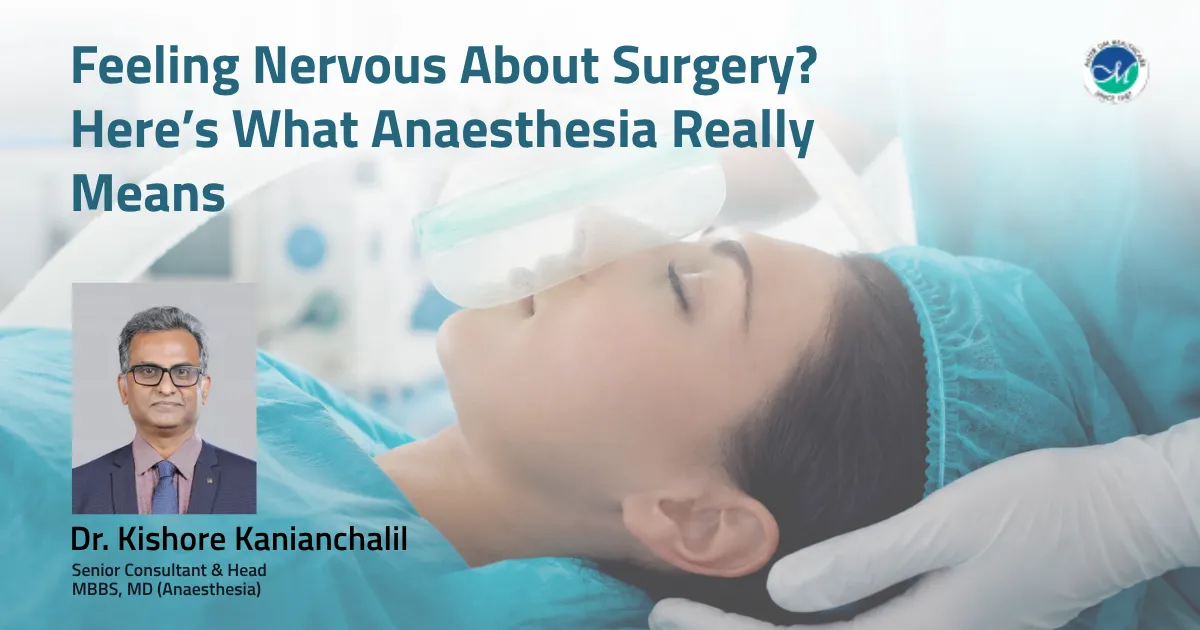

If you've been told you need surgery, chances are one question pops up right after "Will I be okay?" It's "Will I feel anything?"
That's where anaesthesia comes in, and it's far less scary than most people imagine. If you're planning a procedure in Calicut, knowing what happens beforehand makes the whole experience calmer, and so does choosing the best anaesthesia hospital in Calicut for your care. Let's walk through it together, step by step.
So, what is anaesthesia?
Anaesthesia is a safe, carefully controlled way of blocking pain and sensation during a procedure. It lets surgeons do their work while you stay completely unaware and pain free The effect is temporary, and your body returns to normal once the medicines wear off.
Meet your anaesthesiologist
Many people think anaesthesia is just an injection given before surgery. In reality, an anaesthesiologist, a doctor with years of specialised training, plans your care before the operation, stays beside you throughout, and looks after you as you wake up. They watch your heart rate, breathing, oxygen levels and blood pressure every single moment, and adjust the medicines as your body responds.
Types of anaesthesia
• Local anaesthesia: numbs one small area. You stay awake and comfortable. It's often used for minor procedures like stitches or dental work.
• Regional anaesthesia: numbs a larger part of the body, like everything below the waist. Spinal and epidural anaesthesia are common examples, often used in C-sections and knee or hip surgeries.
• General anaesthesia: puts you into a deep, sleep-like state. You feel nothing and remember nothing, and it's used for major surgeries and surgery is not possible with regional anaesthesia.
• Sedation: keeps you relaxed and drowsy, usually alongside local or regional anaesthesia.
Your anaesthesiologist will recommend the right one based on the type of surgery, your age, your health and your own comfort.
Before surgery: the pre-operative check
Before any procedure, the anaesthesia team will talk with you and review your reports. Be open about:
• Any medicines you take, including herbal ones and supplements
• Past surgeries and any reactions to anaesthesia
• Allergies, smoking or alcohol habits
• Long-term medical conditions like diabetes, blood pressure,asthma,heart disorders.
Follow the fasting instructions carefully. An empty stomach keeps you safe during anaesthesia, so don't skip this step, even if it feels like a small thing.
On the day of surgery
In the operation theatre, the team will attach monitors to your chest, finger and arm, and place a IV Cannula in a vein for medicines. You'll be asked a few simple questions, such as your name and the surgery you're having, to double-check everything. Then the anaesthesia begins, and most people drift off or feel numb within minutes. Throughout the procedure, your anaesthesiologist stays right there.
After surgery: what to expect
Waking up a little groggy, thirsty or slightly nauseous is normal and passes soon. Some people also feel a sore throat or mild shivering. Most people feel back to themselves within hours. Rest well, sip fluids when allowed, and ask someone to stay with you for the first day. Avoid driving, signing important papers or making big decisions for at least 24 hours.
Simple tips for a smoother experience
• Arrive on time and carry all your previous reports and medicine lists
• Remove jewellery, contact lenses and dentures before going in, if asked
• Stop smoking and avoid alcohol well before your surgery, as advised by your doctor
• Write down your questions in advance so you don't forget them in the moment
• Keep a family member nearby who can listen to the post-surgery instructions with you
These small habits help your team look after you better and make recovery easier.
Is anaesthesia safe?
Yes. With modern monitoring, better medicines and experienced teams, serious complications are rare. The risks depend on your age, overall health and the type of surgery, which is exactly why the pre-operative check matters so much. Telling your doctor everything helps them keep you safe.
Looking for the best anaesthesia hospital in Calicut?
Aster MIMS Calicut has a dedicated team of anaesthesiologists working in a well-equipped operation theatre. From your pre-surgery check to your recovery, you're looked after at every step, which is why many families see us as the best anaesthesia hospital in Calicut.
A final word
Having questions before surgery is completely natural. Ask them. A clear conversation with your anaesthesiologist can take away most of the fear. Remember, you are never alone in that operation theatre, and every step is planned with your safety and comfort in mind.
Planning a surgery in Calicut? Talk to our anaesthesia team at Aster MIMS Calicut and walk into your procedure feeling informed and calm.
Featured Blogs


One Aster
Personalized Medical Assistant for all your healthcare needs.
Book instant appointment, pay securely, eConsult with our doctors and save all your health records at one place are some of the benefits of OneAster App. It is everything you need, to manage your family Health.



* Registration available only for valid Indian mobile number