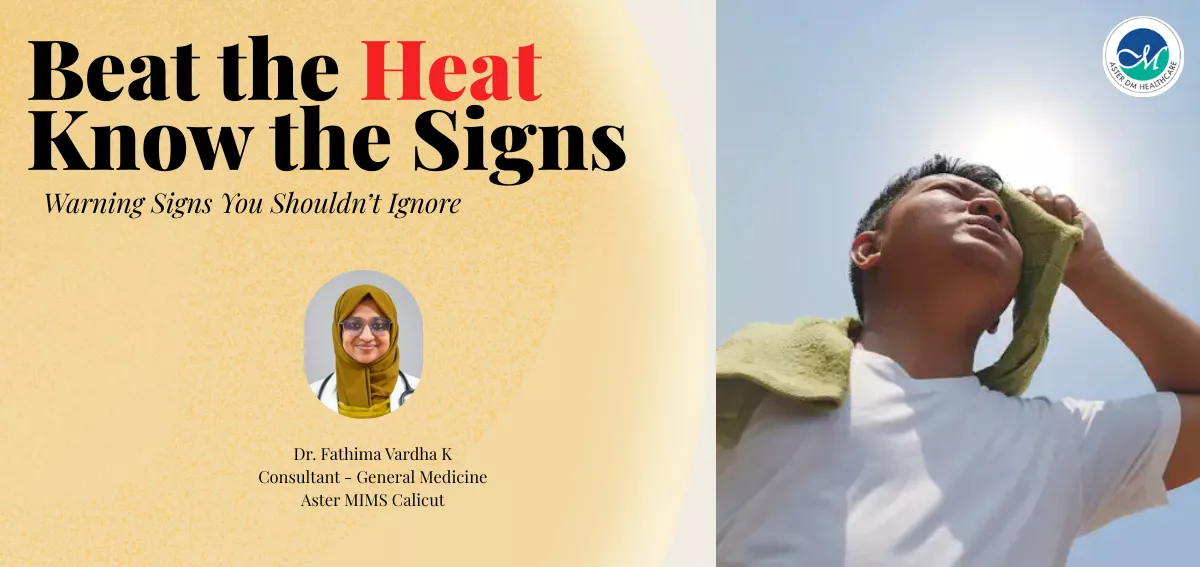

As temperatures continue to rise during summer, heat-related illnesses are becoming increasingly common across Kerala. The intense heat between 11 AM and 3 PM exposes people to strong ultraviolet (UV) rays, increasing the risk of dehydration, sunburn, and life-threatening conditions such as sunstroke or heat stroke.
According to leading family medicine doctors in Calicut, prolonged exposure to extreme heat can affect people of all age groups, especially children, elderly individuals, and patients with diabetes or heart disease.
Understanding the warning signs of heat stroke, immediate first aid measures, and prevention tips can help protect your health during summer.
Common Heat-Related Illnesses During Summer
The two most common heat-related illnesses are:
- Sunburn
- Sunstroke / Heat Stroke
Sunburn: Causes, Symptoms, and Care
Sunburn is a skin injury caused by excessive exposure to sunlight. Similar to thermal burns, sunburn damages the skin due to harmful UV radiation.
Symptoms of Sunburn
Patients visiting family medicine clinics in Calicut commonly report:
- Redness and irritation of the skin
- Burning sensation
- Pain and tenderness
- Blisters
- Peeling skin
- Swelling
If untreated, severe sunburn can lead to dehydration and skin infection.
First Aid for Sunburn
Experts in family medicine in Calicut recommend:
- Moving the affected person away from direct sunlight
- Cooling the body with cold compresses or cool showers
- Drinking adequate water
- Applying soothing moisturizers
- Avoiding further sun exposure
If symptoms worsen, consult a general physician in Calicut immediately.
What Is Sunstroke or Heat Stroke?
Sunstroke, also called heat stroke, is a serious medical emergency. It occurs when the body temperature rises above 40°C (104°F), and the brain loses its ability to regulate body temperature.
According to experienced general medicine doctors in Calicut, delayed treatment of heat stroke can lead to organ damage, seizures, unconsciousness, and even death.
Causes of Heat Stroke
1. Prolonged Exposure to Sunlight
Remaining outdoors during peak summer hours increases body heat rapidly.
2. Working in Hot Conditions
Outdoor workers, delivery personnel, and athletes are at high risk.
3. Dehydration
Inadequate fluid intake reduces the body’s cooling ability.
4. Tight or Heavy Clothing
Poor ventilation traps heat inside the body.
5. High-Risk Groups
Leading family medicine specialists in Calicut warn that the following individuals are more vulnerable:
- Elderly people
- Children
- Patients with diabetes
- Heart disease patients
- Individuals with chronic illnesses
Symptoms of Heat Stroke
Seek immediate medical attention if you notice:
- Very high fever
- Severe headache
- Dizziness or fainting
- Hot, flushed skin
- Absence of sweating
- Rapid heartbeat
- Vomiting
- Confusion or abnormal behavior
- Seizures
- Loss of consciousness
These symptoms require urgent evaluation by general medicine specialists in Calicut or emergency care doctors.
Immediate First Aid for Heat Stroke
Doctors providing family medicine treatment in Calicut recommend the following emergency steps:
Move the Person to a Cool Area
Shift the patient to a shaded or air-conditioned place immediately.
Remove Heavy Clothing
Loosen or remove thick clothing to improve cooling.
Cool the Body Quickly
- Apply cold water to the body
- Use wet towels
- Place ice packs on:
- Neck
- Armpits
- Groin
Give Water Carefully
If the person is conscious:
- Give small amounts of water slowly
- Avoid sugary beverages
Seek Emergency Medical Care
Take the patient to the nearest hospital without delay.
Treatment for Heat Stroke
At hospitals, general medicine doctors in Calicut focus on reducing body temperature rapidly and preventing complications.
Common Treatments Include
- Intravenous (IV) fluids
- Rapid cooling measures
- Electrolyte correction
- Oxygen support
- ICU care in severe cases
Early treatment by experienced family medicine doctors in Calicut significantly improves recovery.
Tips to Prevent Heat Stroke During Summer
Preventive care is one of the key focuses of family medicine specialists in Calicut.
1. Avoid Peak Heat Hours
Stay indoors as much as possible between 11 AM and 3 PM.
2. Drink Plenty of Water
Hydration is essential during hot weather.
3. Eat Water-Rich Fruits
Include:
- Watermelon
- Cucumber
- Orange
- Tender coconut water
4. Wear Loose Cotton Clothes
Light-colored clothing helps maintain body temperature.
5. Use Sun Protection
Carry:
- Caps
- Umbrellas
- Sunglasses
- Sunscreen
6. Take Adequate Rest
Avoid overexertion in extreme heat.
7. Monitor Elderly and Children
People at higher risk should be monitored closely during summer.
Regular checkups with family medicine doctors near you in Calicut can help identify dehydration and heat-related complications early.
When Should You Consult a General Medicine Doctor?
Visit a general physician in Calicut immediately if you experience:
- Persistent fever
- Severe weakness
- Dizziness
- Vomiting
- Confusion
- Reduced urination
- Difficulty breathing
Heat-related illnesses can worsen quickly without proper treatment.
Importance of Family Medicine During Summer
Family medicine focuses on preventive healthcare, chronic disease management, and long-term wellness for all age groups. Consulting experienced family medicine doctors in Calicut helps in:
- Managing dehydration
- Controlling diabetes during summer
- Monitoring blood pressure changes
- Preventing heat-related complications
- Improving overall family health
Final Thoughts
Summer heat can seriously affect your health if proper precautions are not taken. While mild sunburn may improve with simple care, heat stroke is a life-threatening emergency requiring immediate medical attention.
Staying hydrated, avoiding direct sun exposure, wearing protective clothing, and recognizing early symptoms can help prevent complications.
If you or your loved ones experience symptoms of heat exhaustion or sunstroke, seek timely care from qualified general medicine doctors in Calicut or family medicine specialists in Calicut.