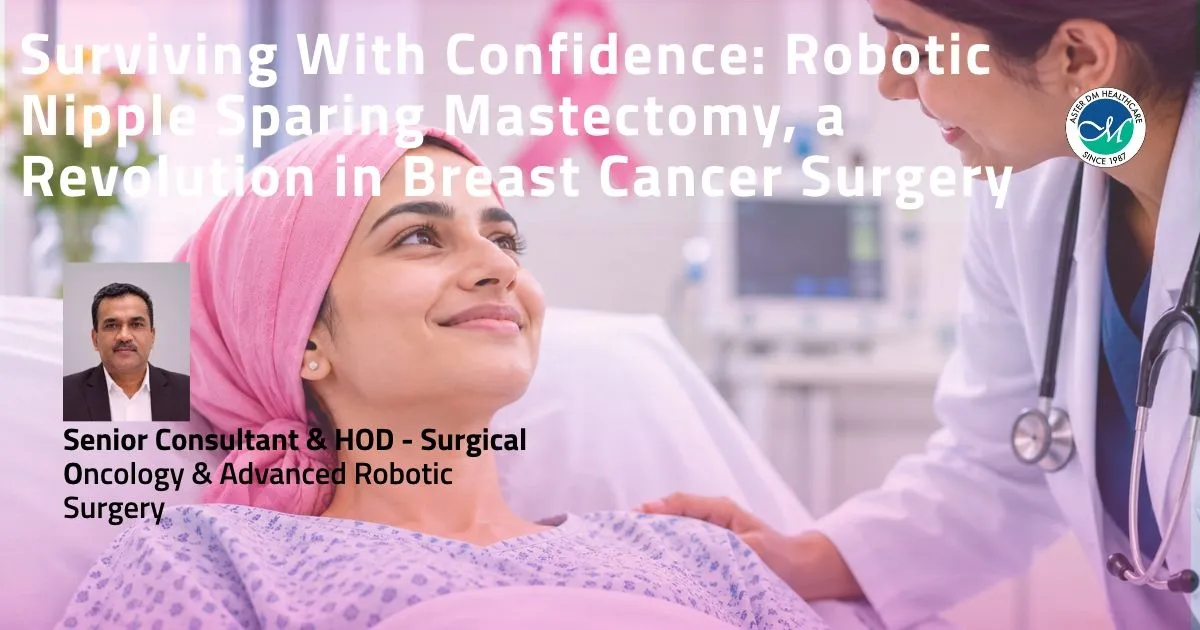

In the past, breast cancer surgery could do little more than remove the cancer cells completely and keep the patient alive. Modern medicine now gives equal importance to quality of life after survival, mental health, and body image, alongside recovery from the disease. Such advances play a decisive role in helping women overcome the physical and emotional shock of a breast cancer diagnosis and treatment. One scientific breakthrough that has made a major difference in this field is Robotic Nipple-Sparing Mastectomy, a mastectomy that preserves the nipple and the skin.
What Is Robotic Nipple-Sparing Mastectomy?
In traditional breast cancer surgery, the nipple, the dark area around it, and the skin of the breast are removed completely along with the breast tissue. In Robotic Nipple-Sparing Mastectomy, however, the natural skin and the nipple are fully preserved, and only the diseased tissue is removed using an advanced robotic surgical system.
The robotic surgical instruments are inserted through a very small incision made under the armpit or on the side of the breast. In the same stage, breast reconstruction is also completed, using either artificial implants or the patient's own tissue from another part of the body (autologous flaps).
Why Does the Robotic Method Stand Out?
For a woman, the breast is not merely a part of the body. It is an integral part of her physical identity, self-esteem, and femininity. The physical and emotional impact of traditional surgery is therefore very great. Against this background, Robotic Nipple-Sparing Mastectomy (RNSM) stands out.
The main benefits of Robotic Nipple-Sparing Mastectomy are:
Because the skin and nipple are preserved, the breasts keep a natural appearance after surgery.
The robotic system helps protect the blood supply to the nipple without interruption, which reduces the chance of nipple tissue dying.
Since there are no large incisions on the front of the breast and only small incisions under the armpit, post-surgical pain and the risk of infection are lower, and the patient can return to normal life sooner.
Because removal of the cancer cells and breast reconstruction are completed at the same time, the burden of multiple surgeries can be avoided.
Who Is This Surgery Suitable For?
Robotic Nipple-Sparing Mastectomy may not be suitable for every breast cancer patient. Doctors recommend this surgery only after careful evaluation:
Early-stage breast cancer: When the cancer is at an early stage (DCIS) and has not spread to the nipple or the surrounding skin.
Location of the tumor: When the tumor in the breast is located at a safe distance from the nipple.
Prophylactic mastectomy (preventive breast surgery): Robotic Nipple-Sparing Mastectomy done as a precaution is well suited for women who have a very high risk of developing breast cancer in the future because of genetic changes such as BRCA1 and BRCA2, or because of family history.
Mental Health and Quality of Life
The psychological impact of surgery on breast cancer survival is not small. The feeling of having lost a part of the body often leads to depression, low self-esteem, and difficulties in marital relationships for many women.
With Robotic NSM surgery, however, the natural appearance of one's own body is not lost, and this gives patients great relief and hope. It helps breast cancer survivors return to normal life quickly after surgery. Beyond mere survival, this technology can help ensure a happy life.
Things to Consider and Challenges
For Robotic Nipple-Sparing Mastectomy to be successful, some factors also need to be considered:
Blood supply and complications: In people with severe diabetes and in smokers, the blood supply to the skin is more likely to be disrupted and the nipple tissue is more likely to die.
Breast structure: This surgery may be technically more complex for women with large breasts or sagging breasts.
Sensation: Compared with open surgery, the chance of experiencing reduced natural sensation in the nipple after surgery is not high.
Towards a New Life with Confidence
Robotic Nipple-Sparing Mastectomy is proof of the progress medical science has made in breast cancer treatment. The aim of modern cancer care is not only recovery from the disease but also restoring the patient's quality of life and self-esteem.
If you have been diagnosed with breast cancer or have a high risk of developing it, you can consult a surgical oncologist, discuss your situation in detail, and explore the possibility of Robotic Nipple-Sparing Mastectomy. Timely diagnosis and suitable treatment are the way to complete survival.
Featured Blogs

One Aster
Personalized Medical Assistant for all your healthcare needs.
Book instant appointment, pay securely, eConsult with our doctors and save all your health records at one place are some of the benefits of OneAster App. It is everything you need, to manage your family Health.



* Registration available only for valid Indian mobile number