While heavy menstrual bleeding is common, it is not something you should simply accept as normal. One of the most common causes is uterine fibroids, a condition that affects millions of women but often goes undiagnosed until symptoms begin interfering with daily life.
In this article, Dr. Smrithi D. Nayak, Obstetrician Gynaecologist, Laparoscopy surgeon, at Aster RV Hospital answers some of the most common questions about uterine fibroids, explains how they can cause heavy menstrual bleeding, and discusses the latest treatment options available today.
Q1. What are uterine fibroids, and how common are they among women?
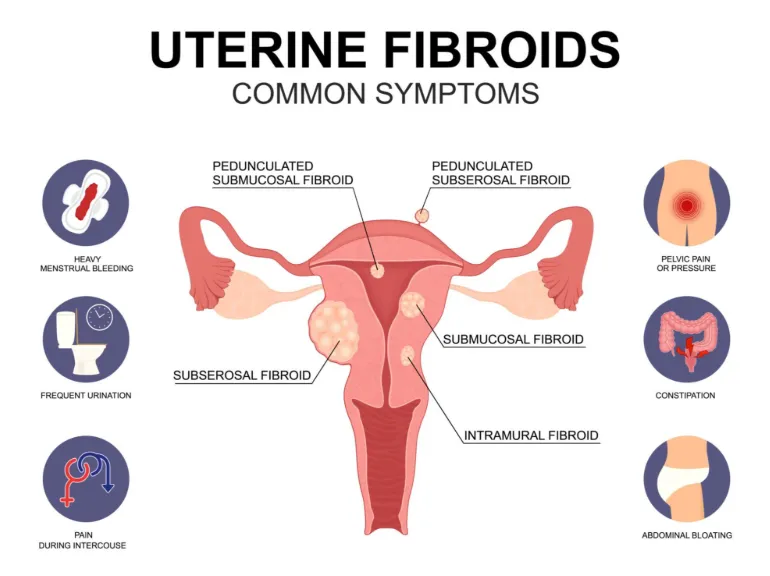
Uterine fibroids are non-cancerous growths that develop from the muscle of the uterus. They can be as tiny as a seed or grow large enough to change the shape of the uterus. Some women have just one fibroid, while others may have several.
70–80% Women develop fibroids by the age of 50
In India, we frequently diagnose fibroids in women in their 30s and 40s, often during an evaluation for heavy periods or while investigating fertility concerns.
Heavy menstrual bleeding is one of the most common symptoms that brings women to the clinic.
Q2. What symptoms suggest that heavy menstrual bleeding may be caused by fibroids, and how can a woman tell if her bleeding is unusually heavy?
Not all fibroids behave the same way.
The symptoms depend on the size, number, and location of the fibroids.
A small fibroid may cause no problems at all, while another located close to the uterine lining can lead to significant bleeding.
"Heavy menstrual bleeding is often the first symptom women notice. But when it's accompanied by pelvic pressure, frequent urination, or passing large blood clots, it's important to get evaluated rather than assuming it's just a 'bad period,'" says Dr. Smrithi D Nayak.
Here's a quick checklist to help you recognise the warning signs:
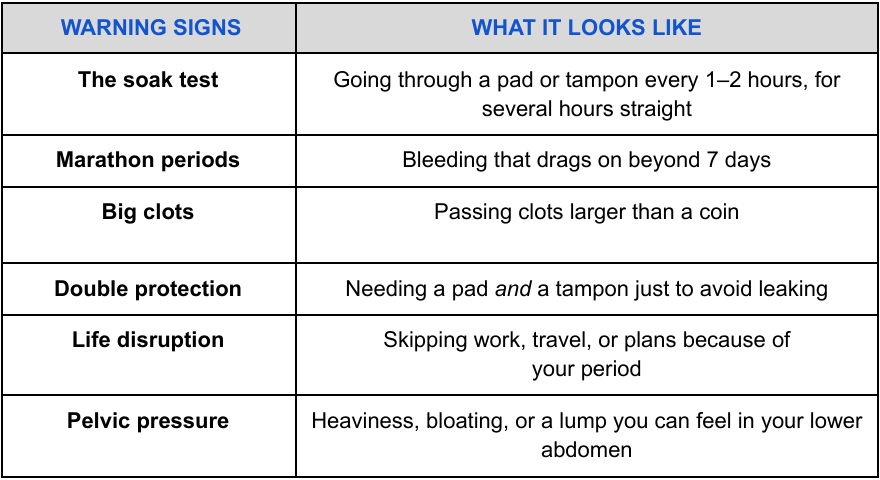

If you're nodding along to three or more of these…
Your body needs medical attention!
A simple pelvic ultrasound can usually identify fibroids within minutes and help determine whether they are responsible for your symptoms.
Q3. How can prolonged heavy bleeding due to fibroids affect a woman's health, including the risk of anaemia?
Dr. Nayak says, " When excessive bleeding continues month after month, the body gradually loses more iron than it can replace, leading to iron-deficiency anaemia. And that's exactly why so many women don't connect their exhaustion to their periods at all. Instead, they blame work, stress, or poor sleep while the real problem continues untreated.”
Signs that heavy menstrual bleeding may be causing anaemia:
● Persistent fatigue - Feeling tired even after a good night's sleep.
● Shortness of breath - Becoming breathless during routine activities like climbing stairs or walking.
● Dizziness or fainting spells - Especially during or after your periods.
● Pale skin, brittle nails, and increased hair fall - Common signs of iron deficiency.
● Difficulty concentrating - Feeling mentally drained or experiencing "brain fog."
● Heart palpitations
"The impact isn't just physical," she adds. "Many women also experience anxiety about leaking through their clothes, avoid travelling or social gatherings, and find themselves planning their entire day around their periods.
Treating anaemia with iron supplements is important, but it doesn't solve the underlying problem.
Unless the heavy bleeding is treated, the body continues losing iron every month.
Once fibroids are managed and bleeding is controlled, many women notice a significant improvement in their energy levels, confidence, and overall quality of life.
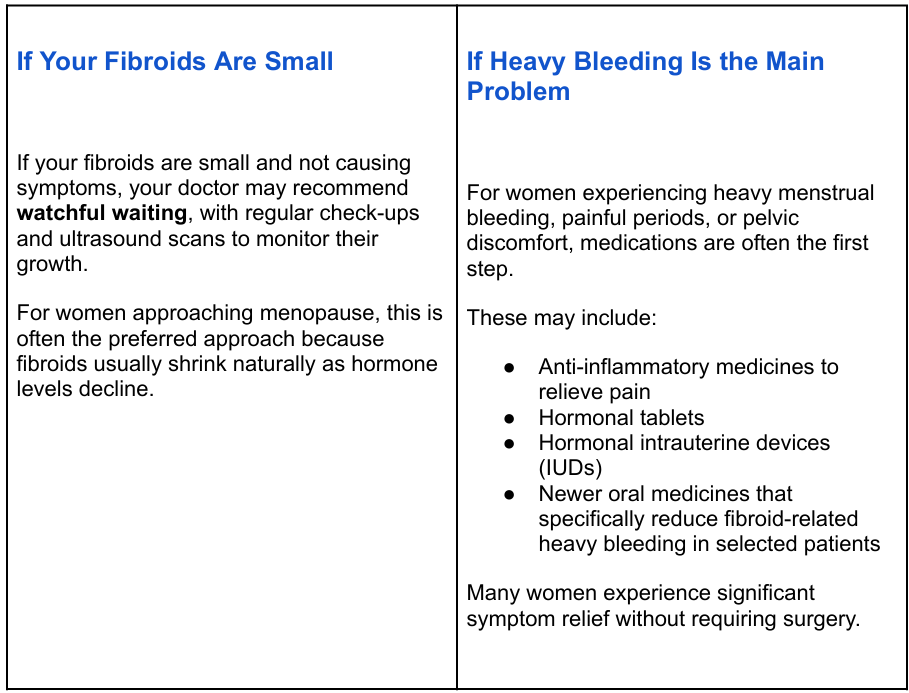
Q4. What medical treatment options are currently available for controlling heavy menstrual bleeding associated with uterine fibroids?
The right approach depends on several factors, including:
● Your symptoms
● The size and location of the fibroids
● Your age
● Whether you plan to have children in the future
● Your overall health and lifestyle
When Is Surgery Needed?
If fibroids are large, continue to cause troublesome symptoms despite medication, or significantly affect your quality of life, your doctor may recommend a procedure.
Treatment options include:
Myomectomy
Removes the fibroids while preserving the uterus, making it a suitable option for women who wish to become pregnant in the future.
Uterine Artery Embolisation (UAE)
A minimally invasive procedure that shrinks fibroids by cutting off their blood supply.
Hysterectomy
Surgical removal of the uterus, usually recommended for women with severe symptoms who have completed their families or when other treatments are unlikely to provide lasting relief.
The goal is always to choose the least invasive treatment that provides effective, long-term symptom relief.
Q5. How do newer oral treatments for fibroid-related heavy menstrual bleeding work, and which patients may benefit from them?
Until recently, treatment options were often limited to hormonal therapies, injections, or surgery.
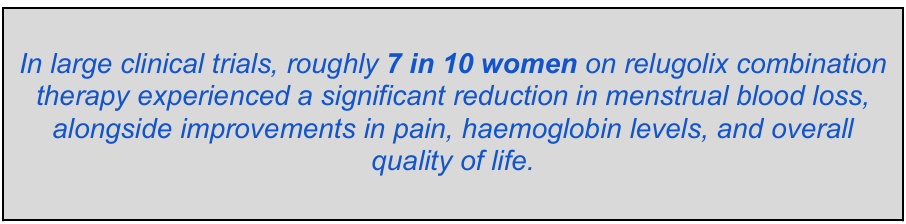
Today, newer oral medicines called GnRH antagonists, including relugolix, elagolix, and linzagolix, offer another option for selected women.
These medicines work by lowering the hormones that help fibroids grow and cause heavy bleeding.
Unlike older injectable treatments, they begin working without causing an initial hormone surge.
To minimise side effects such as hot flushes and bone loss, these medicines are combined with low-dose hormone replacement (estradiol and norethindrone acetate), helping maintain hormonal balance while effectively controlling symptoms.
These medicines may be particularly beneficial for:
● Women who want to avoid or delay surgery
● Women needing a "bridge to surgery" to shrink fibroids and control bleeding beforehand
● Women who haven't responded to first-line options like the pill or IUD
● Women closer to menopause, wanting a non-surgical bridge until symptoms naturally ease
Your gynaecologist will determine whether these newer medications are suitable for your individual situation.
A Message from Dr. Smrithi D. Nayak
To every woman who has quietly rearranged her life around heavy periods… skipping events, carrying a spare change of clothes 'just in case,' feeling drained but assuming it's normal…
I want to say this clearly: you do not have to live with this.
Heavy bleeding is common. Common does not mean normal. And it certainly doesn't mean untreatable.
So many women delay care because somewhere along the way, they were told directly or indirectly that heavy periods are just 'a woman's lot.'
That belief costs women their energy, their iron stores, their careers, and their quality of life for far longer than it should.
Fibroids are one of the most treatable conditions in gynaecology today, and we have more options than ever, including effective oral medications that didn't exist a decade ago.
Please don't wait for an emergency. A conversation with your gynaecologist and a simple ultrasound could be the first step to feeling like yourself again.
Your next step starts here
You don't have to live with heavy periods. At Aster RV Hospital, our experts are here to help you understand the cause, explore your treatment options, and support you every step of the way.
Book a consultation TODAY!