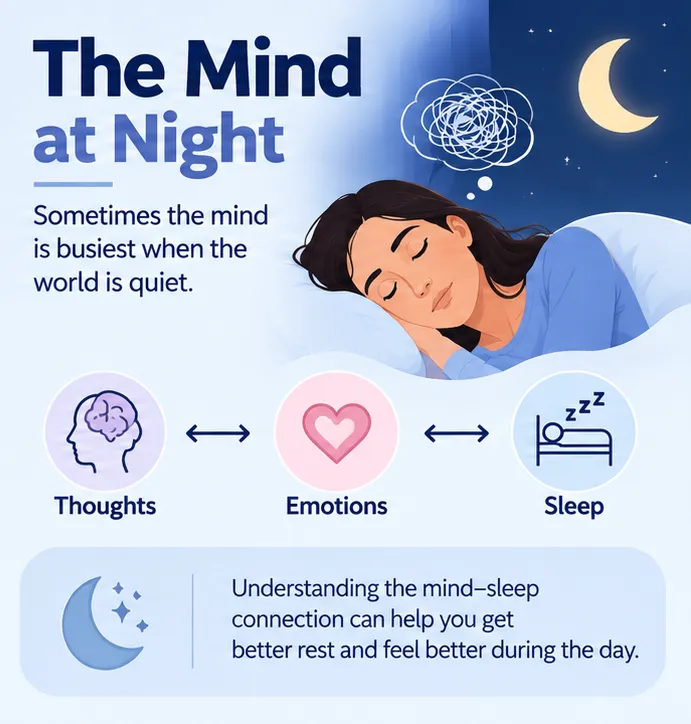
The day finally becomes quiet. There are no meetings, conversations or daily responsibilities demanding attention. Yet, for some people, this is exactly when the mind seems to become the busiest.
Thoughts about the day, worries about tomorrow, unresolved emotions or concerns that were pushed aside may suddenly become more noticeable at night. The body may be ready to rest, but the mind may not be.
When Thoughts Keep the Mind Awake
Sleep is not only about the body becoming tired. Our psychological state can also influence how easily we settle into sleep.
Stress, anxiety, emotional distress and persistent worrying can keep the mind alert. Sometimes, the difficulty may not even be one particular thought—it can be a general sense of mental restlessness that makes it difficult to switch off.
Over time, a person may also begin thinking about sleep itself: “What if I don't sleep tonight?” or “How will I manage tomorrow?” These thoughts can add further worry around bedtime.
The Mind–Sleep Connection
The relationship between sleep and psychological well-being works in both directions.
THOUGHTS
↙ ↘
EMOTIONS ↔ SLEEP
Stressful thoughts can influence emotions and make sleep more difficult. At the same time, repeated poor sleep can affect mood, concentration, patience and the ability to manage everyday stress.
This can create a cycle where emotional strain affects sleep, and inadequate sleep makes emotional challenges feel harder to manage.
When Sleep Difficulties Affect More Than the Night
Occasional difficulty sleeping is something many people experience. It becomes more important to pay attention when sleep problems persist or begin affecting daytime functioning, mood, concentration, relationships or overall quality of life.
Sometimes, what appears to be a sleep problem may also be connected to underlying stress, anxiety, emotional distress or other psychological concerns.
Understanding what is happening beneath the sleep difficulty can therefore be an important part of addressing it.
When Can Psychological Support Help?
Psychological support is not only for people with a diagnosed mental health condition. If persistent sleep difficulties are accompanied by ongoing worry, emotional distress or changes in everyday functioning, speaking with a psychologist may help explore the psychological factors involved.
A psychologist can help understand the relationship between thoughts, emotions and sleep and identify whether further support may be appropriate.
Difficult nights do not necessarily mean that something is wrong with you. Sleep can be influenced by many physical, emotional and psychological factors. However, when sleep difficulties continue to affect your well-being, recognising the pattern and seeking support can be an important step towards understanding what your mind may be trying to communicate.