For some people, pain is temporary and has a clear explanation. For others, pain can persist, fluctuate and affect different areas of the body without an obvious cause. Over time, it can begin to influence much more than physical comfort—affecting sleep, emotions, concentration, relationships and everyday life.
This is one of the realities of living with fibromyalgia.
More Than Just Pain
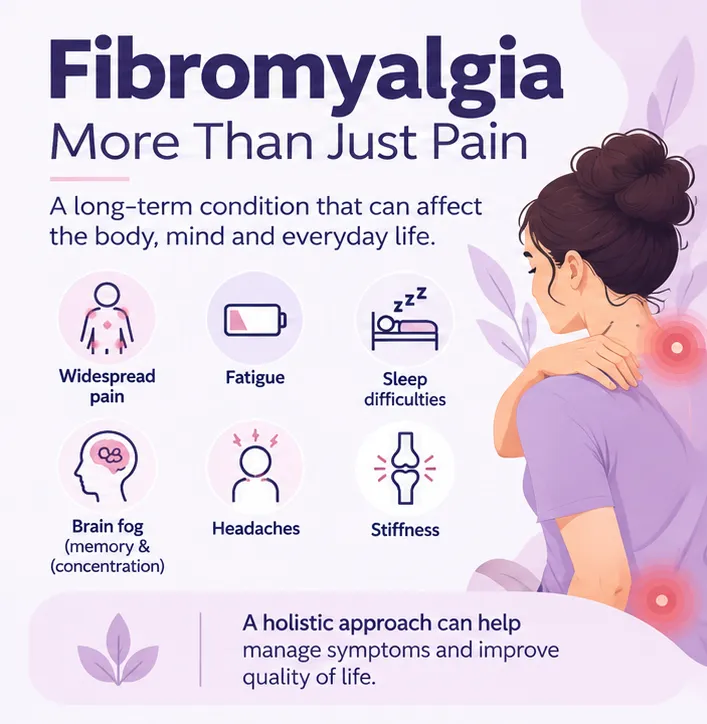
Fibromyalgia is commonly associated with widespread pain and increased sensitivity to pain. People may also experience fatigue, sleep difficulties, headaches, stiffness and problems with concentration or memory, often described as “brain fog.”
When these symptoms continue over time, their psychological impact can be significant. Living with unpredictable pain may lead to frustration, worry, irritability or low mood, particularly when it begins to interfere with work, family responsibilities or activities that were once enjoyable.
These emotional responses do not mean that the pain is psychological. The pain is real. Rather, they reflect the complex relationship between physical symptoms and emotional well-being.
When Pain Affects Everyday Life
Sleep difficulties are also common in people living with fibromyalgia and may contribute to fatigue and difficulties with concentration during the day.
Beyond sleep, persistent pain can gradually influence how people approach their daily lives. Someone who was previously active may begin avoiding activities because of pain or fatigue. Others may worry about whether they will be able to manage their responsibilities or whether their symptoms will improve.
Over time, this can affect confidence, relationships and quality of life.
The Emotional Weight of Persistent Pain
Living with a long-term condition can be emotionally demanding. People may experience frustration, helplessness, worry or changes in mood as they adjust to symptoms that may fluctuate over time.
Psychological support in fibromyalgia is not about suggesting that the condition is “all in the mind.” It is about recognising that living with a long-term physical condition can affect the way a person thinks, feels, behaves and copes.
A psychologist can help understand emotional distress, explore patterns of coping and support the person in adjusting to life with persistent symptoms.
Looking at the Person, Not Just the Pain
Fibromyalgia often benefits from a multidisciplinary approach, where different healthcare professionals address different aspects of the person's experience.
Medical care may focus on symptoms and physical health, while physiotherapy, psychological support and attention to daily functioning can address other factors affecting quality of life.
The aim is not simply to ask, “How much pain are you experiencing?” but also, “How is this pain affecting you as a person?”
Because with fibromyalgia, understanding the person behind the pain can be just as important as understanding the pain itself.