
A Journey from 2024 to a Landmark Moment
For those who do not know the details of the case: This is a case of a presently aged 32 year old gentleman who, 13 years previously at the age of 20 years, tragically fell from the 4th floor of his paying guest accommodation, as a result of which he sustained injuries that put him into a Persistent Vegetative State (PVS) with 100% quadriplegia complete paralysis of all limbs and no possibility of meaningful recovery.
Since then, under the care and love of his family, with the support of a multidisciplinary team, he had undergone treatment for complications of his PVS. This included repeated admissions, measures to provide Clinically Assisted Nutrition and Hydration (CANH), currently in the form of a Percutaneous Endoscopic Gastrostomy (PEG) tube.
A SPECIAL LEAVE PETITION - was placed in 2024 on behalf of the patient through his parents, to the High court for discontinuation of these life sustaining measures. As his condition was not considered as life limiting, this petition was not supported. The High Court had dismissed the petition stating that the applicant was not being kept alive mechanically and that he was able to sustain himself without any extra or external medical aid. In the High Court’s opinion, such a condition did not require any judicial intervention.
The family then moved to a higher court for the following reasons:
(i) Constitution and referral of the applicant’s case to the primary medical board.
(ii) Declaration that the provision of CANH which is currently being administered to him through a Percutaneous Endoscopic Gastrostomy tube is "medical treatment".
(iii) Desire that the suitability of continuation of CANH would be assessed in accordance with the ruling of the five- judge Constitution Bench regarding the guidelines on withdrawal and withholding of medical treatment where no Advance Medical Directive (AMD) has been documented, as laid down in Common Cause 2018 and modified in 2023.
What followed became a defining legal and ethical moment for India.
For the first time, what existed as a written law in theory was translated into real-life action. It showcased the empathic arm of the legal system as it guides the nation is such decision making for loved ones.
But what does this truly mean for the community?
1. The law is brought to the homes of the citizens of India
While the western world spoke of these interventions, the Indian soil was unable to guide the citizens despite discussions since 2011. Words that were used without thought confused the people. Only one word was thought of - Euthanasia. This is still used without clarity in newsletters. The Court, through its judgments in 2018, 2023 and 2026, has now made the meaning of each term crystal clear.
The court has empowered its people to:
● Understand the term 'Passive Euthanasia' - Withholding or withdrawing of medical treatment, where such treatment no longer serves any therapeutic purpose and merely prolongs the dying process.
In other words, stopping these medical interventions allows the individual to have a natural death, owing to the illness. Therefore, NOT intentionally ending life.
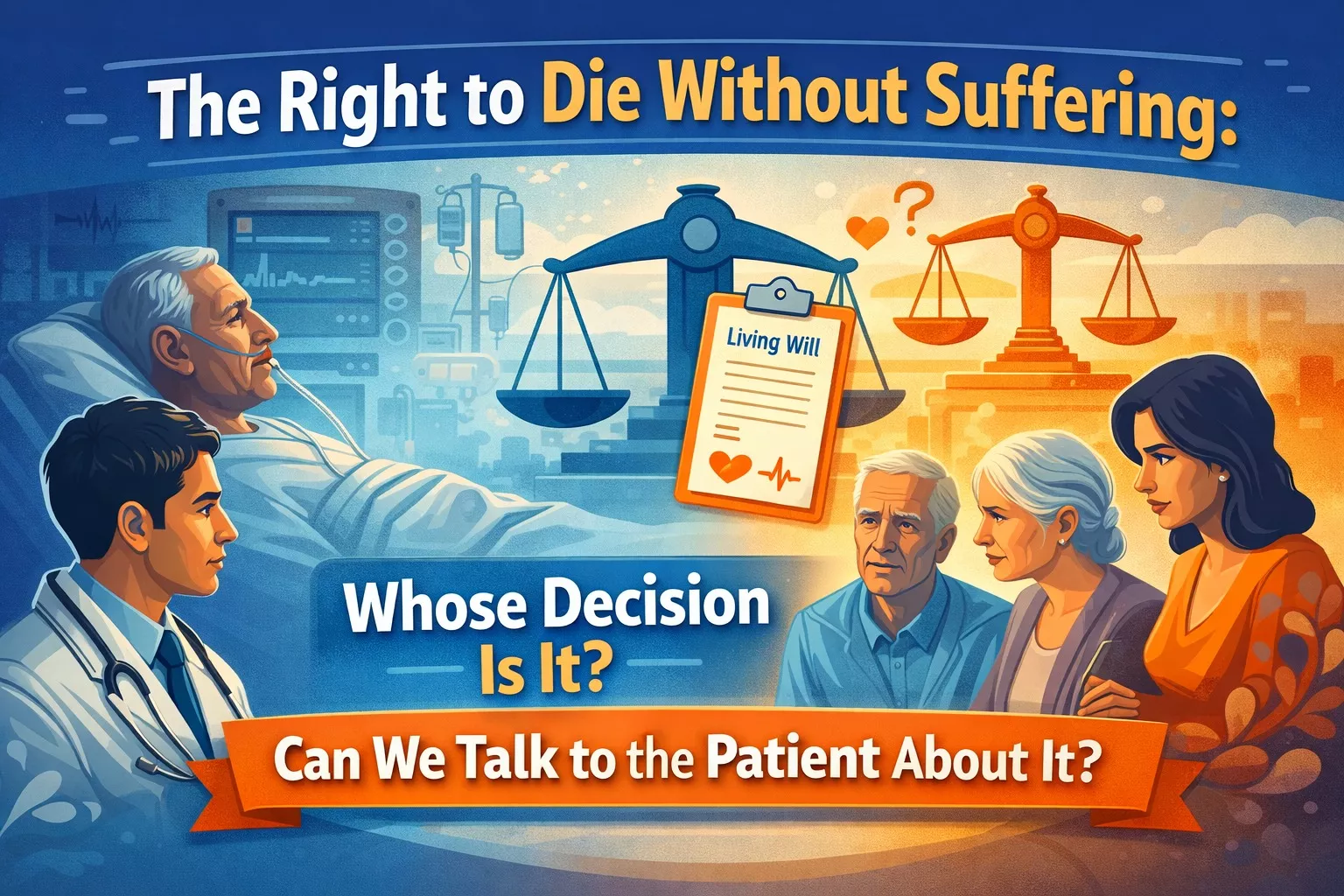
● Document living wills/ Advanced Medical Directives - These are legal documents. That all citizens can now document.
You will be supported by the legal and medical system if you follow the process.
The court, through this case, gave Mr. Harish a voice through his parents. They were heard.
They clearly stated that:
After a detailed look into all the observations made, the diagnostic criteria as well as the opinion of the Primary and Secondary Medical Boards, the Court cumulatively came to one clear conclusion that it will not be in Harish’s best interest to continue with the treatment and artificially prolong his life.
The empathetic conclusion also validated the effort of the family:
"Harish has been in a vegetative state, but the parents and siblings have left no stone unturned in ensuring best treatment for Harish. It is only when the matter reached a point of no return that, to relieve Harish from what he is undergoing, they have resorted to this legal course of action."
While this is about a young man who was in a PVS after a traumatic event, society must realize that this message also resonates to all patients who have a life limiting illness, where further cure is not possible and comfort care is offered.
2. It reassures the citizens that wanting a dignified death is legal when following the process laid down.
In Indian society, choosing to stop life-sustaining treatment is often seen as: Giving up, failing a loved one or doing something morally wrong. The Court laid out the Essential Distinction between Active and Passive Euthanasia, reframed this legally, recognizing that: Allowing a natural death is not abandonment and that it can be an act of deep love and respect for the dignity of an individual with prolonged suffering.
‘Active Euthanasia’ is defined as involving a positive or overt act, such as the purposeful administering of a lethal injection or drugs, which serves to either cause death or directly accelerate it.
‘Passive Euthanasia’ is defined by the absence of such an overt act. It is defined as an omission and primarily characterizes as the withdrawal or withholding of medical treatments that would otherwise sustain and/or preserve life. Hence allowing natural death from the illness itself.
3. It Brings the Patient’s Voice to the Center
One of the biggest gaps in Indian healthcare has been the absence of the patient’s voice in decision-making. This judgment reinforces the importance of patient wishes and the Vital role of advance directives (living wills)
The need to ask: “What would the patient have wanted?”
4. It Encourages open Conversations on death - one that we actively avoid
This case in its entirely has awoken the society to:
● Talk about illness honestly
● Discuss end-of-life preferences earlier if having the opportunity
● Normalize conversations around death and dying
● For the community, this means a cultural shift: from “What should we do? ”to “What would they have wanted?”
Mr. Harish's family did everything that they could through the years of him being in a PVS. They took the courage to ask this question. Society is still to agree. It took this one step from a family to highlight the importance of asking the question - what would the patient want?
5. It Highlights the Role of Palliative Care
It also highlights a gap many patients and families are introduced too late to palliative care services.
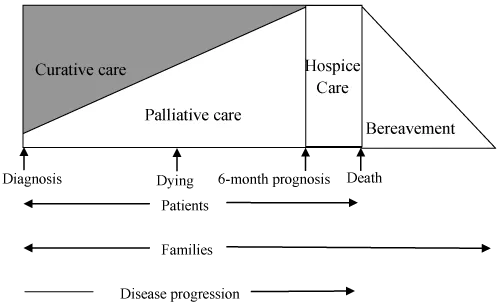
End-of-life care is not just about stopping treatment it is about providing support for symptom burden management for the patient in a holistic manner, while supporting the caregiver. The Palliative team is there to ensure that difficult conversations, aggressive symptom control and the effort to improve quality and dignity of life and death is pursued.
While conversations were held of managing the complications, the opportunity, of introduction to a palliative team was missed.
6. It Begins a Cultural Shift but Doesn’t Complete It
While the judgment is a major step, challenges remain:
● Awareness of the role of a Specialist Palliative Physician
● Awareness of the opportunity to discuss difficult decision making
● Awareness of the definitions of legal terms.
● Awareness about living wills
● Societal and family reluctance in accepting this giant step for the patient.
● Cultural beliefs may resist change
Final Thought: Are we ready to have these conversations?
If you have a loved one who is suffering with a life limiting illness, please come and meet us - The Pain and Palliative Team at Aster CMI hospital. We are here to listen, guide and support you through deep emotional decisions that are needed to be taken.